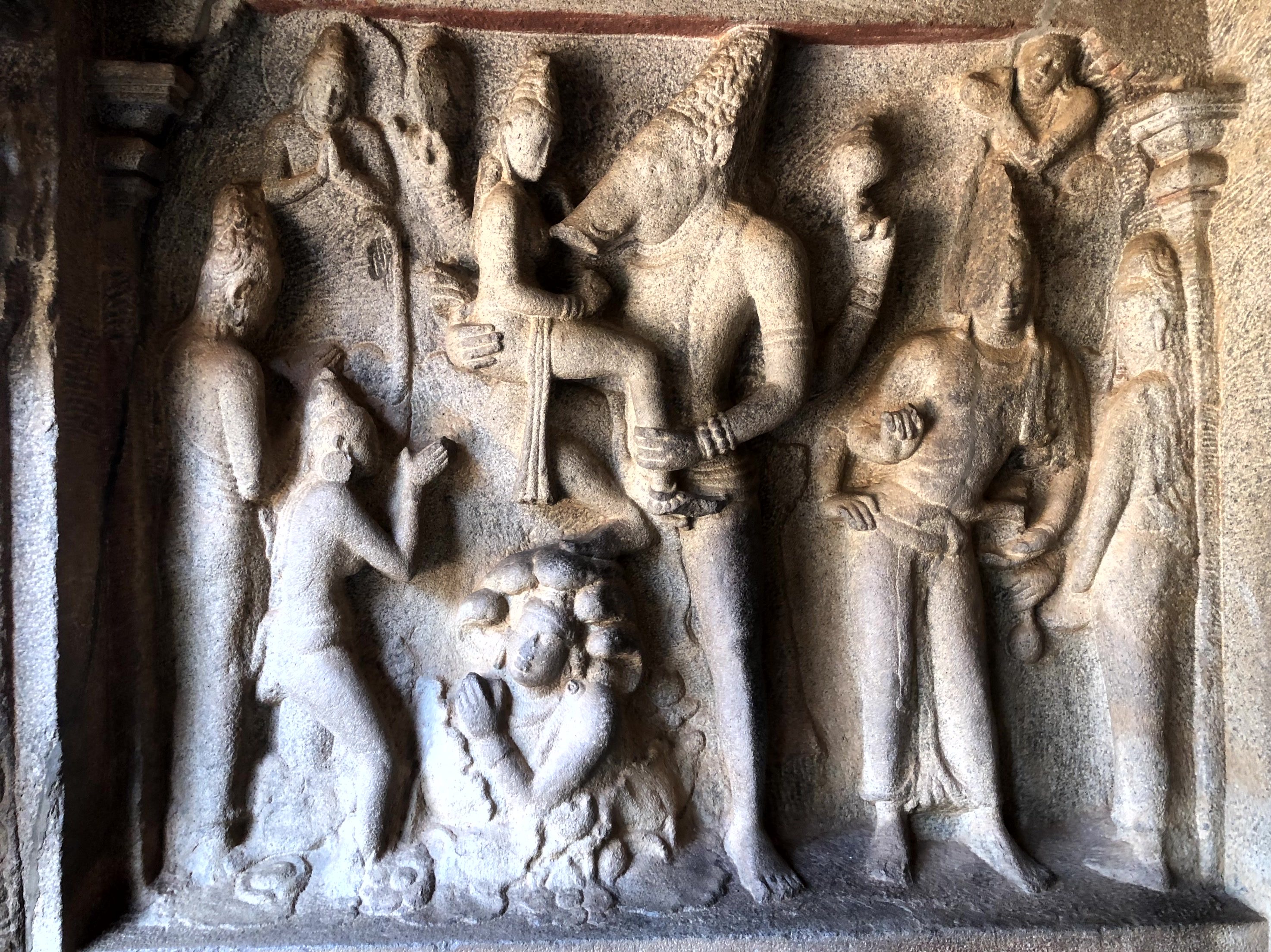
Location: Yellamma Temple, 1st Stage, Kumaraswamy Layout, Bengaluru, Karnataka 560078
Google maps: https://goo.gl/maps/f3HVNVDviH9dpcN66

In the Saka Year 1324, Chitrabhaanu, Jeshta, Ba. 10 , Shu. ( le., on 26th May 1402) AD.
Under The Rule Of Vijayanagar Emperor Harihara 2, His officer ‘Muuvaru Raayara Ganda Saariya ( suriya?) Nagappa Naayaka’s Maneya Gowda Marappa and Tirumale Setty’s Son Nachasetty of Nagarthara Community Built a Tank And Provided The Sluice At ‘Elajeeyaraha Halli Seeme’ And Granted Two Khanduga and Ten Kolaga of Land As Dharmma.
The inscription was issued during reign of Immadi Harihararaya. When one looks into the translation, the content might seem very trivial. The inscription is donative and is about the building of a tank and land grant. However a detailed study can reveal a lot of important information.
LANGUAGE
Language is a very important aspect in historiography. It is constantly evolving (time bound), territorial, and is subject to variation when spoken by different social classes. Language is also used to certify the authenticity of a historical text. The language used in the inscription is Nadugannada. The modern Kannada has evolved from Purva Halegannada, Halegannada, Nadugannada and finally we have the modern Kannada. Hence it can be inferred that during the period of 1400’s Nadugannada was the spoken language because inscriptions were issued by the elite to validate their authority and it was always done in the language people understood. They were installed in public places and were frequently read out, for the illiterate masses. Though the origin of the Sangama rulers ( under whom Immadi Harihararaya falls) of the Vijayanagara Empire is an issue of conflict between scholars like Dr. BA Saletore and Dr. Venkatachalayya, it can be inferred that the area was inhabited by Kannada speaking masses.
TERRITORIAL EXTENT OF THE EMPIRE
An inscription installed testifies the control of the empire or emperor over that territory. Immadi Harihararaya’s control over this area is essentially proved by this inscription. The Vijayanagara Empire was established in the 1340’s. Though the Sringeri inscription during the reign of Harihara-1 testifies the emperor’s control over both the oceans, the Vijayanagara rulers had an uphill task of maintaining their stronghold as their authority was constantly challenged by the Gajapatis of Orissa, Reddis of Kondavidu, Velamas of Racakonda and the numerous chieftains of Deccan Peninsula who had accepted the authority of Vijayanagara reluctantly. Vijayanagara Empire was not a centralized political entity till the time of Krishnadevaraya who made efforts to do so. In the background of uncertain loyalty by the local chieftains, the inscription is a valuable testimony to the existence of Vijayanagara authority over this region.
NAYAKARA SYSTEM
This system of land tenure was special to the Vijayanagara Empire and wasn’t prevalent during the time of their predecessors Hoysala, Chalukyas etc. According to Dr. Venkatachalayya this practice was derived from the last rulers of Kakatiya Dynasty. Under this system, king owned all the land, who distributed it among his nayakas who were obliged to maintain an army of troops, horses, elephants and had to pay an annual tribute to the King. This should not be confused with centralization. According to Burton Stein there was no attempt of centralization till the time of Krishnadevaraya who appointeed Telugu and Kannada Brahmins to rule the Tamil country in response to consistent rebellions from the chieftains. The nayakas authority was communal and existed even before the Vijayanagara conquest. They just accepted the supreme authority of the King. Hence the land was owned by the nayakas and they made the grants, acknowledging the authority of Vijayanagara.
NAGARTHARA AND SETTI COMMUNITIES
These were the merchant communities or the merchant guilds. They were prosperous because of trade and hence established markets, fairs, collected tax, built tanks for the welfare of society. Their affluence and service to the society also led to their control over local governance. They were given titles like ‘Pattanaswami’ (Village headman), Pattanadishwara etc.
PRACTICE OF TANK BUILDING
Tank building was a practice which was started during the time Chalukyas and Pallavas. Tank building was to facilitate agriculture and drinking water needs. The practice of tank building ensured flourishing of agriculture in the whole Deccan region, which along with it’s magnificent trade emporia attracted the Delhi Sultanate in the late 13th century. Ancient kingdoms were generally river valley civilizations. Kingdoms like the Chola, Pandya, Pallava were around the rivers Kaveri, Valgai, Tambraparni, where agriculture flourished and surplus production was traded. However the upland regions of Deccan were dry and there was lack of rainfall. The practice of tank building hence made the dry upland region of the peninsula suitable for agriculture. Tank building was also linked to temples. From the ancient times, temples received a lot of grants and donations from the rulers. Hence temple authorities invested these into building tanks. According to Burton Stein Tirumala temple had close to 170 villages under it and tanks were constructed in about 100 of them. Tank building helped the cultivators and also indirectly the merchant guilds who were involved in trade.

MEASURING UNITS
Khanduga and Kolaga are measures of volume. According to Wilson, 1 Kolaga is equal to 1/20 Khanduga. The ratio of volume of seeds required for sowing in wet and dry land is 4:1. It can be inferred that land was measured by the quantity seeds or grains which could be sown.

REFERENCES
- Stein, B. (1990). The New Cambridge History of India. doi: 10.1017/chol9780521266932
- Veṅkaṭaramaṇayya N. (1933). Vijayanagara, origin of the city and the Empire, by N. Venkata Ramanayya, .. Madras: University of Madras.
 Anuroop Tantry