
Chaalchitra (The Kaleidoscope), written and directed by the iconic parallel cinema doyen, Mrinal Sen, starring Anjan Dutt in the lead along with senior actors Utpal Dutt and Geeta Sen is a simple tale about a young man, Dipu (Anjan Dutt) seeking to establish his career as a journalist in a newspaper. A budding writer, Dipu is well aware that experiences should inform writing and the story starts with him meeting a newspaper editor/owner (Utpal Dutt), expressing his inchoate ideas and thereby seeking a job. For anyone who has seen Sen’s works and has known about his ideological leanings, will have no difficulty in identifying the Newspaper Editor/Owner(Utpal Dutt), as representing ‘the ruthless bourgeois‘- smoking his pipe and insisting Dipu to write something on the middle class experience. The ‘bourgeoiseness‘ of the owner is not necessarily dented by this demand; rather the purpose is to publish works which can be ‘sold‘, which people ‘consume‘. After all, their job was to sell news, just like others sold potatoes, clothes ! The narratives of the working class/middle class are ultimately (if not, ‘nothing but’ )a matter of profit ! He is also seen with a book teeming with capitalist ideals- Marthe Gross’ ‘The Possible Dream’ – in the beginning of the scene and in the climactic ending, where the book also receives camera focus.

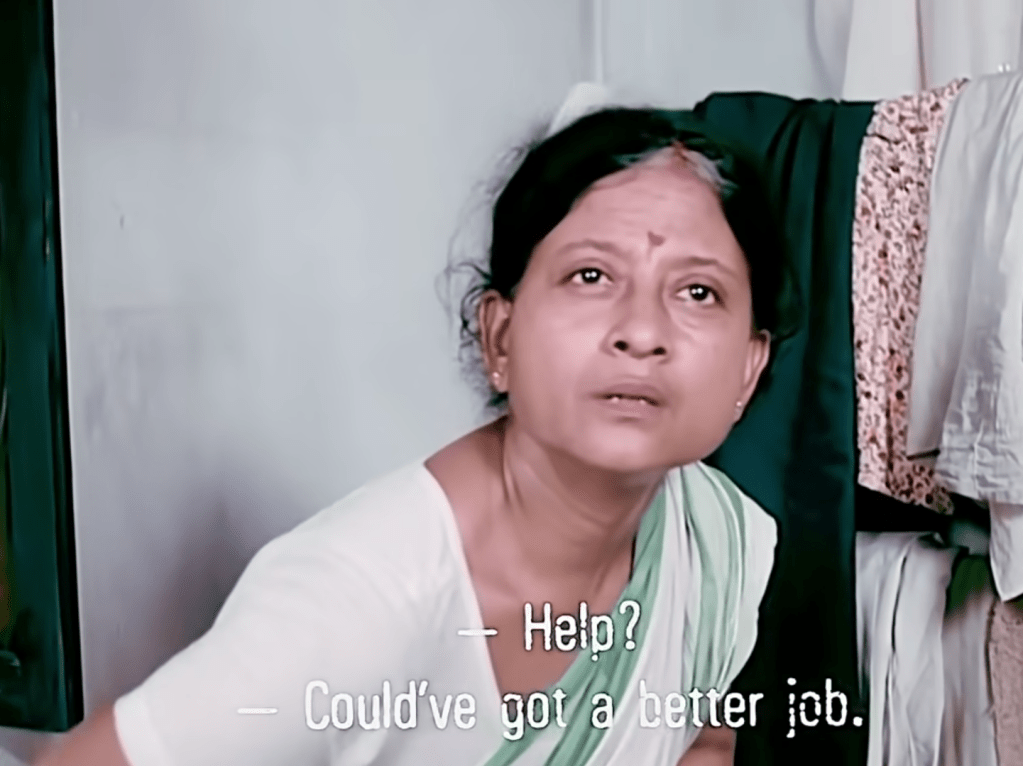
Dipu goes back home, to find ideas for his writing . The home represents the setting of a lower middle class abode. It is no individual, isolated or separated dwelling; but a communal dwelling of sorts; where each family occupies a room/flat in a storeyed apartment with a courtyard/open enclosure. The isolation of the families is very limited; having to constantly see each other during the daily activities like washing utensils, clothes, burning coal etc. The inevitable interactions are not always peaceful and joyous; rebukes, taunts, chidings are part of the daily life.

Dipu first tries to carve out an idea for his article from the scenes of conflict among the ladies, who initially quarrel about the uncleaned starch in the open courtyard. Optimistic Dipu eagerly observes, if he can jot down some interesting occurrences worthy of a saleable, thrilling and exciting article. But mutual rebukes and nasty scorns always end in a rhythm of peaceful coexistence, if not always amicable. Frustratingly for Dipu, even an attempt to insinuate a conflict by complaining to his mother about the coal stolen by the neighbor, evokes a mild response. While Dipu is merely a frustrated observer (like perhaps most intelligentsia claiming to be the voice of the subaltern ?) , he ceases to be an observer when he has to frantically search for a cab, to take a pregnant neighbor to the hospital. The frantic search for a cab at moments of dire need, highlights the uncertainty looming around the lives of middle class and the poor. The inability to find saleable ideas in the middle class experience, is also the reality of of their lives- the routine of toil, dull drudgery, often lifeless; entertainment being a luxury !
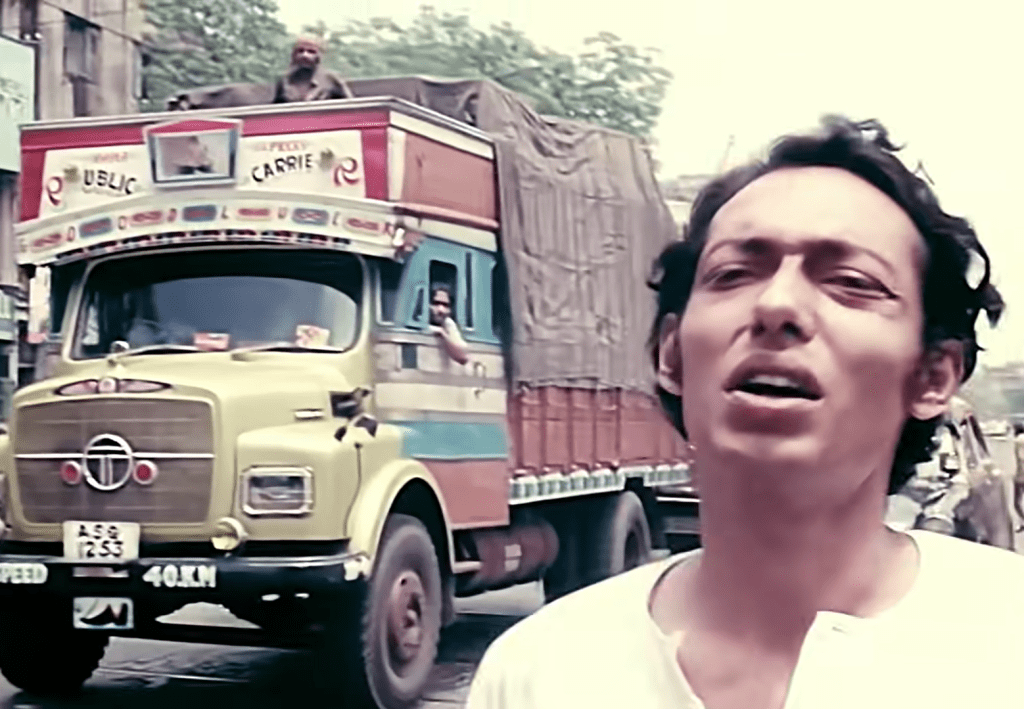
The lower middle class setting in the movie, represents a sort of communal dwelling, where people and families do have their differences, but are not devoid of mutual concern and care. Does it hint the plausibility of a communal society ?
A dominant element in the movie is smoke; mainly coming from the burning coal used for cooking. For the poor and the lower middle class, gas cylinders are a luxury. Breathing the poisonous smoke from burning coal is a harsh necessity, not a choice !
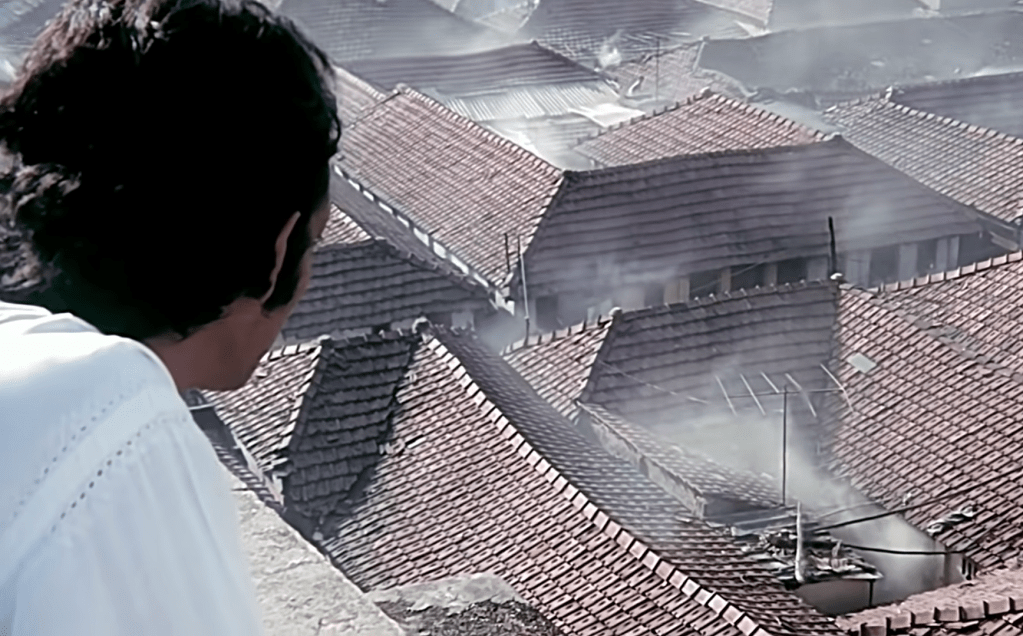
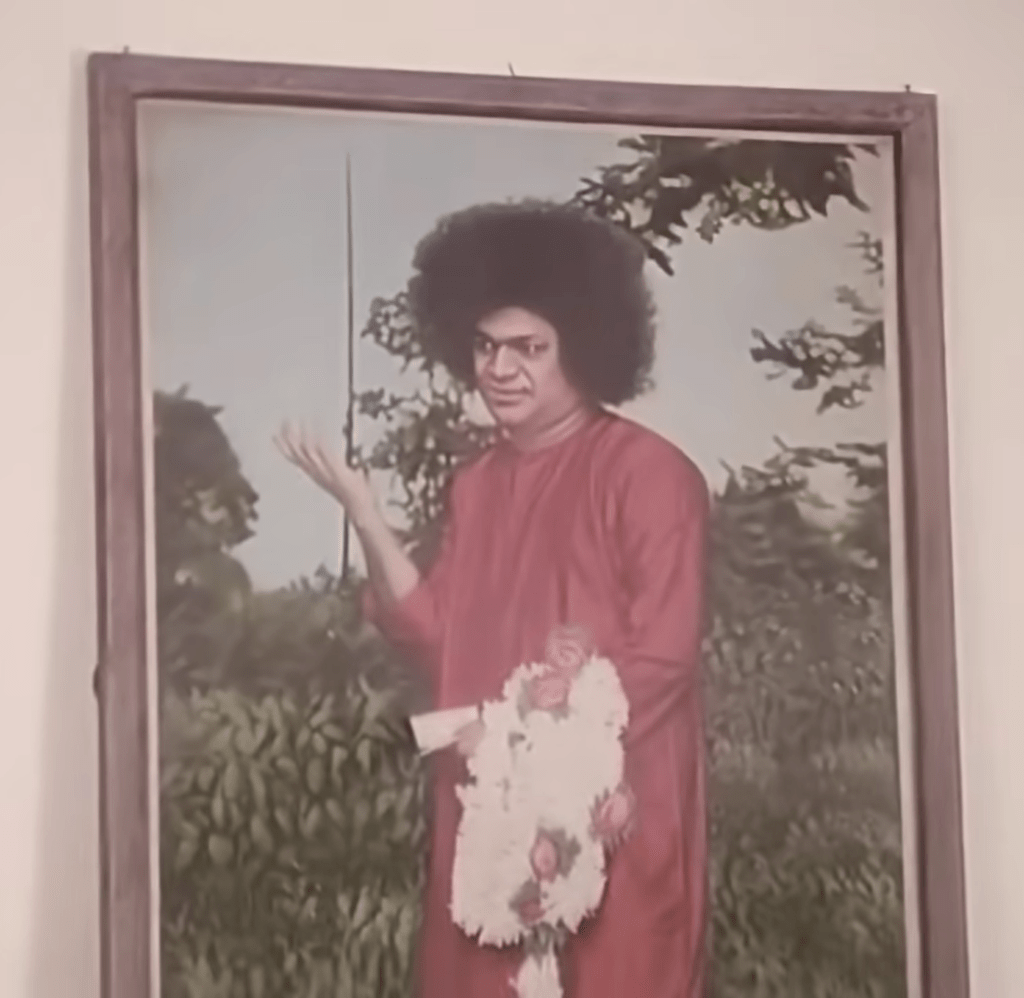
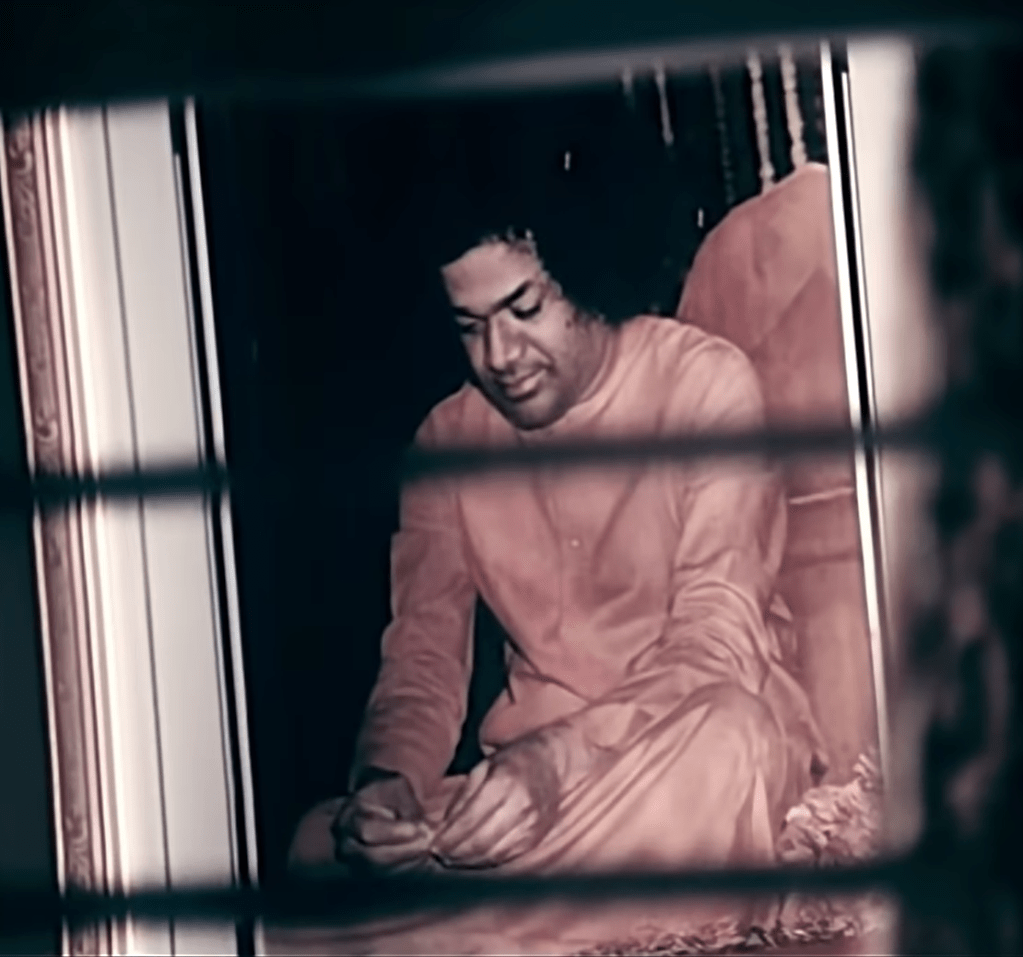
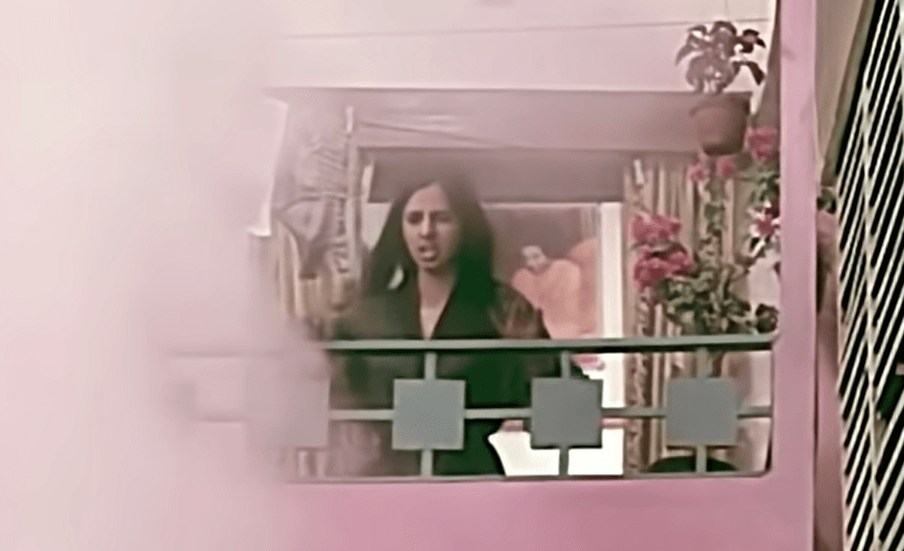
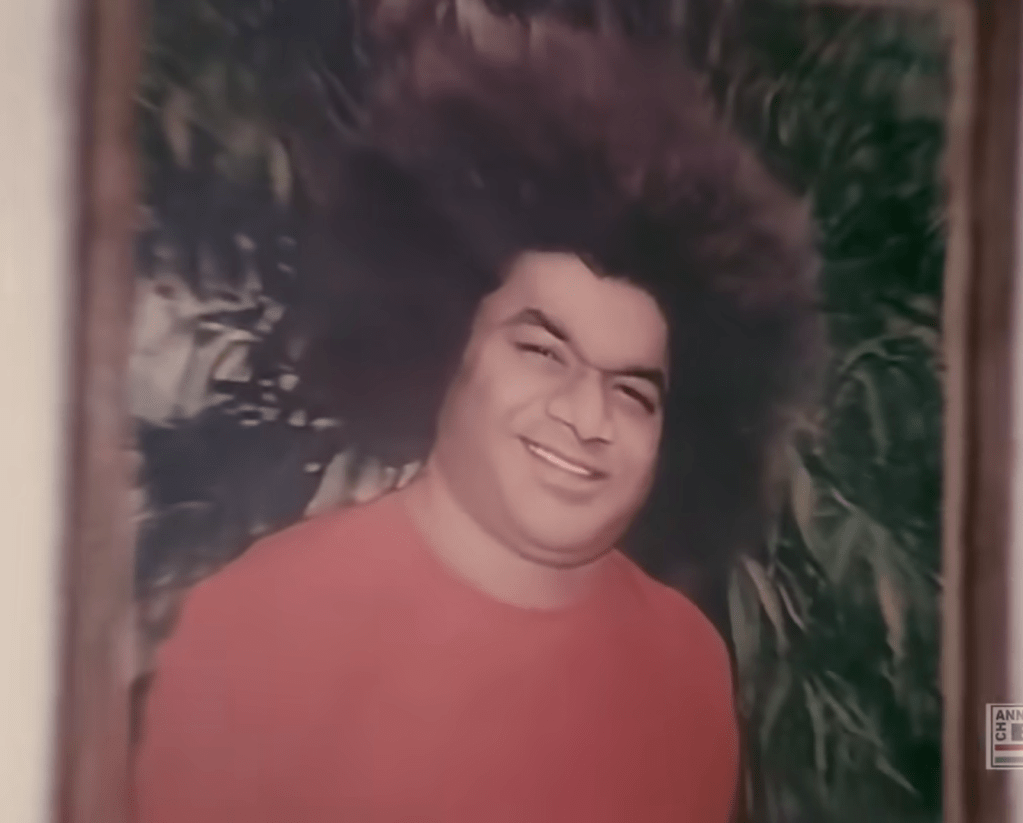
Class interests manifest when the dwellers in Dipu’s apartment butt heads with the neighbor (again representing the bourgeoise), living in an individual house, having issues with the smoke in Dipu and co.’s dwelling. The most interesting element in Sen’s representation of this bourgeoise household is not the characters, but a framed picture of Puttaparthi Sai Baba, which gets a prolonged camera focus.
Whether this represents a subtle rationalist rebuke ( or ridicule )of the bourgeoise and what they represent- insensitivity, oppression, class interests, and ‘not so scientific’ temperaments ? While their insensitivity has been portrayed by their actions in the film sequence; is the specific focus on Sai Baba, a statement that capitalism is not the scientific end, but a part of an end characterized by a classless society ?

Another interesting scene is when Dipu notices a poor old man, an astrologer, reading palms on the streets; seeking to sell his talent by his ability to speak in English. Dipu approaches the poor astrologer, expressing his interest to write about him and his life. The amused astrologer takes him to his dwelling; a slum with conditions much worse than Dipu’s dwelling- if Dipu represented the middle class, the astrologer and his family represented the poor- where the dominant trope of the movie again makes an appearance; the smoke from burning coal. For the astrologer, an article about him in the newspaper is like an endorsement in the capitalist world- a traditional vocation, seeking to sell itself. He even requests Dipu to write it for an English newspaper. After hearing the difficult life of the astrologer who formerly worked as a peon and was trying to eek out a living through astrology- which undoubtedly summarized the lives of the poor, in the oppressive politico-economic order – Dipu refuses to write the article !

He patronizingly argues that it wont be good for him, as his fraud would be exposed. The astrologer is both distraught and furious. Here is another crucial insight. One is impelled to ask, Can the subaltern speak ? or rather, Are they allowed to speak ?
For the astrologer, his craft- albeit a source of livelihood- is no fraud. His convictions about it are strong and solemn. Dipu, representing the intelligentsia – the ‘avowed voice’ of the ones oppressed by the politico-economic order- has no qualms in striking down the subjectivities of the people, he aspires to represent. Is Marxism really liberating ? The astrologer tenaciously argues, that an article published about him is not going to be detrimental, rather advantageous- but to no avail. Does the astrologer (and the class) he represents, have the right to determine and decide what is good for them, even if it is at loggerheads with the ‘Marxist liberators‘ ?
Meanwhile…, What kind of a Marxist leaning subaltern tale is it, if there is no resistance and rebellion ?
Dipu assumes the charge and expresses his resistance against the oppressive order by going to the kitchen, burning the coal and opening the window (which was sealed, so that the smoke doesn’t reach the complaining bourgeoise neighbors). That Dipu rarely went to the kitchen is evident in his mother’s reprimands, and his fumbling with the coal. Of course, we can’t expect the Marxist liberators to be ‘not patriarchal’, can we ?


The movie ends with a dream, which Dipu has, just after his mini act of resistance- a powerful, loaded visual treat ! The smoke which represented oppression by the politico-economic order, now becomes a weapon against it. The authority who becomes the target of the mini revolution (in the dream) is none other than the Newspaper editor, who is not really unfamiliar with smoke ! But it just happens to be of another kind- coming from his pipe !
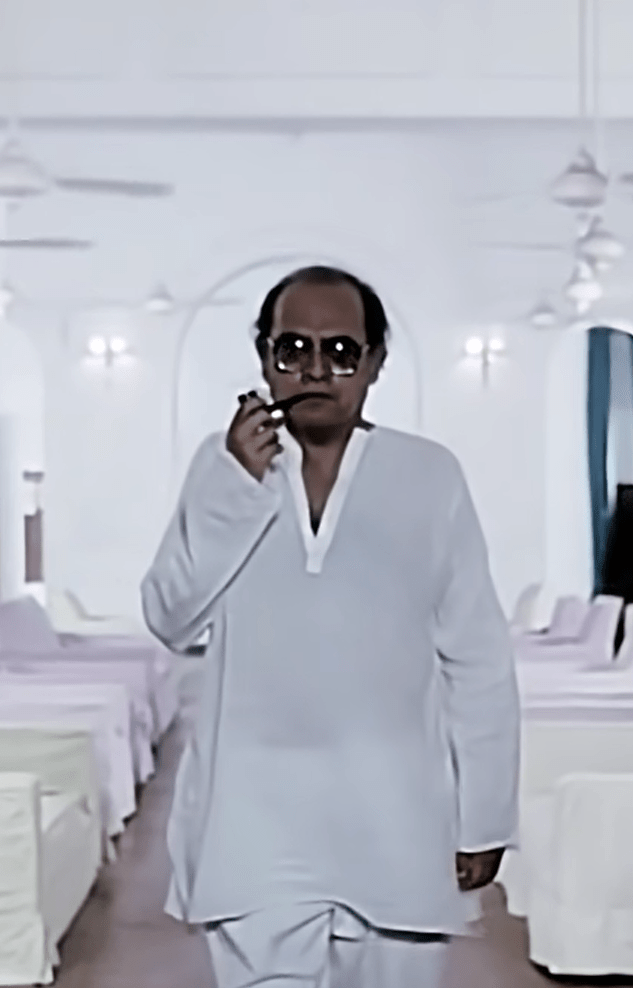
The dominant trope in the movie -smoke, is a rather dynamic element. When coming from the homes of the poor, it is a sign of oppression; when coming from the pipe of Newspaper Owner, it is the sign of the oppressor; when coming from Dipu’s cigarette, it is the sign of impending revolution !
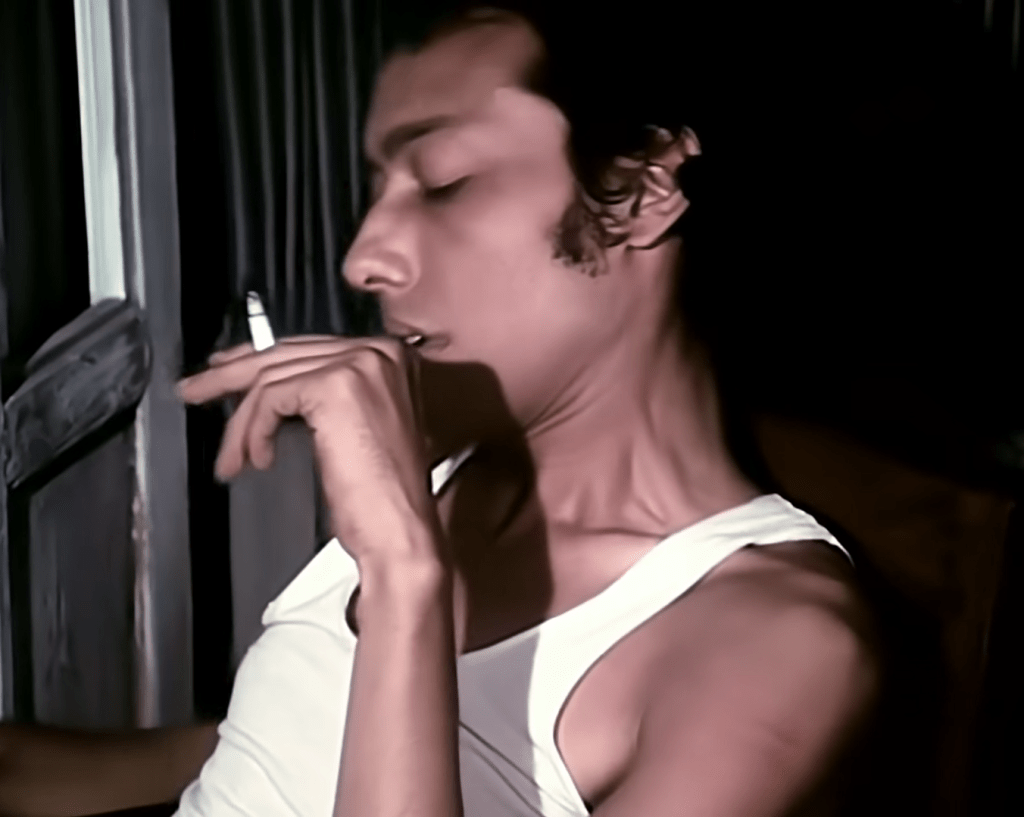
Similarly -despite being tobacco- cigarette is for the communist, but pipe is for the bourgeoise.
When Dipu narrates his dream, next day to the Newspaper Owner; the latter is not fumed, but rather impressed ! Identifying Dipu as a communist, he acknowledges the need to provide him with a good start, and a respectable salary.
The Newspaper owner( Utpal Dutt) is no evil antagonist, like the ones appearing in commercial cinema. He is practical, cut throat endowed with all qualities suited for a businessman – but not necessarily insensitive. He is bourgeoise all right ! – But is more a product of the politico-economic order, rather than a conscious participant !
Does the acknowledgment of Dipu’s communist ideas represent the attempt of the bourgeois to co-opt communist tendencies, thereby safeguarding their position in the order- maintaining a sort of status quo ?

SOURCES
Pictures are screenshots from the movie posted by Bengali Movies- Channel B Entertainment on Youtube– https://www.youtube.com/watch?v=5zan3y4x5Uk&t=1731s
 Anuroop Tantry