Vivek Shanbhag’s ಸಕೀನಾಳ ಮುತ್ತು~ Sakina’s Kiss is a short read, much like his other acclaimed novel Ghachar Ghochar. Set in one of India’s leading tech cities, Bengaluru, the novel is in the form of a first person narration by the protagonist Venkat. Like his earlier work, even this novel does not have a solid plot. It starts on a note of suspense. If it was an unknown female visitor who came to see his uncle in Ghachar Ghochar, this novel begins with the arrival of two unexpected guests who come to visit his daughter. It doesn’t take long for him to realize their nexus with the underworld. The reader is tempted to know more. But just then the protagonist takes recourse to his reminiscences. It is here, Shanbhag thrives as a writer. It feels like sneaking into someone’s personal diary. The sequences of nostalgia and reflections are interspersed amidst a plot, which appears promising, but as one flips the pages, there is a foreboding that any expectations on the plot is a lost cause. But a prior reading of Shanbhag tells us that this style is a conscious choice. It appears that there is much intended to be told through the pieces of reminiscences and reflections than through the plot.
The plot is simple. Venkatram and his wife Vijaya are IT professionals working in MNC’s, living a fairly comfortable life in Bengaluru. They have a daughter Rekha, whose upbringing is a major theme in the novel. When two young men come to their place, adamantly wanting to get in touch with her, Venkat is taken aback. He lets them know that she is not in town and reaching her through phone is also not a possibility- because of poor network. The boys look suspicious, and the very idea of two young men -not so casually or professionally- seeking to get in touch with his daughter irritates him. However when they come back the next day with their uncles, who happen to be part of the underworld, Venkat’s world is rattled. He is introduced to a world, he is unfamiliar of, which he has passingly read in newspapers. He and his wife are worried about their daughter, who they fear, has been unknowingly pulled into that world. But when they try to find her, through her guardian in Venkat’s native -where she had supposedly gone- another story unfurls. She is missing. There are hints of her deliberate involvement in some bold journalistic venture for which she is forced to go underground. It turns out that the dull, artificial, and comfortable world Venkat has created for himself and his family, is not really inhabited by his daughter. His foreboding that his daughter has been trapped in the commotion of an another world is dispelled, only to his realization that she has consciously stepped out of the world created by him to enter the real world. This is all that’s there in the plot, with a few more characters.
But as mentioned, the writer seems to be expressing something, not in the plot, but the nostalgic detours and candid opinions of the protagonist. These candid pieces are good enough for a psychologist to formulate his personality sketch. For a conscious reader, its a glimpse into the world of an upper caste, economically stable, middle class, urban ‘man‘; where the protagonist is the unconscious, yet partially aware, bearer of the collective experiences and worldview of a class represented by the intersection of the aforementioned qualifications. While some of them are directly mentioned, some have to be inferred.
But what stands out in this narration, is the world of a man, encompassing a range of insecurities, vulnerabilities, fears and hidden desires. The protagonist is no paragon of ‘hyper-masculinity’; rather, like the protagonist in his other novel Ghachar Ghochar, he is timid, politically ambivalent- yet conservative and entitled. As a result, the protagonist finds himself being constantly attacked by the world around him. The effects of the neo-liberal, capitalist world is more pronounced in the city he inhabits, and the job he is employed in. The market forces have done enough to make his ‘masculine self‘ aware that he is no longer in control. His semi-arranged marriage, partly because of his admitted inability to win over a girl’s heart has not helped either. Nor does Venkat possess a dominant personality, with an ability to confidently hold on to his views and opinions; he is admittedly diffident, secretly reading self-help books. When he finds a copy of a similar book with his wife during their honeymoon, he is elated; not just because his insecurities were not revealed to her in an ugly way, but the very fact that they were revealed, would possibly bring them closer. Disbelief in caste/tradition and being ‘liberal’ is a garb to put on; to reflect upon the gravity of this stance was not worthy of time. Venkat is of the opinion that liberality must be restricted when it comes to political views; while he admits that the views of his wife and daughter are more liberal, the man in him is ready to concede defeat in these matters as he believes they are not practical enough. For Venkat, practical outlook, no matter how problematic, are they way of the world, and his ability set aside ideals and ‘be practical’ makes him feel like the ‘man of the house’.
It is interesting that the contradictions in Venkat’s own behavioral traits create conflict for him. While he is concerned and fairly secure about his image as an ‘well- to- do middle class’ with a 2 BHK in Bengaluru, his class insecurities also come to the fore. He deliberately admits his daughter in one of the city’s elite schools so that she is groomed to not inherit thosee insecurities. He is often tempted to assuage his insecurities through his daughter’s friendships with the richer class. Interestingly, his wife was against their daughter’s admission in an elite school.
Slightly deviating from the novel, it is worthwhile to note that the elite schools in Bengaluru or urban India are no less places of contradictions. The children studying there most often come from the society’s creamy layers. The child’s fellow classmates more or less come the same economic backgrounds; their experiences, ideas are conditioned likewise. The children and their families often live in the city’s affluent quarters, or apartment complexes. School buses are often allocated for entire apartment complexes. The child’s post-school interaction also virtually remain the same. The same bunch of kids they see in the school bus, school and classrooms. The school or the environment surrounding their homes barely offer them a glimpse of poverty. Even if they do, the schools and apartment complexes shield them from pondering about it. Yet, interestingly, the elite schools are spaces where liberal ideas find currency. It is mostly in these schools, where students are encouraged to take up Liberal Arts, Humanities and Social Sciences. Schools catering to the lower middle class often find themselves prioritizing job guaranteeing streams.
This is clearly reflected in Rekha’s trajectory; for all her liberal tendencies, she does come out as an entitled child; inevitably reflecting the influence of her school. But the wife who was against Rekha joining such a school in the first place, sympathizes – if not with anything else- her liberal views. This is an interesting window – albeit minor- into the lives of urban middle class woman, who though educated and aware of the structural inequality she experiences, can assert herself in the so called ‘modern-urban- society’ only to a limited extent. But a daughter like Rekha, who is able to -owing to her age, schooling and also dependence– challenge every restriction imposed by family and the larger society becomes Vijaya’s alter ego. Rekha’s reactions to the restrictions imposed on her, mirrors how Vijaya as a woman brought up in a ‘modern but traditional‘ society, would ideally want to respond.
Venkat’s maternal uncle Ramana and the journalist in Venkat’s native, Suresh (to an extent), represent his alter egos. But these characters inevitably incite hostile reactions from our protagonist. His mother’s younger brother Ramana, is no active agent in the plot. He recurrently appears in his world of reminiscences. In fact the novel’s title is what inadvertently appeared, when a phrase in his handwritten letter known for its undecipherable script, was read out in front of a crowd. Ramana is presented as a wise and idealistic character who, after his parents death, was initially under the care of Venkat’s father and his younger brother. The latter even conspired to swindle his property. Ramana left the house for his studies, his presence being marked by his mysterious letters and his occasional visits. Even in those occasional visits, he was known for accompanying the village folk to government offices to get their work done. Ramana had a profound understanding of the system– political, social and economic- and the structural inequalities it reproduces. It did not end with understanding; it eventually took course to action as well. He got involved in anti-state activities, for which the police forces were on the look out for him. It is worthwhile to recount a conversation between Ramana and Venkat, where the former after knowing the latter’s future plans dismisses them as ordinary. Venkat expresses his disinterest in politics and Ramana comes up with a powerful response that drawing benefits from a system which is structurally inequal and oppressive is as good as indulging corruption.
Clearly, forces have stripped Venkat’s masculinity; the forces of market, directly or indirectly working with the state. His ‘apolitically political‘ response to it is unconsciously riding on those forces to regain his manhood; being supportive of it and by identifying himself with the overarching reach of the state and market. A clear case of this was how he unknowingly cooperated rather generously with the police forces who came to inquire about Ramana. Also noteworthy is Venkat internally resonating with his colleague’s stance on the issue related to policing woman’s dressing choices. The colleague clearly expressed that the lack of control in his house makes him want to support such a political cause, as it is only there he feels secure. When that debate had already shaken Venkat’s house, he is even seen indulging in a sadistic act of letting the boisterous debate on the news channel go on, despite knowing that it is going to irritate his wife and daughter. Ramana’s masculinity was of a different type; he disagreed to bow down to the forces; forces which would eventually eliminate him. In fact the reader can only wonder whether the altercation with his alter-ego Suresh -the activist/journalist under whose guidance Rekha went underground- came from a paternal concern or his threatened manhood. Venkat’s political ambiguity has made him lonely and less manly. He concedes that marriage has become a task, to be done for the sake of it. During a tense moment, when the husband and wife were frantically in search of their daughter, Vijaya dismisses his advance to hold her hand.
Coming to the worlds we talked about- real, artificial, underworld. etc. What are these ? They are the product of the same system we transact in. Venkat’s outlook is that of ‘self-centered individualism’, where he is happy deriving benefit from the system and turning a blind eye towards the faults and misdoings in the society- a creation of the same system- as though they are totally unrelated to him. But when they reach his doorstep; he has no option. What were trivial information in yesterday’s newspaper, became a horrifying reality when his daughter seemed to be pulled into it.
One is reminded of the fetish Marx talks about in the world of commodities; where commodity exchange in a capitalist world, mask social relations. A sense of individualism rises to the fore; where individuals fail to understand their social relations and operate as free individuals with complete ownership rights over their commodities, free to exchange it with anyone. One is reminded of P. Lankesh’s short story Nanalla~ ನಾನಲ್ಲ (Not me) where a dead body lying on the road evokes a rather cold response from the passers-by.
Now about the system, the forces…. Later. Maybe the readers can dig deeper to understand, what actually controls us.
Chaalchitra (The Kaleidoscope), written and directed by the iconic parallel cinema doyen, Mrinal Sen, starring Anjan Dutt in the lead along with senior actors Utpal Dutt and Geeta Sen is a simple tale about a young man, Dipu (Anjan Dutt) seeking to establish his career as a journalist in a newspaper. A budding writer, Dipu is well aware that experiences should inform writing and the story starts with him meeting a newspaper editor/owner (Utpal Dutt), expressing his inchoate ideas and thereby seeking a job. For anyone who has seen Sen’s works and has known about his ideological leanings, will have no difficulty in identifying the Newspaper Editor/Owner(Utpal Dutt), as representing ‘the ruthless bourgeois‘- smoking his pipe and insisting Dipu to write something on the middle class experience. The ‘bourgeoiseness‘ of the owner is not necessarily dented by this demand; rather the purpose is to publish works which can be ‘sold‘, which people ‘consume‘. After all, their job was to sell news, just like others sold potatoes, clothes ! The narratives of the working class/middle class are ultimately (if not, ‘nothing but’ )a matter of profit ! He is also seen with a book teeming with capitalist ideals- Marthe Gross’ ‘The Possible Dream’ – in the beginning of the scene and in the climactic ending, where the book also receives camera focus.
Utpal Dutt as the Newspaper OwnerGeeta Sen as Dipu’s mother
Dipu goes back home, to find ideas for his writing . The home represents the setting of a lower middle class abode. It is no individual, isolated or separated dwelling; but a communal dwelling of sorts; where each family occupies a room/flat in a storeyed apartment with a courtyard/open enclosure. The isolation of the families is very limited; having to constantly see each other during the daily activities like washing utensils, clothes, burning coal etc. The inevitable interactions are not always peaceful and joyous; rebukes, taunts, chidings are part of the daily life.
Dipu the observer
Dipu first tries to carve out an idea for his article from the scenes of conflict among the ladies, who initially quarrel about the uncleaned starch in the open courtyard. Optimistic Dipu eagerly observes, if he can jot down some interesting occurrences worthy of a saleable, thrilling and exciting article. But mutual rebukes and nasty scorns always end in a rhythm of peaceful coexistence, if not always amicable. Frustratingly for Dipu, even an attempt to insinuate a conflict by complaining to his mother about the coal stolen by the neighbor, evokes a mild response. While Dipu is merely a frustrated observer (like perhaps most intelligentsia claiming to be the voice of the subaltern ?) , he ceases to be an observer when he has to frantically search for a cab, to take a pregnant neighbor to the hospital. The frantic search for a cab at moments of dire need, highlights the uncertainty looming around the lives of middle class and the poor. The inability to find saleable ideas in the middle class experience,is also the reality of of their lives- the routine of toil, dull drudgery, often lifeless; entertainment being a luxury !
Taxxiiiiiiii !
The lower middle class setting in the movie, represents a sort of communal dwelling, where people and families do have their differences, but are not devoid of mutual concern and care. Does it hint the plausibility of a communal society ?
A dominant element in the movie is smoke; mainly coming from the burning coal used for cooking. For the poor and the lower middle class, gas cylinders are a luxury. Breathing the poisonous smoke from burning coal is a harsh necessity, not a choice !
Smoke
Class interests manifest when the dwellers in Dipu’s apartment butt heads with the neighbor (again representing the bourgeoise), living in an individual house, having issues with the smoke in Dipu and co.’s dwelling. The most interesting element in Sen’s representation of this bourgeoise household is not the characters, but a framed picture of Puttaparthi Sai Baba, which gets a prolonged camera focus.
Whether this represents a subtle rationalist rebuke ( or ridicule )of the bourgeoise and what they represent- insensitivity, oppression, class interests, and ‘not so scientific’ temperaments ? While their insensitivity has been portrayed by their actions in the film sequence; is the specific focus on Sai Baba, a statement that capitalism is not the scientific end, but a part of an end characterized by a classless society ?
Another interesting scene is when Dipu notices a poor old man, an astrologer, reading palms on the streets; seeking to sell his talent by his ability to speak in English. Dipu approaches the poor astrologer, expressing his interest to write about him and his life. The amused astrologer takes him to his dwelling; a slum with conditions much worse than Dipu’s dwelling- if Dipu represented the middle class, the astrologer and his family represented the poor- where the dominant trope of the movie again makes an appearance; the smoke from burning coal. For the astrologer, an article about him in the newspaper is like an endorsement in the capitalist world- a traditional vocation, seeking to sell itself. He even requests Dipu to write it for an English newspaper. After hearing the difficult life of the astrologer who formerly worked as a peon and was trying to eek out a living through astrology- which undoubtedly summarized the lives of the poor, in the oppressive politico-economic order – Dipu refuses to write the article !
English speaking Astrologer
He patronizingly argues that it wont be good for him, as his fraud would be exposed. The astrologer is both distraught and furious. Here is another crucial insight. One is impelled to ask, Can the subaltern speak ? or rather, Are they allowed to speak ?
For the astrologer, his craft- albeit a source of livelihood- is no fraud. His convictions about it are strong and solemn. Dipu, representing the intelligentsia – the ‘avowed voice’ of the ones oppressed by the politico-economic order- has no qualms in striking down the subjectivities of the people, he aspires to represent. Is Marxism really liberating ? The astrologer tenaciously argues, that an article published about him is not going to be detrimental, rather advantageous- but to no avail. Does the astrologer (and the class) he represents, have the right to determine and decide what is good for them, even if it is at loggerheads with the ‘Marxist liberators‘ ?
Meanwhile…, What kind of a Marxist leaning subaltern tale is it, if there is no resistance and rebellion ?
Dipu assumes the charge and expresses his resistance against the oppressive order by going to the kitchen, burning the coal and opening the window (which was sealed, so that the smoke doesn’t reach the complaining bourgeoise neighbors). That Dipu rarely went to the kitchen is evident in his mother’s reprimands, and his fumbling with the coal. Of course, we can’t expect the Marxist liberators to be ‘not patriarchal’, can we ?
The movie ends with a dream, which Dipu has, just after his mini act of resistance- a powerful, loaded visual treat ! The smoke which represented oppression by the politico-economic order, now becomes a weapon against it. The authority who becomes the target of the mini revolution (in the dream) is none other than the Newspaper editor, who is not really unfamiliar with smoke ! But it just happens to be of another kind- coming from his pipe !
The dominant trope in the movie -smoke, is a rather dynamic element. When coming from the homes of the poor, it is a sign of oppression; when coming from the pipe of Newspaper Owner, it is the sign of the oppressor; when coming from Dipu’s cigarette, it is the sign of impending revolution !
Similarly -despite being tobacco- cigarette is for the communist, but pipe is for the bourgeoise.
When Dipu narrates his dream, next day to the Newspaper Owner; the latter is not fumed, but rather impressed ! Identifying Dipu as a communist, he acknowledges the need to provide him with a good start, and a respectable salary.
The Newspaper owner( Utpal Dutt) is no evil antagonist, like the ones appearing in commercial cinema. He is practical, cut throat endowed with all qualities suited for a businessman – but not necessarily insensitive. He is bourgeoise all right ! – But is more a product of the politico-economic order, rather than a conscious participant !
Does the acknowledgment of Dipu’s communist ideas represent the attempt of the bourgeois to co-opt communist tendencies, thereby safeguarding their position in the order- maintaining a sort of status quo ?
“When the passions of the past blend with the prejudices of the present, human reality is reduced to a picture in black and white.”- Marc Bloch
The 20th century produced a fair share of genius historians, who stood out among the rest in parallel to the developments happening in modern historiography; or to be more precise, the way ‘History’ itself was being perceived. Unlike the Historical writings of the 19th century which was characterized by a strong sense of sanctity for ‘facts’; the early 20th century had luminaries like R.G Collingwood, Benedetto Croce, Carl Becker who questioned history’s fetish with facts, paving way for a ‘Philosophy of History’. In short, the stage was set for a more renewed understanding of History, much different from the 19th century ‘fact-maniac’ political histories ! It is in this new era which called for a more profound, nuanced understanding of the past, that Marc Bloch appears as one of the most revered and impactful historians.
Undoubtedly his pioneering role along with Lucien Febvre in what we know today as ‘Annales School of Historiography’ stands out as one of the most significant reasons as to why Bloch is celebrated today. Looking back in hindsight- especially considering the wide range of historians and philosophers, post modern theorists like Foucoult and Derrida- one can’t blindly accept all the tenets of Annales school. Like all historians and schools of historiography, they are ultimately a product of history.
If one ponders upon other reasons, as to why Bloch is still relevant (and going to be for many more years) despite the drawbacks which visibly appear to us in hindsight- the answer lies in looking beyond the theories of historical method put forward or endorsed by him. Bloch’s insights and profound understanding of the past and its nuances; including the nuances of historical writings1, nature of sources, mass psychology, nature of man, critical method and mentalities are remarkable; and, cannot always be forced to fit into theoretical frameworks. It is precisely for this reason, Historian’s Craft becomes a must read for both aspiring scholars/historians and history enthusiasts. The work is a testament to the above mentioned insights – or if a more precise term can be used- a keen historical sense. A sense which the scholar/ historian-in training is duty bound to cultivate; but is no less important for a history enthusiast/’curious non-professional’. In fact Bloch avowedly presents an overview of ‘why and how a historian practices his trade’ after which the reader (not just the professional) can decide its use2. For a scholar (in-training or trained), the book may not be crucial in terms of intellectual/theoretical dividends; but surely an inspiration3, in terms of the historical sense to be cultivated (even if it isn’t on the same lines).
Moreover there is an interesting background to the book and the writer; which makes it hard for Bloch or this work to be any less of an inspiration; it was written amidst World War-2. A war to which Bloch was no mere spectator owing to his professional and academic credentials. Having fought the first World War, Bloch (also a Jew) was called to serve in the second World War in 1939 at the age of fifty three4. He was captured by the Germans in 1944, tortured and later shot in an open field.5
His state of mind is mentioned (very briefly and indirectly) in the dedication to Lucien Febvre at the beginning of the work;
If this book should one day be published-if begun as a simple antidote by which, amid sorrows and anxieties both personal and collective, I seek a little peace of mind….6
Like Carr mentioned, ‘a historian is also a product of history’; albeit in a totally different context, the blatant reality of the statement cannot be denied, considering the case of Bloch, who was a victim of one of the most violent contours of history !7
Nor did he have at his disposal sufficient materials in terms of books, manuscripts etc., for this work. In the introduction he laments,
“But, before proceeding to this question, let me insert one word of apology. The circumstance of my present life, the impossibility of reaching any large library, and the loss of my own books have made me dependent upon my notes and upon memory. Both the supplementary reading and the research demanded by the very laws of the craft I propose to describe have been denied to me. Will it, one day, be granted to me to fill in the gaps entirely, I fear. I can therefore only ask indulgence. I should say: “I plead guilty”, were it not that, by so doing, I might seem overly presumptuous in assuming responsibility for the evils of destiny.”8
The nature of the work and the conscious motives guiding it, are briefly expressed in the Introduction. Here Bloch starts with the question, ‘What is the use of History?‘. The question betrays a sense of naivety in scholarly standards – totally unexpected from the likes of Bloch- and goes ahead with a rather grim tone. If one tries to understand the circumstances Bloch was encountering- a crisis in the world around and as a result within, a more pressing need to ‘understand‘ men, and also a phase where the understanding of History was looking for a new direction shedding its old cast of Positivism and ideas like ‘facts speaking for itself’ (which was again not uninfluenced by the external world)- the unusual beginning becomes more intelligible.
The book comprises of six chapters namely, History, Men and Time;Historical Observation, Historical Criticism, Historical Analysis and the incomplete Historical Causation. According to Lucien Febvre, Bloch had anticipated seven chapters in a plan; but never followed it accordingly.
The idea here, is not to give a complete summary of each chapter, which would get too dry and also not do justice to the joy of reading Bloch’s keen narrative (albeit translated, for the ones who can’t read French). Rather, it would be more wise to point out the insights and sensibilities, which appear timeless.
In the first chapter, on History, Men and Time, Bloch specifies that the object of History is not the past, but men9. The pursuit is to understand men, who are not studied in an abstract sense but as beings who conducted and interacted themselves in historical time. The thoughts and values of the men were very much rooted in historical time, which again, according to Bloch, is no abstract entity ‘but a concrete and living reality with an irreversible onward rush’, ‘the plasma in which events are immersed’ and become intelligible10. In short, the thoughts and values through which wo(man) engages with his/her social world are historically contingent and not eternal unchanging realities. This is a subtle point with overarching significance and relevance, especially when almost unconsciously, individuals and also the so-called ‘professional historians’, go about making judgements about the past. That their judgement is rooted in the ‘thoughts and values’ of the present and is directed at a past when these didn’t exist, seems to be a bitter pill to swallow.
Interestingly as much as Bloch bats for the thoughts and the mind of man at constant flux, he asserts that, there are aspects of human nature that has not changed; if not owing to which, it would be impossible to understand the society (its past or present).
In the same chapter Bloch engages with a discussion on the oft cited, ‘Idol of Origins‘. A very common obsession of historians and dilettantes, is with ‘origin theories’- origin of a race, ideas, a people, language. As innocent and curious, this quest seems, it is loaded with dangers which Bloch sheds light on. The ambiguous nature of the term origins is pointed out, where it is often taken to mean ’causes’ or ‘beginning’ and, what often happens is the contamination of both. The search for origins, subtly transforms into an an inference of the cause11, resulting in linear suppositions; making complex issues a victim of value judgments. Be it the origin of a certain people (if they really existed), or certain words in languages whose meaning has changed over time; merely finding out the origins, often leads to misinformed and inchoate assumptions about the cause of the change, which are no less guided by the prejudices of the present. Bloch draws attention to much deeper questions like how and why changes/transformations/ diffusions happened, and why they happened at that point of time in history ?
In the second chapter on Historical Observation, Bloch along with discussing whether our knowledge of the past is direct or indirect, makes a crucial observation that, though our understanding of the past is bound and restricted by the tracks left by it, we are always capable of knowing more than the tracks seek to convey. This leads to another point, befitting a popular misinformed belief that historians just convey (or are supposed to convey) what the sources of history tell. A trained historian is duty bound not to just produce an account, the way sources speak. Sources are not treated with undue reverence and obeisance; rather they are rigorously cross examined to extract information which are not discernible directly. This very process makes a historian vulnerable to the threat of ‘distorting’ history; that there can be a history which is an exact product of the past is unfortunately, rather an illusion !
In the next chapter on ‘Historical Criticism‘, Bloch takes an interesting detour to trace the history of ‘Critical Method’. As mentioned earlier, a method involving rigorous scrutiny and interrogation of the source used by the historian not just to judge the validity/authenticity of the source; but also to enable it, to give more insights about the past than it intended to12. Its rather interesting, how Bloch laments the general public scarcely knowing how historians operate with this method; and lays the blame on historians for the unwarranted modesty of not openly holding on to the very methods which make them professionals. Whether the public today, is aware, that such a method exists will surely evoke a dubious response; as there are many who masquerade as messiahs for presenting ‘the facts of history as it is’, attacking professional historians for distorting the facts13. That presenting the facts ‘as it is‘- which is mostly in line with the prejudices of the present- is also going to make their so-called resurrected history ‘distorted’, is barely acknowledged !
The next chapter on Historical Analysis, starts with a short but impactful discussion on, Judging or Understanding. Whether we, as students of history, must approach it with the motive of Understanding or Judging ? Bloch does not delay in expressing need for the former rather than the latter. Our judgments are always rooted in the present- or rather the prejudices of the present ! Here are some excerpts from that section, presented here solely because the author (and/or translator) has delivered them with a degree of perfection, hard to paraphrase !
“Are we so sure of ourselves and our age as to divide the company of our forefathers into just and the damned? How absurd it is, by elevating the entirely relative criteria of one individual, one party, or one generation to the absolute, to inflict standards upon the way in which Sulla governed Rome, or Richelieu the States of the Most Christian King ?“14
“When the passions of the past blend with the prejudices of the present, human reality is reduced to a picture in black and white.”15
“Moreover, to plumb the consciousness of another person, separated from us by the interval of generations, we must virtually lay aside our own ego, whereas, to say what we think, we need only to remain ourselves. This is a less arduous endeavor.“16
Noteworthy, is also the section on From the Diversity of Human Functions to the Unity of Consciences. In this section Bloch starts by explaining how all systems of knowledge segregate, organize, classify and specialize in order to understand better and deeply, as the limited scope of mind permits. Even historians segregate aspects of religion, economy, trade to understand each of it more lucidly. But while scientists can study physical and natural world by dissecting; a historian, while for sure can dissect, is tasked with a challenging feat, as the human consciousness perceives everything together without segregation. As Bloch says,
The difficulties of history are of still another nature. For in the last analysis it is human consciousness which is the subject matter of history. The interrelations, confusions, and infections of human consciousness are, for history, reality itself.17
The connection drawn by the likes of Max Weber between, Protestant ethic and Capitalism can be understood in this context. As Bloch asks,
Were Pascal, the mathematician, and Pascal, the Christian, strangers to each other ?
Such questions become more important while trying to understand capitalism, scientific revolution, modernity in context of Europe. Were such developments, especially the rise of modern ideas, institutions and scientific developments complete strangers to faith and belief systems like Christianity ? Like the age old ‘science vs belief’, ‘modernity vs tradition’ debates would have us believe !
The last incomplete chapter is on Causation, where Bloch blatantly barrages the fetish with cause; especially the search for a single cause, with value judgement lurking behind. He claims that a graduated classification of causes is only an intellectual convenience18. A valid argument that human actions in past were not always a result of logic and self interest is also made. He even ends up asking a loaded question,
Does anyone consider that the moral atmosphere in which we are currently plunged comes only from the rational part of our mind ? We should seriously misrepresent the problem of causes in history if we always and everywhere reduced them to a problem of motive.
In this incomplete chapter, Bloch’s call for a more rigorous, nuanced and mature engagement with the idea of causes in History.
These are just few of the many insights which stood out, especially in terms of their continued relevance. The interesting feature in the book is that, none of the insights (the few mentioned, and the many others not mentioned ) are presented as diktats or postulates. Bloch keeps highlighting the element of complexity and nuance in every topic and sub topic dealt. The ‘historian’s craft’ is not rigid/infallible; it can also prove to be a double edged sword. Bloch’s writing unfurls as a discourse and dialectic; he doesn’t easily allow you to agree with his own points. There is an alarming sense of caution, in every incisive observation about the past and its sources, giving due reverence to contextuality and complexity. The nature of Bloch’s work in fact embodies the nature of Historical studies, in all its attributes-
Discursive, subtle, nuanced, complex and contextual.
NOTES
Contrary to the general ignorance in common parlance; past and History are different. History referring to the writings about the past, rather than past itself ↩︎
The term has been italicized for two reasons. One, Bloch consciously prefers the plural denotive ‘men’ over the singular ‘man’. Two, albeit respecting the larger point being made, the lacking gender sensitivity is glaringly visible. Whether such an indictment is anachronistic or not is subject to debate. ↩︎
There is a pressing need to understand that sources like royal charters, edicts, royally sponsored contemporary accounts and histories, proclamations from authorities, inscriptions were created with motives of future. Irrespective of the nature of the future in their minds, they embody the way, they (the group sanctioning) wanted to comprehend their actions or others to comprehend their actions. By taking them at a face value, we are openly falling into a ditch, which they wanted us to fall into ! ↩︎
A common barb of Youtube historians ‘or fact revivalists’ ↩︎
The widely popular, Autobiography of Yogi written by Paramahamsa Yogananda is a book, full of promise and possibility ! Considering its global appeal, with endorsements and testimonials from international celebrities across generations, pops up intriguing questions on the aspects of the book which appealed to people beyond cultures and nationalities? Was it the overarching spiritual message of Unity ? Unity with the Absolute, Unity of Humankind, Unity in the messages of Religious Texts; all of which are evinced in the book ?
Indian Cricketer Virat Kohli – Credits: Times of IndiaSuperstar Rajinikanth- Credits: India TimesBaba- A movie written by the superstar himself, inspired by Mahavatar Babaji who happened to be the guru of Yogananda and his preceding Gurus ~ Credits – IMDB
While the appeal of spirituality across cultures and especially in the West is well known, the contents of the book is replete with a crucial element, whose impact on the reader could be profound, complex and nevertheless pronounced- the element of miracle. The book’s appeal to the spiritual tendencies of the reader is only complemented by this element
Mukunda Lal Ghosh was brought up in an elite Bengali Kayastha family and was one of the eight children of Bagabathi Charan Ghosh (employed in the Bengal Nagpur Railways) and Gyanprabha Devi. Young Mukunda’s sociocultural conditioning was quiet unlike the usual colonized bourgeois Indians, who sought to entrench/uplift their socio-economic status by clinging to colonial modernity. While it was common for the elite upper class/middle class Indians, to secure government jobs or a position of importance in the new economic milieu created by the British; the narrow class interests of the babus also proved to be a forerunner for the Indian National movement. A characteristic feature of the Indian, Western educated intelligentsia especially in the late 19th century, was their conscious acceptance of modernity and Western ideas even to the extent of harboring ridicule or contempt for non-Westernised downtrodden Indians. While the situation and beliefs held by the intelligentsia saw a gradual change by the turn of the century, characterized by strong scruples against blindly accepting the West; engagement with modernity and modern ideas formed a crucial (perhaps inevitable) component.
The book is both an autobiography of Paramahamsa Yoganananda and the biography of many saints and yogis who- as has been claimed- transcended the abilities of normal humans in varied aspects, and have either influenced his own personal quest or have proved as substantial examples of the possibilities in the way of life he expounded or lived.
For the young Mukunda, what fascinated/appealed to his imagination was not a Westernised/elite life of a government servant as would be the case among his relatives, family friends and wider social circle; but lives of saints and yogis often haloed with miracles. The miracles and enigmas often reached Mukunda by word of mouth, and the boy didn’t really content himself in blindly believing them but also made an effort to witness them. A crucial characteristic trait was his unflinching devotion and belief in the Divine. From early childhood, owing to Mukunda’s passionate faith in Divine, he did not just witness miracles as a third party observer, but also in his own life, in myriad ways ! Like the lives of many other young saints -as the monastic traditions of ancient-medieval India suggest- who left homes and renounced family ties at a young age, Mukunda’s quest for the Divine and most importantly a guru (teacher) in a modern setting is lucidly presented.
His experiences with his teacher (guru), Sri Yukteshwar Giri, undoubtedly stands out as the most significant trope in the book, irrespective of the chapters dedicated exclusively. The reason is fairly direct; justifiably venerated and celebrated in most Indian monastic traditions, the teacher-student or guru-shishya relationship forms the main conduit for continuation and spread of knowledge. The young adolescent who leaves his home, renouncing familial ties is completely under the responsibility of the guru who takes care of his sustenance, nurturing and education (not necessarily as we understand it in the modern sense !). In the process, there is an also an efflorescence of a relationship based on love and affection. The guru inevitably has maximum influence on the young monk; Sri Yukteshwar’s influence on Yogananda throughout the book and his lifetime is discernible.
Cover of Beatles Album, Sgt. Peppers Lonely Hearts Club Band– Yogananda’s Guru Sri Yukteshwar Giri featuring in the top left corner ~ Credits: https://www.beatlesbible.com/
Written from a Vedantic/Upanishadic worldview; the world of Yogananda and his gurus evinces tremendous possibilities. We have gurus and Yogananda himself reading minds of people, displaying tremendous psychic abilities; yogis appearing in different bodies, foreseeing the future, discerning the karmas of their disciples (or themselves), defying time and space, living without food for their entire lives, bringing people back from the claws of death, telepathic messages, having things completely go their way, tapping the knowledge of past and future lives and what not ! But all of this is not presented abstractly or out of the blue; and this is where Yogananda’s skill and ability as a masterful narrator deserves special credit.
The language is a neat blend of simplicity and sophistication, the tone- enthralling, and the larger meta narrative- through which all these miracles and enigmas get intelligible- Vedanta. Though a complex philosophy with sub-branches, Yogananda’s narrative avoids the complexities and attempts to deliver the larger message in a much simpler and experiential way. Nevertheless it also stands in conformity with the Yogic ethic which considers intellectual/philosophical exegesis and debate of scriptures, futile! The postulates of Upanishads becomes a matter of living experience rather than an intellectual exercise.
However Yogananda does not shy away from explanations, even attempting scientific explanations to the superhuman feats. Boldly citing even Einstein’s theories ! While a student of theoretical physics is always welcome to critically analyze the claims and pose counter-questions to Yogananda’s scientific understanding; the explanations to various phenomena assumes a tone and clarity capable of convincing the readers, especially the ones seeking a sort of spiritual validation. A marked feature aiding such explanations is the extensive use of footnotes which appear in almost every page- where complex Sanskrit terminologies or concepts are explained, additional/interesting information of the people mentioned, general information as regards to History/contemporary events, quotations from world literature and not to forget– ‘the most important’ and recurring footnote references- from the Holy Bible.
To substantiate his metaphysical worldviews, Yogananda generously uses quotations from the New Testament implying an ever affirming conviction that the underlying messages of the scriptures in both religions are essentially the same. Interestingly his guru, Sri Yukteshwar even wrote a book, The Holy Science specifically dealing with the parallels between Upanishads and New Testament. While the freedom to interpret Biblical texts independently and innovatively is more or less an accepted tradition dating back to the Reformation; the merit of such interpretations and their theological/metaphysical underpinnings are for expert theologians and academics of Christian theology to ascertain and judge. Nevertheless, Paramahamsa, who in his entire life – as can be discerned in the autobiography- acted with considerable conviction and clarity, had no qualms accepting the divinity of Christ and the abilities of enlightened Christian mystics. His persistent desire to meet the German mystic and Stygmatist Therese Neumann and his experiences validating her visions are noteworthy.
Apart from spiritual dimensions, it is also interesting to discern the history of times in which Yogananda lived, through his writings. The East-West, modernity-tradition debate unsurprisingly makes its presence, like it does in the writings of many novelists, writers, philosophers and social reformers of those times who have written about religion and society. Similar to Swami Vivekananda’s views, Yogananda believed that both East and West could borrow from each other; undoubtedly, spirituality was what the West could borrow and the East – ‘practical grasp of affairs’.1 While there is immense reverence and also a perceived superiority of Indian religious tradition and History; Yogananda’s message is of brotherhood beyond nationalities. His sojourn to the West was a vision of his gurus, who perceived the desperation for spirituality in the ‘materially’ inclined West which was leading itself (along with the world) to destruction. In the snippets of information provided on History- wherever deemed necessary-a clear influence of ‘nationalist historiography’ is visible for fairly valid reasons2; surprisingly there’s hardly any tinge of condemnation or disapproval of the British. He even recounts how he was approached by young men to lead a revolutionary movement during World War-1- he declined claiming that nothing good will come out of kiling ‘our English brothers‘3. Despite the influence of nationalist historiography, Yogananada- who spoke very little about Muslims- has only positive things to say about them4, even mentioning that both lived ‘side by side in amity‘ and that the partition was ‘a sad division‘, whose causes were ‘economic factors‘5. However his views can –in no way – be taken as representing that of the entire Indian population, or even the majority- such generalizations lining on idealism, only defiles the complexity of History. Like Tagore and perhaps even Gandhi, Yogananda’s deep rooted spiritual influences could be the reason for such views- despite the fact that they (especially Gandhi, if not Tagore and Yogananda) are vehemently blamed by fundamentalists to this day for the ‘idealism’ rooted in concepts like brotherhood and Universalism6.
Yogananda’s spiritual message embodies a syncretism not just with respect to other religions; but within Indian metaphysical traditions. His experiences of Union (with the Absolute )are not just on the lines of non-theistic monism (or Advaita) as is usually the case for yogis; Yogananda also has visions of Krishna, Kali, his dead master Yukteshwar and even Jesus ! The experience of communion promised in the scientific meditation technique of Kriya Yoga (which is closely connected to breathe), does not discourage Yogananda from engaging in fervent devotion or bhakti !
How do we understand this sheer diversity in approaching the Absolute ?
Syncretism in present day has acquired loaded meanings with political overtones- often used as an ammo against fundamentalist narratives. The usage of the word in this context seeks to steer clear of such baggage. Undoubtedly Yogananda’s ways7 come under what we understand as mysticism and spirituality; in variance with the ‘conformist’ based sects/religion. It must be emphasized that we are not talking in terms of binaries; religious beliefs and mysticism/spirituality are not necessarily conflicting/contradicting entities. Yogananda’s principle obsession is the communion with God- the Absolute, which is an experience, a living reality; and like most traditions of mysticism, it (directly or indirectly) rebukes the fetish with outward garbs like identity, scriptures, rituals, philosophical/intellectual debates etc., as the real sojourn is inward, through meditative silence . The myriad ways he witnesses communion appears as a message for seekers to not waste time arguing about the means, for, in the end, there is no debate !
Yogananda succeeds in taking the reader to a totally different and lesser known world; where sorrow and misery are marginal, where there is hardly any space for vices; a world without hustle, identity crises and insecurities; totally unimaginable in the modern world of the 20th century and perhaps even today. While the book can be a treat for believers/theists, spiritual seekers (sadhakas) and undoubtedly the ‘avowed’, ‘passionate’ believers and inheritors of Indian religious and cultural tradition…..
…how are non-believers, atheists, agnostics and people with rational/scientific outlooks expected to engage with such narratives ?
This becomes imperative as the book is replete with miracles and we live in a world -which for legitimate reasons- does not believe in such phenomena. That Yogananda’s claims and experiences may appear to be sham for skeptics and rationalists (despite his effort to explain the law behind it) is a very strong possibility. Modern India has seen no less ‘Godmen’. The very term may evoke a sense of disdain because of the complicated experiences modern Indians have had with gurus (and so-called gurus). Along with allegations and acquittals in cases like rape, physical harassments, money laundering; other aspects like the otherworldly pretensions, and most importantly miracles have made modern-day gurus, both a figure of ‘cultic’, ‘messianic’ veneration and contempt. It also gave rise to Rationalist Movements and Associations, led by scientific minded rationalists, who passionately went around disproving the miracles (putting it under the banner of ‘superstition’) and the abilities to perform them. H. Narasimhaiah, Abraham T Kovoor, Basava Premanand are just a few names representing such attempts; which even targeted the renowned Puttaparthi Sathya Sai Baba.
It ultimately becomes a showdown between science vs ‘belief/superstition‘ and people are put in tougher spots than is usually imagined. The dilemma spills on to a lot of aspects in every day life. Many a times, people find it difficult to engage with spiritual discourses of gurus because of these dilemmas, prejudices and stereotypes .
So what is the way forward ?
One can always play the card of choice; and leave it open to the readers whether they want to believe or not. Belief – not just in the miracles, but the entire approach, spiritual quest as a whole ! That may hinder us from going deeper. But the question even for the believers, is whether ‘belief’ is the right –or only -approach ? Are we to totally let go of the scientific temperament bequeathed to us by humankind over the course of last few centuries? Or, does it mean that rationality must only be selectively applied and the course of religion and spirituality is better tread by keeping aside rationality ? Are science and spirituality, binary opposites like it is perceived for tradition vs modernity/ science vs belief ?
Unlike popular perception, ‘Spiritual quest’ does not necessarily have its basis on belief. In fact belief may not be the best trait for a spiritual seeker.
According to the famous (and infamous) mystic OSHO Rajneesh, the spiritual quest is to know, not believe; when one ‘knows’ the need to believe doesn’t exist. This is were notional binary opposites of ‘spirituality vs rationality‘ takes a back foot and spirituality stands on the shoulders of rationality. Here, it also becomes imperative to broadly distinguish between philosophy and spirituality. What philosophy postulates , spiritual mysticism experiences. Absolute Monism/Neo Platonism /Non Dualism/ Advaita, Dvaita are philosophies no doubt ! But so are they experiences, living realities for spiritual mystics. Yoga is not just a set of exercises for weight loss, cholesterol, fitness, diabetes etc., but practical ways to facilitate and witness Union. While there is ground for debate in philosophy (not just with other, but ourselves), for a ‘Truth Realized’ mystic, there is no debate; there is just the experience of Truth8. The Truth/Absolute Reality if we may understand broadly, is the ultimate answer of the quest. The nature of Truth or sat, whether it is in concurrence with Monism/Non-Dualism is subjective; but only for the one who hasn’t realized it; its objective for the one who has witnessed it. Might seem like a wordplay, but even in the contemporary world where we are dealing with ‘Posts’ (Post Modernism, Post Structuralism, Post Colonialim) ideas like ‘objectivity’ and ‘truth’ are problematized.
While spiritual traditions exhibit a wide range of diversity, the need to let go of beliefs forms a crucial component according to views of the world renowned spiritual figure Jiddu Krishnamurti. Jiddu, whose essential argument is about ‘choice less awareness’ calls for abandoning all pre-existing beliefs, religious ideas, theological/philosophical knowledge (an umbrella term called ‘conditioning’ is used) as pre-requisite for such a quest. So does the (mostly misunderstood) mystic OSHO Rajneesh, who denounces all holy scriptures and the idea of believing.
But what is this quest, all about ? Why pursue it, after all ? What is at root of this quest ?
Historian Manu .V Devadevan in his widely acclaimed book, A Prehistory of Hinduism, attempting to understand what religion really accounted in premodern India, traces its underlying preoccupations to suffering. While the English terms, ‘religion’ and ‘spirituality’ have Eurocentric connotations and their semantic parallels in the context of Indian languages is another discourse.9 For the sake of convenience and a broad understanding, we may understand that the roots of spiritual quest lie in the inescapable reality of suffering. The four noble truths of Buddha, acknowledges it as the key aspect.
It is not just physical suffering, but mainly the mental suffering at the root of which is desire( scholars further specify ‘carnal’ desire). We are not just talking about suffering in ‘extremes’, but of varying degrees; even the daily conflicts we face within ourselves; the moments of frustration, pleasure, love, attachment, sadness, gloominess, jealousy, anger, hatred, selfishness, lust which may not be as deep rooted/pronounced as we would like to believe. Desire in its multi varied forms, in varying degrees pushes humans into the ocean of suffering. It is this desire owing to which peace and happiness always eludes wo(man); bouts of happiness never last, there is no feeling of fulfillment and the cycle of joy and sorrow continues.
Connected to desire, is the human thought. The common saying goes, ‘An idle mind is a devil’s workshop‘. Is there ever a moment where there is no thought running in the mind ? Its rather not surprising, if one totally does not have control over thoughts; which keep flowing, connecting in unimaginable ways; if meditatively observed, a marvel in itself !
Where do these thoughts come from?
An excerpt from the remarkable work, “The Book of Mirdad” by Lebanese poet, novelist and philosopher Mikhail Na’ima, answers this flawlessly,
“By merely thinking ‘I’ you cause a sea of thoughts to heave with in your heads. That sea is the creation of your ‘I’ and which is at once the thinker and the thought. If you have thoughts that sting, or stab, or claw, know that the ‘I’ in you alone endowed them with sting and tusk and claw.“
Thoughts and Desire rise from ‘I’ or ‘Self’ perceived by us; and many spiritual traditions consider this Dualism, where we perceive ‘I’/Self existing as a separate entity, to be a mere illusion; and the quest is to realize that ‘I’ which is the Absolute. Now to think about it, how often do we use ‘I’ and the pronouns associated with it like- my effort, my hard work, my wife, my girlfriend, my fame, my respect, my land. The claim to possession presupposes an ‘I’ which claims as ‘its’. J. Krishnamurti analyzes this with stupendous clarity10. He says, what we have is an image of ‘I’ (or rather I is just an image). The ‘I’ we hold on to, is nothing but an image accumulated by all past impressions, experiences, cultural conditioning. An image which is constantly changing ! It is this image which is hindering any perception in totality. When we feel hurt, betrayed, cheated or angry it is the image we claim as ‘I’ which is getting affected. We have created images of ourselves and others; hardly able to see anything or anyone the way it is/way they are, without a pre-existing image. The image of ‘I’, which is the creator of a ‘sea of thoughts‘ -ultimately a bunch of accumulated impressions from the past- is constantly changing as we accumulate more impressions; hence there is state of constant fear and the inability to stay in the present without any thoughts. Thoughts after all, are either coming from the past (as we perceived them) or are imaginations of the future, which is again strongly rooted in the past impressions. So perhaps most of us are living in the past, which is technically dead ! Again quoting from the Book of Mirdad,
“By merely feeling I you tap a well of feelings in your hearts. That well is the creation of your I which is at once the feeler and the felt. If there be briars in your hearts, know that the I in you alone has rooted them therein. Mirdad would have you know as well that that which can so readily root in, the same can as readily root out.“
In a state of no thoughts there is no ‘Self’; a state of Sunya. It is broadly on these lines that ‘Union’ must be understood. Yogic tradition claims that, this is a ‘state’ of tremendous possibility. Whether the possibility is of performing miracles or whatever ! What is possible at that state should not be the concern !
A seeker’s journey is about dwelling on these questions, in a meditative journey of Self inquiry. That, ‘I am not the Body, I am not the mind’, is no diktat to live by, but a living realization; not just another thought which flashes in the mind. The Self-Inquiry entails ceaseless questioning. Upanishads, which critically deal with such aspects is composed as a dialectic between a teacher and student; the latter being totally uncompromising in his pursuit. The ethic of rational/scientific questioning is not necessarily in deviance with spirituality. In fact ceaseless inquiry by shedding all form of pre-existing notions (conditioning), even if it is forgoing all traditionally accumulated knowledge, maybe the path.
This is not to belittle or trivialize the other approaches or the diversity in the historical and contemporary approaches to the Absolute (Inclusive of subjectivities). That there exists paths, rooted in belief and faith, cannot be denied. But so does the ‘rational path’ !
Spirituality is no virtue, whose possession is going to endow the so-called seeker with the right to moral policing; nor is it something, by the inclination of which one can perceive oneself as being on a higher ground than the other. There is no need of spirituality if one is able to engage in life without conflict (inner). If one can keep a steady mind, see things the way they are, there is no need for any spirituality, religion or God. The quest, is inarguably for the ones who want to ask deeper questions and not brush them aside as philosophy11. For those who have experienced suffering, and observe that no matter how intelligent or how good their intellect, stops giving answers or gives answers hardly satisfying or assuaging. Maybe in a different context, but one is reminded of the protagonist Raskolnikov in Fyodor Dostoevsky’s Crime and Punishment, when he says
“Pain and suffering are always inevitable for a large intelligence and a deep heart. The really great men must, I think, have great sadness on earth.“
Acknowledging the degrees of subjectivity in the given statement- of the author and the protagonist in the context of the story- and with no intention of creating a division between ‘intelligent and less intelligent men’; the statement beautifully betrays that intelligence may help in understanding sorrow, but not necessarily mitigating it. Spirituality is just for the ones who ask (or want to ask) deeper questions; who observe the conflicts within them and try to find its roots rather than distract themselves. It is a choice !
To conclude, it doesn’t matter if one would like to believe in the miracles or any of otherworldly tendencies mentioned in the book. The miracles are not a lure; it is blatantly futile if one seeks to engage in the quest, just to be able to perform/witness such feats. They are merely a promise of possibilities. It is for the reader to decide whether such a promise should be the spark behind the spiritual quest. Beyond the world of miracles, the autobiography is a passionate, loving call for a quest to perceive and engage in pursuing the Absolute. A quest which does not divide people into religion, creed, race, faith, nationalities etc., but that which perceives Oneness and brotherhood- not just in theory, but as a living reality !
‘Valid reasons’ because nationalist historiography apart from the drawbacks which we can point out on hindsight, was the most acceptable narrative in contrast to the earlier narratives on Indian history written from the ideals of Utilitarianism. There is no inherent assumption that because Yogananda was ‘Hindu’ he subscribed to a Hindu Nationalist narrative, as ‘Nationalist Historiography’ is accused of (rather hollowly !) ↩︎
Italaicized for emphasis- The community based religious identity owes a lot to colonial/modern perceptions. Identities existed in pre-modern India and the difference in faith also was also expressed through identities, but not such totalizing ones as Hindu-Muslim ↩︎
Tagore was known for critique of nationalism and propounding Universalism ↩︎
Italicized as I am slightly skeptical of using the term creed/belief or any other ↩︎
The word Truth has been used in a very broad context, signifying the experience when the quest is fulfilled. On the other hand, from a scholarly/academic perspective Manu.V . Devadevan in his Pre-History of Hinduism has claimed that concepts like ‘Transcendental Truths’ are mostly Semitic in origin and sat never really had a constant meaning in Indian metaphysical traditions.. ↩︎
Read Chapter-1, Indumauli’s Grief and the Making of Religious Identities, in the above mentioned book, for a detailed discussion ↩︎
Read, Freedom from Known and other works of J. Krishnamurti ↩︎
In disdainful sense, like its used in common parlance ↩︎
Unlike popular belief, ‘facts don’t speak for themselves’. The historian’s interpretation is crucial for the formulation of a historical fact.
English diplomat, journalist and historian E.H Carr’s ‘What is History?’ is a book whose relevance is not going to die down any time soon. While it is certainly an essential reading for a beginner taking academic history courses in Undergraduate studies; a serious engager in the discipline is understandably expected to go beyond Carr and stay updated about the advances in historical theory and historiographical studies. But the fact that it has consolidated its position as a foundational work for students and history enthusiasts is of no surprise.
It is for the popular readership and ‘history enthusiasts’ with a non- academic (or more precisely a non-historiographic background) that this book becomes a must read. As a subject taught to students in school, appearing as one of the major areas of intervention and politicization through ‘national’ curriculums’; its association with identity formation/internalization is no big secret. Getting students acquainted about their history (or indoctrinating students, if we are allowed to be a bit more open about ‘nationalist projects’ in general) is with the purpose – along with the other openly stated/ obvious objectives- of enabling students to formulate an idea of ‘Who they are?’ and their supposed ‘roots’. There are committees set up (whose composition is determined by the ruling govt) which decide upon the content of the history text books and most importantly write books which are comprehensible to young readership. Inevitably there is a ‘dilution of subject matter‘, to facilitate teaching and understanding. As a result of which, history- for students or adults who have studied the subject only until lower secondary- is generally an assortment of facts, which they are (or were made to) learn by rote. The perception of history is about a set of facts crafted into rigid singular narratives; totally unaware of its flexibility and dynamism. While this may not be a problem in countries with not so complex pasts; in countries like India with centuries of recorded history- inhabited by societies with strong religiocultural affinities- history more often than not becomes a zone of contestation with the interests of dominant power blocs playing a not so invisible hand. It is in such societies where there is going to be prevailing confusion over ‘past and history’, the question of ‘What is History’ becomes fundamental. Carr, in a book no longer than 151 pages directly takes on issues of seminal importance like Facts, Causation, Society/Individual, relationship of History with Science/Morality and concepts like Progress.
In the first chapter on ‘Historian and His Facts‘, Carr specifies the distinction between ‘facts of the past‘ and ‘historical facts’. Unlike popular belief, historical facts don’t exist by themselves; rather, it is the historian who is selective of facts because s(he) deems it important to support an interpretation. Most importantly it is only with the due intervention of the historian (who uses it to support his/her interpretation) that its status as a fact is determined. This also dispels an important myth as regards to the ‘facts’; the latter don’t speak for themselves (as is generally believed), a historian’s interpretation becomes imperative and, with the interpretation comes the subjective element. Whether history can be objective or is always subjective, is a discussion which spills across chapters and Carr adopts a complicated position with regard to this. In the process, a definition of history is also worked, ‘…. a continuous process of interaction between the historian and his facts, an unending dialogue between the past and present‘.
In the second chapter on ‘Society and Individual‘ the plausibility of a dichotomy between society and individual is vehemently rejected. ‘Tendencies of the times’ in which the historian writes appear in the works irrespective of the period of past being discussed. Likewise a historian is also a product of history; hence the latter becomes a dialogue between the society of the past and the present. In the chapter on ‘History Science and Morality‘, Carr’s puts forward certain insightful and fairly profound points. A noteworthy one made by Carr, is that moral/value judgements can be made on institutions rather than individuals. The chapter on ‘Causation‘ amidst laying down the basis of its formulation, also touches upon interesting issues like ‘Determinism’ and ‘Chance/ Accident in History’; where Carr manages to make his point with considerable clarity. The chapter on ‘History as Progress‘, is where Carr further engages with the concept of objectivity and its basis (in future), where he builds upon the points made in previous chapters. The final chapter on ‘Widening Horizons‘, is a sort of conclusion, presenting Carr’s optimistic view of the ‘essentially teleologic’ History.
As mentioned in the introduction, the book’s relevance-especially considering its readability and the crucial insights made- does not really seem to be coming to an end, anytime soon. As for a student of History who seeks to engage deeply not just with the subject matter, but also the theoretical issues; Carr’s work is not without drawbacks. A sense of deep optimism and idealism can be observed when Carr, starts by making a very important observation with respect to facts- its deep connection with the historian’s interpretation, highlighting the subjective nature of history- but still posits that an ‘objective history’ is possible. The objectivity or progress) whose direction is towards a particular end is claimed to be towards no finite end, but ‘an end which is modified as we approach it‘. Such abstractions -on the basis of which affirmative positions are taken with respect to an objective history- is deeply problematic as it, by its very nature – of a constantly modifying end- contradicts itself. Moreover, postulating that moral/value judgements can be made against institutions (and not individuals), gives a free hand to make judgements, which are ultimately on the pedestal of values we stand on, today; rather than giving emphasizing on ‘understanding‘ as suggested by Marc Bloch in Historian’s Craft ( a much earlier book). Value judgements/moral judgements (notwithstanding the very nature of ‘word’) are not going to take us anywhere except, brew a set of emotions which inevitably gets capitalized by groups for political gains. Same goes with the ambivalent position taken by Carr with respect to the ‘Great Man Theory’, where- despite affirmatively stating that an individual cannot be separate from a society- he claims that the great men either ‘represent the existing forces’ or ‘forces created by them‘. While the former stands in conformity with his earlier view; the latter brings forth yet another question of whether the ‘Great Men‘ (and sadly not women in the opinion of Carr) can create such forces ? What constitutes these forces ?
Concepts like objectivity, teleological nature of history and causation are challenged more radically by the likes of Keith Jenkins and other Post Modern theorists of history; which comes under the larger purview of ‘Post Modern challenge to History’. All in all, when seen from the standards of its time, the book is indeed a crucial and a commendable work, putting on paper and bringing forth to discussion certain unconscious influences and underlying assumptions in history writing; even exposing the narrow Eurocentric standards of contemporary historians.
Historical Art and Architecture is one of the most dynamic sources of history. There is not just history ‘of ‘ Art and Architecture; but there is substantial history that can be inferred ‘from‘ art and architecture. It allows us to speculate about the ideas, politics, philosophies, knowledge systems of various periods in history. It also allows us to interrogate about their utility, nature and choice of material for construction, whether they were manifested as ‘art’, the way we understand it today; the multidimensional functions it performed when it was built and the functions it took up later ! The Lion capital of Sarnath, was sanctioned by Emperor Ashoka for various reasons; but it still holds relevance in the Republic of India which came up almost two millennia later. The dynamism of ‘art and architecture’ as sources of history lies in the fact that it doesn’t speak for itself and has to be interpreted; and the results of such discourses will always have so much to tell us; perhaps way more than we as students of history are capable of asking. Today if one travels across south India, he/she cannot miss observing temples; big or small, irrespective of their antiquity; let’s say the ones with brightly painted and towering gopuras and vimanas. Ever wondered when this particular style got standardized ? The Dravidian style of architecture was an innovation of Pallavas and Chalukyas; the process and stages through which it was reached, has a complicated narrative of its own.
The Pallavas were an early medieval dynasty who ruled major portions of the far south and contended with their neighbors, the Chalukyas who ruled major portions of the Deccan. The political history, achievements and dynamics as recovered from inscriptions, literary texts and travel accounts is just one avenue to understand them . The Architectural edifices left by them take us to a completely different world characterized by dynamism, innovation (technical, spiritual and political) and artistic finesse.
Building activity of the Pallavas began under Mahendravarman-1. This can be claimed only with due acknowledgement of the fact that Mahendravarman was the pioneer, when it came to, engaging in building activity with imperishable materials like stone, unlike the previously used wood, timber etc. An inscription issued by the king himself found in Mandagapattu cave temple (also called Lakshitayana ) throws some light on this aspect.
The poetic Sanskrit inscription written in Grantha script can be translated as follows:
“The temple dedicated to Brahma, Siva and Vishnu was excavated by Vichitrachitta without using brick, timber, metal and mortar”.
Mahendravarman’sinscription in Lakshitayana cave temple
Temples are chronologically analyzed by art historians based on stylistic conventions and the presence of inscriptions; though the latter is not always reliable as there are evidences of inscriptions being inscribed at a much later date. Stylistically and paleographically, the Mandagapattu cave temple can be ascribed to Mahendravarman-1.
Lakshityana cave temple ~ Mamandur
The massive, coarse pillars are in stark contrast to the later refined pillars of the Pallavas; hence on the basis of evolution, Mahendravarman’s cave temples stand as the earliest efforts of temple building in hard material. Inferring from the content of the inscription which alludes to the novelty of such an attempt; scholars like K.R Srinivasan even claim that this was the first cave temple sanctioned by Mahendravarman.
The use of stylistic features to assign structures to a particular patron or in a chronological sequence becomes more understandable when observed that similar features are found in cave temples located at considerable distances. Almost at a distance of 96km from Mandagapattu (Villianur district), is a place called Mamandur on the way to Kanchipuram where there are a set of 4 cave temples (two unfinished). While two (unfinished) southern caves are attributed to the successors of Mahendravarman, the finished northern ones are attributed to Mahendravarman based on two criterias. Stylistic features stand out as the prime criterion.
It’s hard to not notice the similarity of these cave temples especially the pillars; despite the fact that they are located almost ninety six kilometres apart ! The Cave-1 in Mamandur has Mahendravarman’s inscription whereas, adjacent Cave-2 has no inscription of the Pallava period and is attributed to Mahendravarman solely based on stylistic features and its vicinity to Cave-1. Interestingly, Cave-2 has two Chola inscriptions and one of them mention “Rudravalishvaram“, while the other one mentions “Valishvaram“, suggesting that it was a temple dedicated to the worship of Lord Shiva. One can also discern the traces of painting on these caves, allowing the observer to imagine the splendor and grandeur of these temples when they were first consecrated.
Traces of faded paint
The ‘Mahendra style‘ of temples (a term coined by art historians), with such features can also be found in Dalvanur, Tiruchirapalli, Pallavaram, Vallam and Siyamangalam. These stylistic features gradually give way to the ‘Mamalla style‘ prominently found in the cave temples and rathas in Mahabalipuram. While the ‘Mahendra style‘ pillars, as can be seen, were divided into three parts; the top and the bottom cubical sadurams and the middle octagonal kattu; the ‘Mamalla style‘ pillars were more slender and had a squatting lion in the bottom. These pillars also had a sophisticated capital unlike the ‘Mahendra style‘.
Mamalla Pillar- Charecteristic Pallava lion found in later pillars as well
The ‘Mamalla style‘ is not just attributed to Narasimhavarman (held the title, ‘Mahamalla’ ~Great Wrestler or Great Warrior), who was Mahendravarman’s son and successor; in fact there is no way the structures in Mahabalipuram (except the Shore Temple) can be ascribed to one ruler. Hence it is accepted that they were sanctioned during the latter part of the reign of Narasimhavarman and his grandson Parameshvaravarman.
One of the most exquisite pieces of art, generally believed to have been sanctioned by the ‘Mamalla‘ himself is the Varaha cave temple. It does not just mark the refined phase of cave architecture in succession to the cruder Mahendra structures; the interiors of the temples also have panels of Gajalakshmi, Trivikrama and Varaha (the boar incarnation of Lord Vishnu) carved with marvelous finesse.
Varaha Cave Temple ~ MahabalipuramVaraha Lifting BhudeviVishnu as TrivikramaGajalakshmi
Another beautiful cave temple of the ‘Mamalla style‘ is the Mahishamardhini cave temple known for its two beautiful panels, ‘Sheshashayana Vishnu’ and ‘Durga as Mahishamardhini‘. The Mahishamardhini panel is magnificent in terms of its scale, detailing and carving of images in motion.
Mahishamardhini Cave temple~ MahabalipuramDurga as MahishamardhiniSheshashayana Vishnu
While cave temples are regarded as the earliest phase of Pallava structural experimentation; conventionally, it is believed by art historians that the intermediate stage was that of monolithic rathas; the Panchapandava rathas being the most prominent ones. These rathas also belong to the Mamalla period; but they stand out due their variety and the extensive debate stimulated among art historians on their utility and authorship. Not all of these monolithic structures were used for worship and most importantly they were also left incomplete. It is believed that these rathas were models (in stone) of various designs, perhaps earlier executed by the Pallavas in perishable materials. While the Draupadi ratha with its simple thatched, single cell design may throw light on the earliest forms of temple architecture, the other rathas like Dharmaraja, Arjuna and Bhima appear as blueprints for the later Dravidian style of temple architecture which developed in South India.
The nomenclature of these monoliths as ‘rathas‘ and its association with the Pandavas is a much later feature and there is no contemporary evidence to even remotely support it. Apparently, the name of Mamalla was misunderstood as referring to the Pandavas; the heroes of the epic Mahabharata.
The rock cut experimentation of the Pallavas finally gave way to massive complete structural temples during the reign of Narasimhavarman-2- ‘Rajasimha’ who was the son of Parameshvaravarman-1. Ideally what started with the pioneering efforts of the enterprising ‘Vichitrachitta‘ (Curious minded) Mahendravarman, saw fructification during the reign of his fourth generation descendant. Rajasimha is credited for constructing the Shore Temple in Mahabalipuram, Talagirishvara Temple in Panamalai, Kailashanatha Temple and Vaikuntha Perumal Temple in Kanchipuram.
Shore Temple ~ Mahabalipuram
Talagirishvara temple ~ Panamalai
Kailashanatha temple ~ Kanchipuram
These temples marked the pinnacle of Pallava architecture; deserving special mention are Kailashanatha and Vaikuntha Perumal temples in Kanchipuram. The Kailashanatha temple is a marvel in itself; the compound wall/enclosure also called the prakara of the temple, houses rows of cells numbering 58 (as recorded by the ASI; Prof. Padma Kaimal claims it to be 64).
Rows of Cells- Part of the Prakara(Compound)
Dr. Padma Kaimal, Batza Professor of Art and Art History at Colgate University has brought about interesting perspectives on the art in Kailashanatha temple. Though theoretically a temple dedicated to Lord Shiva, Kaimal has argued that the outer prakara (compound) with its cells is dedicated to the Goddess; similar to the Chausath Yogini temple in Khajuraho and other places in the central India, which appeared a few centuries later. The prakara embodying the female principle is seen as the yoni (vagina) which embraces the linga (phallus) in heterosexual intercourse; metaphorically dissolving the separate identities of the sexes; dualism. This has been proved by taking into account the various forms of the depiction of Goddesses in the temple; both in aggressive, martial form and in demure forms creating an equal balance between the Gods and the Goddesses.
Over a period of perhaps a hundred years, Pallava architecture in imperishable medium saw a transformation from the crude massive pillars of ‘Mahendra‘ to the highly ornate, sophisticated and complete Kailashanatha and Shore Temples; the construction of latter, especially the vimanas, undoubtedly involved the application of geometry and mathematical calculations.
However this narrative of the evolution of Pallava architecture propounded by art historians over the decades has not been without challenges. R. Nagaswamy argued that all the temples in Mahabalipuram must be ascribed only to Rajasimha; while another group of scholars like Marilyn Hirsh ascribe the authorship of the structures to Mahendravarman. While both these propositions challenge the ‘traditional evolutionary’ theory initially proposed by scholars like Jouveau Dubreuil and A.H Longhurst (later accepted by most historians); these revisionist theories can also be subject to questions, which hardly give satisfactory answers. If these revisionist theories are to be accepted, the question of ‘gaps’ become crucial; if the temples of Mahabalipuram are ascribed to Rajasimha, why was there a gap in building activity from the death of Mahendravarman to the rise of his great-great grandson Rajasimha; and the same question follows, if the Mahabalipuram structures are ascribed to Mahendravarman. In terms of their war with the Chalukyas, the immediate successor of Mahendravarman only saw success; moreover Chalukyan attempts from the earliest of times were more of punitive raids and display of dominance rather than deliberate attempts of conquest; this is testified by the pace at which the Pallavas recovered their territories after the invasion during the time of Mahendravarman. Moreover various difficulties like securing line of communication, the presence of other set of kingdoms down south precluded any Chalukyan intention of conquest. While such campaigns definitely must have burdened the economy; there is hardly any reason to say that building activity must have been stopped due to involvement in warfare. Such raids were parallel and coherent with the royal ideology, which along with the building of structural temples legitimized the royalty. Such raids had been common in the geographical setting of the Deccan and even in the far south; the Sangam age was never devoid of raids by chieftains, which was eulogized in poems; despite the fact that such raids were detrimental to the economy as pointed out by the historian, Rajan Gurukkal. Concepts like digvijaya and vijagisu were central to the royal ideology and considering the new wave of urbanization which had set in during the late 6th-7th century CE, which in fact had stimulated new forms ideology and legitimation, it is hard to imply a complete stalling of building activity due to warfare. In fact after Narasimhavarman’s capture of Vatapi (Chalukyan capital), Pulakeshi-2’s son Vikramaditya-1 recovered all the territory lost to the Pallavas, corresponding to the reign of Parameshvaravaman-1; and this would have been a very protracted affair. The variety and the detailed analysis of Pallava art and architecture points to contribution by successive kings starting from Mahendravarman to Rajasimha; especially because construction took a longer time, due to the use of hard medium. However this is not to deny the connection between the declining authority of empire/kingdoms and decline in architectural patronage; but instances such as this just point out to the complexities associated. Nevertheless the arguments put forward by these scholars in their works (mentioned in the references) are definitely worth a read.
A more intriguing question to ask would be the reason for this sudden shift to building in imperishable mediums like stone instead of the earlier used ‘brick, timber, metal and mortar’. While there are credible reasons to explain this shift; Marilyn Hirsh emphasizes on the personality of the pioneer Mahendravarman, who initiated this shift. Mahendravarman was indeed an enigmatic personality; certainly one of a kind considering the nature of inscriptions and other sources left behind by him. The manner in which the Mandagapattu inscription has been written and signed by him as ‘Vichitrachitta‘, a biruda or a title which essentially means (curious minded or ‘myriad minded’) bears testimony to his intellect and humor. The titles, which he gave himself where often pun intended characterized by the usage of ‘double entendre’. This becomes more clear in his birudas like ‘Mattavilasa‘ (drunk with pleasure) and ‘Branta’ with the suffix ‘akari’ which meant ‘the madman or the one out of his senses caused this to be made’ (Hirsh, 1987). Mahendravarman also wrote two plays, Mattavilasa Prahasana and Bhagavadajjuka; their contents only justifying his incredible personality and humor. Another title of his refers to his interest in paintings (‘chitrakarapuli’ which meant, the ‘Lion of Painters’); his knowledge in music is testified specifically by the Mamandur Cave-1 inscription.
Mahendravarman’s damaged Mamandur inscription which has references to his two plays and Gandharvashastra~ Music
Such birudas, some even ridiculing or making joke of himself; reflecting his superior intellectual and most importantly enterprising, progressive and daring outlook have been taken by some scholars such as Marilyn Hirsh to be one of the crucial reasons for the experimentation of structures in stone. Mahendrvarman has to be credited for using stone as a medium in the Tamil country where people where only used to seeing/using it for burials or memorials (megaliths). For such people Mahendravarman would indeed have been a Vichitrachitta or Branta ! It has to be noted that cave temples in the subcontinent or south of Vindhyas as a whole was not pioneered by Mahendravarman; the caves of Ellora, Ajanta, Karle, Bhaja Bedsa, Pitalkora, Guntupalli were carved many centuries before Mahendravarman’s attempt. In fact Pallavas’ Andhra roots are much acknowledged by historians through the early inscriptions. The Pallavas even had a provincial capital at Dhanyakataka (Amarawati/ Dharanikota); the Buddhist Stupa at Amarawati and other architectural edifices in the Andhra region would have definitely inspired Mahendravarman’s enterprises. While the pioneering efforts of Mahendravarman are not to be dissuaded, ascribing an individual solely, for such historic shifts would also be inappropriate.
Manu. V. Devadevan argues that from the period of Mahendravarman, there was a marked shift from the ‘cult of chivalry’ to the ‘cult of personality’. While the inscriptions of Mahendravarman’s predecessors were concerned with presenting the king as an ideal, chivalric person, strictly conforming to dharma; starting from the former, were impressive titles(birudas) praising the king’s personality. Mahendrvarman’s double entendre birudas have already been mentioned; there were also others like ‘Satrumalla‘ (a warrior who overthrows his enemies), Narasimhavarman’s ‘Mamalla‘, Parameshvaravarman’s Ekamalla (sole warrior or wrestler) etc.
The king’s personality was further endorsed by the christening of temples and tanks after him and his birudas. Mahendravarman’s cave temple in Dalavanur was named ‘Satrumalleshvaralaya’ (after his title Satrumalla), a cave temple dedicated to Vishnu in Mahendravadi was named ‘Mahendravishnugruha‘ ; a temple commissioned by Parameshvaravarman in Mahabalipuram was named ‘Atyantakama Pallaveshvaragruham‘ (though the birudaAtyantakama was also held by his son Rajasimha). In fact the Kailashanatha temple was originally called Rajasimheshvara or Rajasimheshvaragruham/Rajasimha Pallaveshvaragruham. Almost 100 titles of Rajasimha (over 300 as claimed by R. Nagaswamy) has been engraved on the prakara(compound) cells of temple (Stein, 2017).
Rajasimha’s birudas
Prof. Devadevan explains this transformation from the ‘cult of chivalry’ to ‘cult of personality’ as a result of the third wave of urbanization which had begun in the 6th-7th centuries, leading to the shift in emphasis from the ‘rural’ to the ‘urban’; characterized by the creation and cultivation of an ‘urban culture’ involving the construction of temples, use of Sanskrit and patronage to literature in classical Sanskrit, classical music and promotion of Agamic deities, themes and ideas. These themes have been effectively studied by scholars like Shonaleeka Kaul, Daud Ali and Sheldon Pollock.
These changes could not be brought about overnight and had to be cultivated over decades and centuries. The Somaskanda image is an excellent example of integration of local Sangam tinai deities into the mainstream Agamic pantheon. According to Prof. R. Champakalaksmi, Somaskanda was a Pallava innovation which involved Shiva along with Murugan and Korravai (Durga); the latter two being Sangam tinai deities (Lorenzen, 2008). While this image was first used by Parameshvaravarman, it was popularized by his son Rajasimha, during whose reign almost forty panels were commissioned (Lockwood, 1974).
Somaskanda Panel behind the linga ~ Kailashanatha TempleDamaged painting of Somaskanda ~ Kailashanatha TempleSomaskanda panel in Shore Temple ~ Mahabalipuram
Similarly the evolution of Pallava architecture bears testimony to the process and stages of cultivation of skills and taste in classical architecture; like the choice of material, the use of themes/iconography , craftmanship, the nature of pillars, pilasters; the pyramidal vimana etc. The pyramidal vimana which was finally executed on a massive scale by Rajasimha, shows a highly advanced knowledge of geometry and mathematical calculations!
The personality cult was not just endorsed through inscriptions and the naming of temples/tanks etc., they can also be observed in architecture; in the way kings sought to leave their ‘signatures’. Why is it that all the pillars in Mahendravarman’s cave temples situated kilometers away, had the same design? The same question can be asked for the pillars of the ‘Mamalla style‘, though these cave temples fortunately/unfortunately cannot be ascribed to an individual king! Similarly its hard to not notice the similarity in Rajasimha’s temples shown above, especially in the style of the vimanas/shikharas.
Notwithstanding the mentioned aspect, the different phases of Pallava architecture also show continuity and this is strikingly visible in Rajasimha’s Kailashanatha temple. The pillars in the front mandapa of the temple are of the ‘Mahendra style‘. Similarly, the prakara cells have ‘Mamalla style‘ pillars with lion base.
Mahendra Style pillars in Kailashanatha- Specifically the shaftMamalla Style pillars in the prakara cells of Kailashanatha
Emma Stein in her dissertation thesis makes an interesting observation on the choice of sites by Rajasimha for the temples. The Talagirshvara Temple is located in close vicinity to the Mandagapattu cave temple and Kailashantha is located close to the Mamandur cave temple(even though the Kailashanatha temple is located in Kanchipuram, the capital of the Pallavas; it finds itself in the western outskirts); throwing light on Rajasimha’s intention of establishing a ‘royal genealogy’; a continuity with his predecessors(ibid).
As mentioned in the introduction, ‘Art and Architecture’ enable us to map out certain aspects of history in a way, no other sources help. This was just a brief account of the ‘History of Pallava Art and Architecture’, history we can map out ‘from‘ Pallava Art and Architecture and also the history we can map out ‘from‘ the ‘History of Pallava Architecture’; inspired by the works of all those scholars who have worked on this for more than a century. What has come down to us is extremely valuable; we are duty bound, to acknowledge its value and make it more valuable.
REFERENCES
1.Lockwood, M., Siromoney, G., & Dayanandan, P. M. (1974). Mahabalipuram studies. CLS.
2. Longhurst, A. H. (1998). Pallava architecture. Director General, Archaeological Survey of India.
3.Lorenzen, D. N. (2008). Religious movements in South Asia: 600-1800. Oxford University Press.
4. Nākacāmi, I. (1969). The Kailasanatha Temple; a guide. State Dept. of Archaeology, Govt. of Tamilnadu.
5. Singh, U. (2019). A history of ancient and early medieval India: From the stone age to the 12th century. Pearson.
6. Srinivasan, K. (1964). Cave-temples of the pallavas. Archaeological Survey of India.
7. Devadevan, M. V. (2017). From the Cult of Chivalry to the Cult of Personality: The Seventh-century Transformation in Pallava Statecraft. Studies in History, 33(2), 127–150. https://doi.org/10.1177/0257643017705195
8. Hirsh, M. (1987). Mahendravarman I Pallava: Artist and Patron of Māmallapuram. Artibus Asiae, 48(1/2), 109–130. https://doi.org/10.2307/3249854
9. Kaimal, P. (2005). Learning to See the Goddess Once Again: Male and Female in Balance at the Kailāsanāth Temple in Kāñcīpuram. Journal of the American Academy of Religion, 73(1), 45–87. http://www.jstor.org/stable/4139877
11. Stein, E.N. (2017). All Streets Lead to Kanchipuram: Mapping Monumental Histories in Kanchipuram, ca. 8th – 12th centuries CE (Publication Number: 10633265)[ Doctoral Dissertation, Yale University]. ProQuest Dissertations and Thesis Global.
“The Broken Ladder” by Andre Castaigne – French Artist
Schools of historiography have constantly laid out guidelines for the writing of history in tandem with the ideologies prevalent in the respective periods. Their propositions have not just been a broad framework for writers, but also the suggested approach for readers. Nevertheless, there’s no way to control how history is perceived or interpreted by individuals. The insights a reader draws from history are never bound by any guidelines and can never be !
In a country like India, history acts as a mystical trump card used as a response and an assuaging medicine against all hardships. This isn’t just restricted to the literate section of the population. Temples all around the country have interesting myths about their provenance; which definitely cannot be defined as history, but is perceived so, by the people. Myth and history are indeed different but not entirely incongruous. Ultimately it’s the perception that matters. While conversing with a rural dweller about a local temple; one can often get to hear about the local legend of the deity and a striking point in most of the cases is that, they connect the antiquity of the temple with divinity. When they say that a temple is ‘very very old’, it is mostly accompanied with a feeling of divinity and mysticism.
This is not just restricted to the illiterate section of the society. Ever since mind blowing discoveries about Sanskrit were made in the 18th century; and the rich evidence of a continuous, whooping 5000 year history of the subcontinent mapped out in the following centuries; the literate Indians have left no stone unturned to perceive their superiority over the Europeans. Early 20th century Indian historians and readers; the wounded civilization held on strongly to the rich evidences about their provenance, boosting their armaments in the struggle for self rule.
Thinking about it, there’s nothing wrong in taking pride about a rich history; just like every aspect of development and advancement in the world is ascribed to ‘Enlightenment’ which took birth in Europe. The narrative today is that, all developments starting from Industrial Revolution, democracy, representative governments, communism, capitalism had its origin in ‘Enlightened’ Europe. The same narrative is used to even justify colonialism; the existing level of development and democracy in the Third World countries is only because the seeds of Enlightenment were sowed through colonialism. While this is a totally different debate; the point being, when Europe and the West can take pride about being the “generous benefactors” of Enlightenment; why shouldn’t we take pride about the level of philosophical advancement reached as early as the first millennium BCE. American Transcendentalism pioneered by Ralph Waldo Emerson and Henry David Thoreau; German Romanticism drew influences from the Upanishads !
Likewise, a very important episode in ancient India often evokes a sense of suspense, mystery and curiosity among us Indians, who knowingly or unknowingly seek to take pride in the superiority of our past; Alexander’s campaign of India. The events ended in such a suspense and disappointment because it was just short of a culminating encounter of Alexander and the Magadhan army.
What would have happened if Alexander’s army hadn’t mutinied ? Could Alexander have defeated the long standing army of the Nandas or Chandragupta who usurped the throne; the following year ?
An answer to these questions would have provided a fitting response to the excitement and reviving confidence of the wounded civilization. Unfortunately historians and readers had to satisfy with the “what if” propositions, which indeed weren’t disappointing; favorable as a matter of fact. Though the encounter of Porus and Alexander in the banks of river Jhelum, ended in the defeat of the former; readers could take pride in the fact that his army fought gallantly; considerably damaging the vigor of the Macedonian army. The famous legend about the conversation between Alexander and Porus after the war didn’t blemish the dignity of Indian readers either; further strengthened it !
After the battle of Hydapses, when Alexander sought to advance to the Ganges; his army resisted and expressed their disapproval; if not mutinied. After deliberation, Alexander finally agreed to return back home; by first sailing down the Indus to the sea and from there to Babylon. However, even if it meant a retreat, arrangements had to be made. The whole purpose of the campaign undertaken would be futile if he would not make the necessary arrangements for administration, governance of the conquered territories etc., in order to consolidate his empire; for it to be more than a mere raid !
Hence, all the small tribes on his way back were either destroyed by his army or themselves surrendered. On his way down river Jhelum, Alexander realized that two tribes were ready to resist his passage; the Mallians and Oxydracians (identified as Kshudrakas). The Mallian campaign undertaken by Alexander is an interesting one. As usual, Alexander’s master planning and military strategy led to a massive defeat of the Mallians, who were also a formidable fighting tribe. Yet the campaign ended with a dramatic turn of events.
The Mallian state was in between the Chenab and Ravi rivers; also comprising the region around present day Multan in the Punjab province of Pakistan. While Alexander’s contingent marched and sailed down the Jhelum river; the confluence of Jhelum and Chenab marked the beginning of the campaign. The land between the two rivers (Chenab and Ravi) was a desert and one of the Mallian capitals Agallasa (present day Kamalia, Toba Tek Singh district), was across this desert.
Alexander divided his army and sent them in different directions, so as to ensure that Mallians would not get a chance to escape. He sent one contingent down the right bank of Chenab, another following the same route through the river; a third one was sent along the left bank of Chenab. The former had to secure the region where Ravi joins Chenab to make sure the Mallians do not get any reinforcements; the contingent on the left bank was to stop the evading Mallians before they reach the former contingent. Alexander, then again divided his army such that he would first march across the desert with a few troops and another troop was to follow three marches behind him to kill the Mallians who would escape upstream.
The alliance between Mallians and Oxydracians broke at an earlier stage, although they were expecting Alexander’s army. The Macedonians’ success lay at the beginning stage of planning itself; Alexander had decided to march across the desert and attack Agallasa; a move least expected by Mallians. An army with its cavalry, infantry forces marching across a dessert would have been hard to imagine for anyone, let alone the Mallians!
When Alexander reached the city of Agallasa, the inhabitants were taken by surprise and were completely unprepared; roaming outside the city walls. The city walls were easily reduced and the inhabitants fled to defend themselves from the citadel, where they fought gallantly. Following this, the inhabitants fled from one city to another and the events unfolded in the same pattern; the city wall reduced easily and a tough defense at the citadel. The Mallian cities of Harapa (Sahiwal district), Tulambo and Atari (Khanewal district) were reduced. The escaping Mallians, wherever spotted were killed; in fact Alexander had even sent his troops in different directions to ensure that they have no place to escape.
The final task was to then siege the largest capital city of the Mallians, present day Multan. The inhabitants had fled even before Alexander reached and had positioned themselves upstream Ravi, on the western side. A brief encounter of armies ensued followed by the same pattern; where in, the Mallians secured themselves inside the citadel and offered resistance.
It has to be noted that the Mallians defended each of their citadels gallantly; even setting their own wooden structures on fire and hurling it on the intruders. Sieges generally lasted for hours.
Unable to break the defense, Alexander became restless and ordered for ladders. When ladders were arranged, he immediately started climbing before anyone could. Climbing with a sword and shield, he reached the top; his soldiers and bodyguards panicked as their leader ventured defenseless and alone into the enemy territory; crowding around the ladder, trying to climb. Three others reached the top, when the ladder broke. Alexander who was hanging on the rampart refused to jump back even at the request of his soldiers. He jumped straight into the citadel, immediately being attacked and surrounded by Mallians with his back against the wall. He killed a few including their leader; but in no time, he was surrounded by Mallians shooting arrows. One arrow struck his helmet and another struck his chest; Alexander fainted. Meanwhile the soldiers who had jumped and the others who had reached through ladders, human ladders, pegs etc., shielded the injured Alexander and took him to the tent.
The arrow was three fingers thick and four fingers long. The arrow head had penetrated into the lungs and wooden shaft had to be chopped off. Alexander did recover after a few days, but the troops were completely distraught. Rumors had spread that their king was no more. Only when the injured Alexander boarded the vessel to wave at his troops stationed in the banks of Chenab; would they believe that their savior was still alive !
The Mallians however, finally submitted. But this again urges the reader to ponder over the alternatives. Macedonians may have had defeated the Mallians, but would have lost their leader who led them all the way from Greece. They would have even retained the territories conquered, governed them etc., but Alexander, would have been remembered in history as being killed during his last battle with Mallians; the overall outcome going unnoticed.
Plutarch who later documented Alexander’s campaigns, mentioned (after claiming to have read Alexander’s letters) that the battle with Porus had “taken the edge off Macedonians’ courage”, compelling them to return back, as further progress meant facing even more formidable and larger armies.
Even if analyzed in terms of military skills, the Indians were no less than their Greek counterparts; when in 305 BCE, Selucus Nicator (a former General under Alexander) sought to invade, the Mauryan army under Chandragupta Maurya inflicted a defeat.
The Indian archers were also really skilled and used bows which were up to six feet long. Greek historian Arrian claimed that nothing could resist the long Indian arrow which could penetrate the shield and breast plate together ! If an arrow head could penetrate deep into the lungs of a warrior like Alexander, even donning a breastplate; then this observation would definitely not have been an exaggeration.
The defeat of tribes on his way back to the sea created a power vacuum in the region of Punjab, making it easier for Chandragupta Maurya to include it in the vast empire he would take control of. Renowned historian Burton Stein even suggests the possibility of Chandragupta’s involvement in the disapproval expressed by Alexander’s soldiers !
Nevertheless, the arrow which struck Alexander is symbolic of the possibilities, suspense and the impact created by the Greek entry in the history of the subcontinent !
Historians even deduce that Mallians later migrated to the south/south east, occupied the region of central India; which got the name Malwa.
REFERENCES
Dodge, T. (1890). Alexander. Boston: Houghton, Mifflin and Company.
Wheeler, B. (1902). Alexander the Great. New York: G.P. Putnam’s Sons.
Keay, J. (2013) . India a history. [London]: HarperCollins.
Thapar, R. and Spear, P., 1979. A history of India. Harmondsworth: Penguin Books.
Stein, B. (2012). A History of India. New Delhi, New Delhi: Wiley India Pvt. Ltd
Kosambi, D. D. (2016). An Introduction to the Study of Indian History. New Delhi, New Delhi: SAGE Publications India Pvt.
Banerji, A. (1931). THE MĀLAVAS. Annals of the Bhandarkar Oriental Research Institute,13(3/4), 218-229. Retrieved June 20, 2021, from http://www.jstor.org/stable/41688247
‘Hoy’-‘Sala’- Royal Emblem of Hoysalas Mythic Society Bengaluru
The Western Ghats is considered one of India’s most beautiful scenic destinations. A home to a wide variety of species belonging to the plant and animal kingdom, it is one of the four biodiversity hotspots in the country. These hills are considerably high and steep in comparison to the eastern counterpart, and their heights decrease as one comes down from Maharashtra to Kerala.
The monsoon winds entering from the Malabar, strike these hills bringing heavy rainfall near the coast (windward side); and the upland Deccan, being the rain shadow region gets lesser rainfall. Due to this, the region of Western Ghats is heavily forested, naturally fortifying the Deccan plateau on the western front. The coast and the hilly regions are also extremely fertile, rendering agriculture and production of other commodities profitable; whereas the rain shadow upland always had to depend on tank irrigation. It has been widely accepted after various theories and interpretations, put forward over the years in historiography that ‘geography of a region’ is one of the most important factors ‘determining history’. This is not only justified by the role of rivers in the rise of the earliest civilizations, but also geographical factors such as these which determine (in this case) the pattern of rainfall and the possibility of agriculture and settlements.
The Western Ghats region is called Malenadu or Malnad in Karnataka. ‘Male’ in Kannada means rain and ‘nadu’ denotes place or region. The heavy, constant rainfall led to this region, being christened as such. Densely forested Malenadu, was home to various tribal groups since ancient times and some still continue to exist. Their presence has however reduced, over the years due to development projects.
Going back to about 1000 years, a group of tribals from Malnad, came down to the mainland and over the years, with their superior fighting skills formed a great dynasty; contributing to politics, art, architecture and literature.
‘Hoysala’ was the name of these Malnad tribes, whose origin is believed to be the present day Angadi in Chikmagalur district. The territorial extent of control during their peak was the present day region of Karnataka, or perhaps a bit lesser than that. However it would be inappropriate to disregard their importance based on size (in comparison to the previous empires) and the localization of the dynasty in the Kannada territory, for two main reasons; the significant feature of that period was that of constant power struggle between four dynasties in south India (this feature has been discussed in the previous article on Kakatiya Ganapati) and no dynasty held large territories like their predecessors or their common successor Vijayanagara. Another reason being Hoysalas’ contribution to architecture, which is unparalleled in Indian Art history. Nevertheless, one of the major factors responsible for their rise to prominence was their superior fighting ability, because of which they were even employed as mercenaries.
So what about the fighting abilities? How was it different from that of others?
In the history of mankind, the transition from tribe to sedentary living has never happened without an impetus. The banks of river Ganga and their periodic development and urbanization from the times of Mahajanapadas would have never have happened without an impetus; the entry of the Aryan Way of life, introducing iron which made it possible to clear the earlier densely forested Ganga valley. Hence wherever the introduction of iron was late (due to inaccessibility) or agriculture was difficult due to the terrain, the tribal way of life continued; continue till now!
The dense forests and the steep terrain made agriculture and settlement difficult in the Western Ghats region. Hence the tribes, lived by hunting and gathering. To augment their hardships was the hilly, difficult terrain and the massive rainfall which would flood the existing few paths leading to the plains, further isolating them from the plain dwellers! These tribes generally made a living by selling sandalwood or flesh of wild boars which was even their diet. Occasionally when wild animals intruded into the territories of common people in the plains, there was no other option but to hire the Malnad tribes who made a living by killing beasts, kidnapping women or looting cattle from the farms !
Sedentary living, denotes the progression from hunting -gathering to settled phase! Interestingly the word sedentary originally means lazy and inactive. Hence the physical strength of a tribal, who lived by hunting and gathering in harsh, rainy conditions, would have been invariably greater than that of a normal plain dweller.
Not much has changed; the difficult terrain can still be experienced while driving through the Ghats. Hair pin curves and high chances of skidding due to the wet conditions makes it an accident prone region, to be ventured only by experienced drivers !
Hoysalas who came down to the mainland, showed their presence in public domain from early 12th century, attempting to overthrow the Chola rule in the region of Southern Karnataka, called Gangavadi-96,000. It was a period of the ‘Glorious’ Chola epoch and the Hoysalas struggled to drive them away and often allied themselves with the Later Chalukyas or Chalukyas of Kalyani (present day Gulbarga). The Chola inscriptions while celebrating their victory against these minor offensives, do acknowledge the formidable Hoysalas !
Kalyani Chalukyas or Later Chalukyas were the contemporaries of Cholas and Eastern Chalukyas. They held sway over the entire region of present day Maharashtra, parts of Andhra, Gujarat and northern Karnataka; southern Karnataka was held by the Cholas.
Kalyani Chalukyas constantly got into conflict with the Cholas in their southern frontiers. In this pursuit they took help of Hoysalas, who belonged to the South Karnataka (Malnad) region. But their prowess as exemplary fighters was proved in an unknown turf as well !
Kalyani Chalukyas naturally tried to extend their northern borders and intruded into Malwa, locking horns with the Paramaras.
Paramara-Chalukya conflict dates back to the time of earliest ruler of Kalyani Chalukyas, Tailapa and continued over many generations. Bhoja was one of the most popular and celebrated warriors of the Paramara dynasty, believed to be the founder of the City of Lakes- Bhopaland also many literary accolades to his name.
Bhoja, who ascended the throne of Malwa in the beginning of the 11th century, continued this conflict with the Kalyani Chalukyas; his contemporaries being Jayasimha-2 and during his final years Someshwara-1 (Ahavamalla Somehswara). He even formed an alliance with the Cholas in the south, against Chalukyas. However during the final years of Bhoja’s reign, which lasted for about half a century, Someshwara launched an attack on Dhara, which was the capital of Paramaras in Malwa. Bhoja lost this battle, which must have happened during the mid 11th century but is believed to have somehow recovered Dhara. When Bhoja died, his successor Jayasimha took control of Malwa.
But the Paramaras had way too many enemies, all eyeing the fertile, mineral rich Doab region of Malwa. No wonder Bhoja is considered the greatest of warriors, for having had to secure his turf despite so many eyes on it !
Hence when Jayasimha took over after the death of Bhoja, he was attacked on the East and West; simultaneously planned by Kalachuri Karna of the Tripuri kingdom and Bhima belonging to Chalukyas of Gujarat. Jayasimha, who was completely helpless, went to Someshwara for help. Someshwara gladly accepted and sent his capable son Vikramaditya-6 to drive the intruders away.
Vikramadtiya-6 was an efficient warrior, administrator and one of the greatest of Kalyani Chalukyas.
Someshwara-1 was initially succeeded by his eldest son Someshwara-2 (Bhuvanaikamalla Someshwara). He became apprehensive of his younger brother Vikramaditya’s alliance with Jayasimha which was believed to have happened when Vikramaditya restored him the kingdom. Hence Someshwara-2 ordered an attack on Dhara.
In this offensive against Dhara came the role of the Hoysalas, who had already proved themselves in the south and their prowess had no wonder urged Someshwara to send them to a totally foreign land, against foreign foes; to reduce a fort in the heartlands of Malwa.
The Hoysalas were ruled by their chief Vinayaditya. On the orders Someshwara, Vinayaditya sent his son Ereyanga along with the troops. Hoysala Ereyanga marched to Dhara, defeated the Paramara army.
Jayasimha was killed in action.
An inscription at Belur, dated 1117 AD (E.C-5, Belur-58) describes the event as follows:
“The overpowering Poysala burnt together the fortresses that had been the pride of Bhoja, so that the smoke entered the eyes of the lords of the quarters and blurred them; the smoke all around smudged the whitish tusk of the elephant at the quarters to make it appear like (another) limb; and through its smoke the fire of his fierce valor caused the region of the heavens to be filled with flocks of clouds”
In another inscription at Nagamangala, dated 1164 AD (E.C-4, Nagamangala-30)
“Overcoming with his own army Dhara the mighty, called the foundation of the Malava kingdom, and fostering the prowess of his own arm so that victory might increase for the emperor, king Ereyanga set up in the northern region the standard of his fame, which was notorious for victories in the quarters, in such a way that the Sun shuddered to see it”
These are however poetic references to the campaign, issued by the Hoysala rulers themselves, much later. The victory in a completely foreign soil was something they cherished for generations and invariably used it in inscriptions to politicize their might. The Belur inscription mentioned above, refers to Dhara as “Pride of Bhoja”. It has to be however noted that Bhoja was in no way, a part of this battle!
He had passed away much earlier with the throne passing on to Jayasimha. But the Hoysala inscriptions associate Bhoja to Dhara fort, intentionally as he was a great warrior and by doing so, they would have sought to magnify the effect of their conquest.
Nevertheless, sources other than the Kannada inscriptions, claim that that Ereyanga was not alone in the campaign. Someshwara was also assisted by Kalachuri Karna, who was earlier driven out by Vikramaditya. In fact, the attack was planned and launched by an alliance of three kings; Someshwara, Kalachuri Karna and third king’s identity is debated (Ganga Udayaditya is believed to be the third king). Ereyanga’s presence is accepted by all the sources, but whether he was an ally as mentioned or a mere chieftain appointed by Someshwara is unknown. But there is absolutely no doubt that Ereyanga led a troop of Hoysala fighters.
Nevertheless, undermining the role of the Malnad fighters would be gravely unfair. The Hoysalas during the time of Vinayaditya (Ereyanga’s father), didn’t have control over a large territory. The territorial control of Hoysalas reached it’s zenith only during the reign of Ereyanga’s son Vishnuvardhana and great-grandson Ballala-2, making inroads to Tamil Nadu and northern Karnataka. In fact till Vishnuvardhana came to power, Cholas had not yet been rooted out of Ganagavadi (southern Karnataka).
So one may infer that the Hoysala kingdom, was a very small entity with absolutely no reputation of an independent kingdom during this campaign. Their army strength in numbers also would have been quiet meagre. At such a stage if Someshwara had to recruit Ereyanga, then it would definitely have to do with their capability and fighting prowess.
Hoysalas’ victory in foreign soil as mercenaries, doesn’t end with Ereyanga’s Dhar campaign. Ereyanga was also appointed to fight in Chakrakuta (present day Bastar, Chattisgarh) held by the Kalingas and Beleyapattana (recognized as present day Valapatttanam in Kannur, Kerala) held by the Mushaka rulers of Ezhimalai.
How fair would it be to evaluate the impact or greatness of a ruling clan or kingdom by only it’s territorial expanse ?
‘Greatness’ is yet again subjective and to appreciate the influence and impact of Hoysalas or any such kingdom, calls for understanding of history in it’s own terms. Approaching this period of medieval south India by respecting the social, economic, political and other conditions; not resorting to comparison with another era or time period becomes important. Every period had it’s own set of requirements, challenges and and what happened, was what the circumstances or conditions provided for.
Let’s not forget that, though the notion of India is widely debated and perhaps considered to be an identity conforming to the political boundary after independence; contacts and connections between different parts of the country- cultural, political and linguistic are much older than we perceive and these have also been continuous and dynamic.
REFERENCES
Muthanna, I. M. (1962). History of Karnataka- History, Administration and Culture. Mysore, Karnataka: Usha Press, pp.88-91
Aiyangar, S., 1911. Ancient India. Chennai: S.P.C.K Depository, Vepery, pp.227-234
Singh, M., 1984. Bhoja Paramara And His Times. Delhi: Bharatiya Vidya Prakashan, pp.39-60.
Coelho, W., 1950. The Hoysala Vamsa. Mumbai: Indian Historical Research Institute.
Ganguly, D., 1933. History Of The Paramâra Dynasty [Of Ancient India]. Ramna, Dacca: Univ. of Dacca pp.127-130
K.A.Nilakanta, S., & R. (1997). A History of South India: From Prehistoric Times to the Fall of Vijayanagar (4th ed.). Oxford University Press.
Kunte, B. (1969). Maharashtra State gazetteers. Bombay: Directorate of Government Printing.
Sastri, V. (1947). THE LATTER DAYS OF BHOJA “THE GREAT”. Proceedings of the Indian History Congress,10, 260-268. Retrieved September 6, 2020, from http://www.jstor.org/stable/44137143
Mirashi, V. (1941). NEW LIGHT ON THE HISTORY OF THE PARAMARA DYNASTY. Proceedings of the Indian History Congress,5, 256-260. Retrieved September 6, 2020, from http://www.jstor.org/stable/44304733
SINGH, A. (2012). Interpreting the History of the Paramāras. Journal of the Royal Asiatic Society,22(1), 13-28. Retrieved September 6, 2020, from http://www.jstor.org/stable/41490371
The life and times of the most prominent and capable ruler in the Kakatiya dynasty, whose reign lasted for about sixty years, is indeed an insight into understanding many nuances in Deccan history. The attempt here is to not just narrate his reign, but through that infer the dynamics of the South Indian polity, the nature of power struggle in the region and ultimately the reason for it. K.A Nilakanta Shastri, in his exemplary work, “A History of South India- From Pre-Historic Times to Fall of Vijayanagara” mentions this era; the 12th and 13th century CE as ‘The Age of Four Kingdoms’, pointing out to the power struggle in the southern part of the subcontinent between the Hoysalas, Kakatiyas, Pandyas and Yadavas.
The era was preceded by the glorious Chola epoch, not just in the major portions of South India, but extending their influence into South East Asia as well. Their contemporaries were the Kalyani Chalukyas, with the Tungabhadra river as the border and the Vengi Chalukyas who eventually came under the Cholas. The latter had an upper hand among both of them; with instances of two front wars and them emerging victorious.
The era succeeding this was indeed a turning point in history, marking the inroads of Islam or Turks; the defeat of all these four kingdoms by Alauddin Khilji and later by Muhammed Bin Tughlaq. So this ‘Age of Four Kingdoms’ was a transition period to a rise in new dawn; the Muslim invasion and the birth of the Vijayanagara empire which went on to rule for about two centuries.
Burton Stein noted a very important feature of this era; a transition from riverine kingdoms to the arid, upperland kingdoms specifically Warangal – the Kakatiya capital and Dwarasamudra- the capital of Hoysalas. A prime requisite for any state to function is resources and the prevalence of agrarian economy in ancient times necessitated the empires to have their capitals, generally on the banks of rivers; Chola capital on the banks of Kaveri, Pandyas on the banks of Vaigai. In specific to Andhra, the Chalukyas had their capital in Vengi, the region where Godavari drained into the Bay of Bengal. However, the ‘Practice of tank building’ with evidences even during the Mauryan era and a massive proliferation of this practice over the years had made the moderately fertile, arid, upland of Deccan fit for agriculture; the result of which is evident in the rising of capital cities like Warangal and Dwarasamudra.
Coming to the Kakatiyas of Warangal, they were subordinates of the Rashtrakutas and later, the Kalyani Chalukyas. They were given the fief of the relatively small territory of Anumakonda ( present day Warangal) by Trailokyamalla Someshwara during the time of Prola-1. Kakatiyas were loyal to Kalyani Chalukyas till the very end, until Kalachuri Bijjala overthrew them and established control in Kalyana ( Gulbarga district).
To undersand and evaluate the reign of Kakatiya Ganapati, it becomes important to understand the political environment when he ascended the throne in 1199AD, and a brief mention about the contributions of his uncle Rudra and grandfather Prola. The northern and northeastern Telangana was under the control of Polavasadesa chiefs ( around the present day Karimnagar district) with whom Prola and his son Rudra engaged. The southern part of present day Telengana was the Kandurunadu, ruled by the Choda chiefs, who were attacked by both Rudra and Prola. The eastern Telangana was under the control of Mudigonda Chalukyas who were attacked by Rudra. The coastal Andhra region had many local chieftains namely Haihayas of Kona ( Godavari deltaic region), Chalukyas of Pithapuram (present day East Godavari district) , Kota chiefs of Amaravati ( Dharanikota, Guntur district), Velanati Chodas (Vishakapatnam to Nellore), Haihayas of Palnadu ( present day Guntur), Kolani chiefs, Sarasipuri (in the Eluru region, West Godavari district).
It took two generations of Kakatiya kings, to establish their authority in the region of present day Telangana with Prola and Rudra, both fighting the Kandurunadu and Povalasadesa chiefs during their respective reigns. When Prola-2 made an attempt to conquer the coastal Andhra, he was slain by the Kota and Haihaya chiefs. Rudra made some progress in coastal Andhra by defeating the Kotas ( Dharanikota, Guntur), thereby avenging his father’s death and also subdued the Kondamadupati chiefs ( western front of Velanati Chodas). However, Rudra was killed by Yadava Jaitugi when he tried to expand his northern frontiers. This was more or less the situation in Deccan; controlled by innumerous chieftains and an environment of constant power struggle.
Ganapati’s reign started on a disturbing note. His uncle Rudra was killed by the Yadavas of Devagiri; his father Mahadeva who succeded him, continued hostilities with the Yadavas and he was also killed. Ganapati was taken as a prisoner by the Yadavas. When a group of nobles led by Recharla Rudra went to the Yadavas, they released him and he ascended the throne. So he started his rule in 1199 AD, with perhaps the present day territory of Telangana, thanks to his predecessors, and of course with the memory of a terrible engagment with the Yadavas.
His first major victory, was the defeat of Velanati chief Prithvishwara. As mentioned earlier, the Velanati chiefs had control over a considerably large coastal tract of Andhra. Ganapati defeated Prithvishwara and conquered the Diviseema island (present day Krishna district) bringing in considerable booty in terms of diamonds etc., by around the first decade of 13th century, maybe before 1211 AD. That victory asserted his control over the major coastal region of Andhra and the formidable, well established enemy which ruled for generations was overthrown.
Meanwhile, Chola Kulottunga-3 invaded the Telugu Choda kingdom, (whose sway extended from Kanchi to Nellore), defeated the king Manumasiddha and installed his brothers, Tammu Siddha and Nallasidhha on the throne. Tikkabhupala, who was Manumasiddhi’s son appealed to Ganapati for help. He had also assisted Ganapati in the Velanati campaign. Hence Ganapati responded by marching to Nellore with a huge army. Nallasiddha and Tammusiddha fled, and Tikkabhupala was coronated. This campaign consolidated Ganapati’s sway till Kanchi in the Tamil country, as Tikkabhupala accepted his suzerainty.
Another campaign was awaiting Ganapati, when the Kalinga king Ananga Bhima -3 invaded the Andhra territory taking advantage of Kakatiyas’ attention invested in the southern Andhra. They had come down till Daksharamam (East Godavari district). In response, the Kalinga expedition of Ganapati, crossed the Andhra lands and entered into Kalinga regions of Chakrakuta (Bastar, Chattisgarh), Udayagiri and Ganjam in present day Orissa. However they lost control over those regions after a while, because the local chieftains asserted independence. The campaign was more of a retaliatory response. However Kolanu (in the present day Eluru region) was conquered from the powerful Saronathas who ruled there. There was another attempt by the Kalinga country to invade Andhra in the final years of Ganapati’s reign, which was succesfully thwarted.
Ganapati’s reputation as the Lord of Andhra country (corresponding to the present day united Andhra Pradesh) was further strengthened by his second campaign to the South, where he once again captured Kanchi. This time Tikkabhupala’s son Manumasiddhi was in trouble. Vijayagandagopala, who belonged to the Telugu Pallavas ( ruled over the Tondaimandalam- northern Tamil Nadu and southern Andhra Pradesh) or (belonged to same Telugu Choda family and claimed to be the rightful heir as some sources suggest) got into conflict with Manumasiddhi, as they claimed authority over the same region. He was supported by Kulottunga Rajendra-3 and also the Pandyas and Hoysalas; maybe in response to Ganapati’s streak of victories and display of might. Adding on to the woes of Manumasiddhi, Padiharis Bayanna and Tikkanna drove him out of his capital in Nellore and Vaidumba Rakkasa Ganga, gained control over the Kadapa region by defeating the Kayastha, Gangaya Sahini (commander of Manumasiddhi’s forces).
Padiharis ( derived from the Sanskrit word Pratiharis, meaning door keepers) might have been important military officers of his kingdom. The Vaidumbas, who claimed to belong to the lineage of Western Gangas ruled over parts of Northern Arcot, Kadapa and Nellore district. Their presence as local chieftains is known from the times of Rashtrakutas.
Tikkanna Somayaji, the famous Telugu poet known for his translation of Mahabharata into Telugu, was sent to Ganapati’s court by Manumasiddhi.
Ganapati sent his commader Samantha Bhoja to re-establish control over Nellore. Pratiharis Bayanna and Tikkanna were defeated and Kulottunga Rajendra Chola was captured in the Tamil country. In a battle against the combined army of Hoysalas, Pandyas and Vijayagandagopala in Palaiyur (present day Nagapattinam), Ganapati’s commander Samantha Bhoja led the Kakatiya army to victory.
Such was the reign, of one of the most succesful and capable statesman of that era. Starting from disastrous hostilities with the Yadavas of Devagiri, to carving out an empire as huge as the present day united Andhra Pradesh, Ganapati’s achievements were indeed commendable. All he had when he ascended the throne, was an empire as big as the present day Telengana, which was consolidated due to years of effort by his uncle and grandfather. Ganapati went on to extend his sway over the coast ruled by a plenty of small, yet formidable chieftains and make a powerful statement about the ‘Kakatiya Might’ by entering into the Tamil lands and challenging their authority twice, not to forget the Kalinga expedition which may not have had territorial gains, but did give a fitting reply to the intruders.
However towards the end of his reign, the Kakatiyas had to finally face defeat. The reins of the Pandyan Empire came under ‘The Mighty’ Jatavarman Sundara Pandya whose achievements have been mentioned in the previous articles.
Vijayagandagopala who was defeated by Kakatiyas, still managed to rule Kanchi even after his defeat; and by about 1257 AD, Jatavarman attacked him and his ally Kulottunga Rajendra Chola-3. When the Pandyan army first invaded Vijayagandagopala, he and his another ally Kadava Kopperunjinga surrendered and promised to assist the Pandyans, in their expedition to Nellore.
Kadava Kopperunjinga belonged to the Kadava dynasty, who were related to the Pallavas and ruled in the present day Cuddalore region.
Manumasiddhi appealed to Ganapati and others for help. Meanwhile Kopperunjinga went across the Telugu country, perhaps to establish contact with the Kalingas. He was stopped by Ganapati who defeated him, and even honoured him with a title; maybe an indication to the enemy about their broken alliance. However, Nellore was captured and Manumasiddhi was killed in a battle at Muttukuru in the year 1263 AD (Nellore or Kadapa district).
(It has to be noted that Manumasidhhi was also called Vira Gandagopala or Gandagopala and should not be confused with his Telugu Pallava counterpart Vijayagandagopala’s son or brother Vira Gandagopala. The identity of Manumasiddhi (2 or 3), Vijayagandagopala, Viragandagopala is highly contested among scholars. The event above should be understood broadly. The readers can refer to the articles and books referred, to understand this identity crisis)
This defeat, during the final years of his reign, which lasted for about sixty years cannot overshadow his achievements as a ruler. When studied and evaluated in a broad perspective, noting the political environment in Deccan as a whole, and the various local powers which existed in the Andhra country alone, his commitment and capability deserves credit.
This was a significant feature of this period. Rulers like Jatavarman Sundara Pandya, Ganapati did expand their empires and maintain stability, but it didn’t last for generations. After the defeat in Nellore, Kakatiyas lost much of their territories under Rudramma; so did the Pandyas under Jatavarman Sundara Pandya’s grandsons who fought for the throne. The Hoysalas who flourished during the reign of Vishnuvardhana (also evident in the richness of the achitecture in Belur and Halebidu during this period), lost major portions of the territories to Yadavas during the reign of Ballala-2, and his grandson Someshwara was even killed by Jatavarman Sundara Pandya, leaving the Hoysala sway only in the Mysore plateau. The Yadavas’ hostilities with Kakatiyas and Hoysalas have already been mentioned and they also became the first victims of Muslim incursions.
This period, marked with power struggles maybe, due to rise of warrior clans under the predecessors and tank building practices (which ensured the thriving of capital cities in less rainfall, arid, upland regions of Deccan), had no stable rule of empires for long periods of time ,over huge territories like it previously did. So rulers like Ganapati, Jatavarman Sundara Pandya, Yadava Singhana, Billama, Hoysala Vishnuvardhana, Ballala-2 must be duly regarded for their efforts to establish their empires, despite the many power centres which included local chiefs.
Ganapati declared his daughter Rudramma as the heir apparent, during the last years of his reign. Rudramma is one of the most celebrated women icons in Indian history along with Rani Lakshmibai, Rani Chenamma and many others.
REFERENCES
A., N. S. (2009). The Age of the Four Kingdoms. In The illustrated history of South India: From prehistoric times to the fall of Vijayanagar (pp. 192-205). New Delhi, New Delhi: Oxford University Press.
Stein, B. (1989). Vijayanagara. Cambridge, New Delhi: Cambridge University Press.
Devi, Y. (1995). The history of Andhra country: 1000 AD – 1500 AD. New Delhi: Gyan Publ. House.
Kumari, M. K. (1990). Social and cultural life in medieval Andhra. New Delhi: Discovery Publ. House.
Kunte, B. (1969). Maharashtra State gazetteers. Bombay: Directorate of Government Printing.
Nair, S. N. (2013). Sri Venkateswara: Lord Balaji and his holy abode of Tirupathi. Ahmedabad, Gujarat: Jaico Pub. House.
Babu, M. B. (2007). Material background to the Vijayanagara Empire A study with special reference to Southern Andhradesa from A D 1300 to 1500 (Unpublished master’s thesis). Acharya Nagarjuna University, Guntur. Retrieved July 3, 2020, from https://shodhganga.inflibnet.ac.in/handle/10603/126657.
Venkateteswarlu, K. (2002). History and culture of western Andhra Pradesh 900 A D to 1323 A D (Unpublished master’s thesis). Sri Krishnadevaraya University, Anatapur. Retrieved July 3, 2020, from https://shodhganga.inflibnet.ac.in/handle/10603/64424.
Invasion of India by the Central Asian Turks, was indeed the turning point in her history, affecting the entire subcontinent, in various aspects like culture, religion, warfare etc. It also lead to different kingdoms, arising in response to their authority all over the country, drastically changing the political scenario as well.
The Deccan faced, invasion by the end of 13th century, a century or two later, but not too late to have it’s impact. The southern part of the country from time immemorial, was extremely prosperous. Trade flourished along both the coasts, especially the western coast. The Arikamedu excavation, leading to the finding of Roman and Greek articles, including coins of Augustus Caesar and references in Periplus of Erythrean Sea and Ptolemy are an evidence to the extensive trade that occurred. Substantially backed by the writings of Mamulnar, a Tamil poet who makes a reference to the amount of wealth surrendered to the Nandas, following their conquest and the Tamil Sangam literature; southern India could definitely not have missed the attention of the Delhi Sultanate. The raid of Devagiri in 1296 , not only promised Alauddin Khilji, the throne, but also marked the opening of the gates to conquest of South India.
Alauddin sent his slave Malik Kafur; also called Malik Naib to win the southern territories; which he did, very efficiently. Yadavas of Devagiri who had to be taught another lesson, the Kakatiyas of Warangal and Hoysalas of Dwarasamudra; all fell one by one. The individual conquests of each of these prosperous kingdoms are an interesting account on their own; so the details of these conquests will not be discussed here. Warangal was captured by 1310 and Dwarasamudra by 1311.
From Dwarasamudra, Malik Kafur headed to the Malabar in order to conquer the entire territory till the ocean. In the words of Amir Khusrau who accompanied Kafur,
“After that, Barbek (Malik Kafur) was further ordered to make the elephants of Ma’bar food for falcons ; he should make the heroes throughout the army on every side drunk with Ma’bari blood ; he was to grasp the shores up to the territory of Lanka”
In the land of Pandyas , a civil war was going on between Vira Pandya and Sundara Pandya, sons of Mahavarman Kulashekara. Kulashekara and his father, Jatavarman Sundara Pandya were extremely efficient rulers who had taken the Pandya empire to it’s zenith; the former subdued the Cholas, defeated the Hoysalas twice, and extended their territory up to Nellore, defeating their Kakatiya counterparts and also conquered Ceylon; the latter ruled efficiently over the territories conquered by his father for a period of about forty years.
However his sons, Vira Pandya and Sundara Pandya fought for the throne, and it is even believed that Sundara Pandya murdered his father as, Kulashekara wanted Vira Pandya to sit on the throne. Hoysala Veera Ballala -3, tried to take advantage of this situation, in order to recover the territories lost by his ancestors. It was then, Malik Kafur raided Dwarasamudra in his absence. When Dwarasamudra was raided, Ballala immediately came back and surrendered. He had to forgo a large booty in terms of elephants, horses and gold; he also promised Malik Kafur to lead them to the Pandya country.
Now this was a real challenge for the brothers. The throne would not mean anything if they would be defeated by the army from Delhi. The invasion evidently, wasn’t a big surprise as Warangal had fallen just a year ago. The brothers had to choose between; their unnecessary conflict for the throne or a bigger challenge that was facing them, which could lead to the end of their nation’s glory; a feat achieved by their father and grandfather.
The brothers finally decided to end their conflict and first deal with the invader. When Malik Kafur reached Bir Dul( in the neighborhood of Uraiyur; also identified by scholars as Virudhacahalam), the capital of Vira Pandya, he had already fled and hid himself in Kandur. The weather had become harsh, but Malik Kafur and his men braved the weather and went to Kandur to find out, that Vira Pandya had fled once again. From there he marched to Chidambaram ( Marhatpuri) and plundered the Nataraja temple, which was made of gold, studded with rubies and diamonds. He then returned to Bir Dul. From there he headed to Madurai, which was the capital of Sundara Pandya. Even Sundara Pandya had fled with his family along with the treasure. However, Malik Kafur’s campaign hadn’t actually gone futile. He plundered the cities, captured about 250 elephants and other treasure; also desecrated rich temples.
But in an unexpected turn of events; Vikrama Pandya, brother of Mahavarman Kulashekara and uncle of the brothers who was in retirement, took charge and inflicted defeat on Malik Kafur’s army. He and his men then, marched back to Delhi; though not with empty hands.
This a neutral narration of events that occurred during the conquest of Malabar.
So here’s a tale of bravery. A tale of courage, not to be underrated. All have tasted defeat owing to the superior warfare, like the use of manjaniqs, maghribies, aradah sabats and superior cavalry of the Turks. Kings like Hoysala Veera Ballala didn’t hesitate to surrender when they were invaded. However, this courage was not shown by the brothers who were fighting for the throne, but their uncle who stood up against the army.
The relative superiority of the Turks over these southern kingdoms is can be inferred through the observations of traveler Marco Polo on the poor state of cavalry in the Pandya kingdom. In his words,
“……Here are no horses bred; and thus a great part of the wealth of country is wasted in purchasing horses. The merchants of Kish, and Ormuz, Dhafar and Sohar and Aden collect greater number of chargers and horses, and these they bring to the territories of this Kingand of the four brothers. For a horse will fetch them 500 sagi of old, worth more than 100 marks of silver, and vast numbers are sold there every year. Indeed the king wants to buy more than 2000 horses every year, and so do his four brothers who are kings likewise. The reason why they want so many horses every year is that by the end of the year there shall not be one hundred of them remaining, for they all die off. And this arises from mismanagement, for these people do not know in the least how to treat a horse…..The people of the country go to battle all naked, with only lance and a shield…” (Kosambi, 2016: 206)
Superior warfare, larger armies do make a difference; but so does bravery and self belief, which compelled Vikrama Pandya, who was in his old age to come and fight. Doesn’t it ?
Well this is what I have perceived from this event and it is completely personal. It is open to interpretations, judgments and criticisms. On the other hand, I have tried my best to be neutral, while writing about the events. Blending morality and history, biased writing is certainly condemned and is against academic ethics. Hence I have included this separately and this interpretation might be dissented.
Coming to the sources, the defeat is not mentioned clearly in many texts. One reason as to why this isn’t very popular, might be due to the overall success of the campaign. Malik Kafur was undefeated throughout, and before his final retreat, he had sacked Bir Dul, Kandur, Madurai and Chidambaram. Much of wealth hoarded in elephants, horses were sent to Delhi from the Pandya country alone and much more from Warangal, Dwarasamudra and Devagiri. If not the Pandyan kings, the Hoysalas, and Kakatiyas were forced to accept the suzerainty of Alauddin Khilji and the small strip of southern mainland had been thoroughly sacked.
It is also claimed that Vikrama Pandya was not Kulashekara’s brother and uncle of Vira and Sundara Pandya. However according to the sources I have referred , Vikrama Pandya has been mentioned as Kulashekara’s brother who was in retirement. In fact Amir Khusrau, who is believed to have accompanied Malik Kafur, doesn’t make a mention of this; so does Wassaf, the 14th century Persian historian. However the writings of Issami, who stayed in south India, during the campaign writes about Malik Kafur being forced to withdraw by pressure of ‘a huge army with numerous elephants’.
The dilemma can be resolved when we adopt a different approach; the prime objective of this blog. When we consider the event mentioned above as ‘a theory’ and not the ultimate truth (which can never be reached); it sounds convincing. This holds true, not just for this event; but our approach to history in general. History is more of, ‘writings about the past’ rather than just ‘the past’. Unavailability of other writings necessitates us to accept ‘that’ as the past; nevertheless ‘what really happened’ or the ‘ultimate truth’ is just a myth and can never be decided. However when we consider it as a ‘theory’, it broadens our horizon and approach. Similar is the case with many events in history, in fact all events. Be it Prithviraj Chauhan’s death or Rani Lakshmibai and Jalkari bhai; or any war. The wars may truly have happened, but the details of it are never absolute; Allied have their own versions about World War and Axis their own; Cold War has different narratives from the USA and Soviet Union, so ultimately it’s impossible to find out the truth; in reality it doesn’t exist.
REFERENCES
1.A., N. S. K. (2009). The illustrated history of South India: from prehistoric times to the fall of Vijayanagar. New Delhi: Oxford University Press.
2.Kosambi, D.D. (2016). An introduction to the Study of Indian History. Tamil Nadu: SAGE Publications Pvt Ltd.
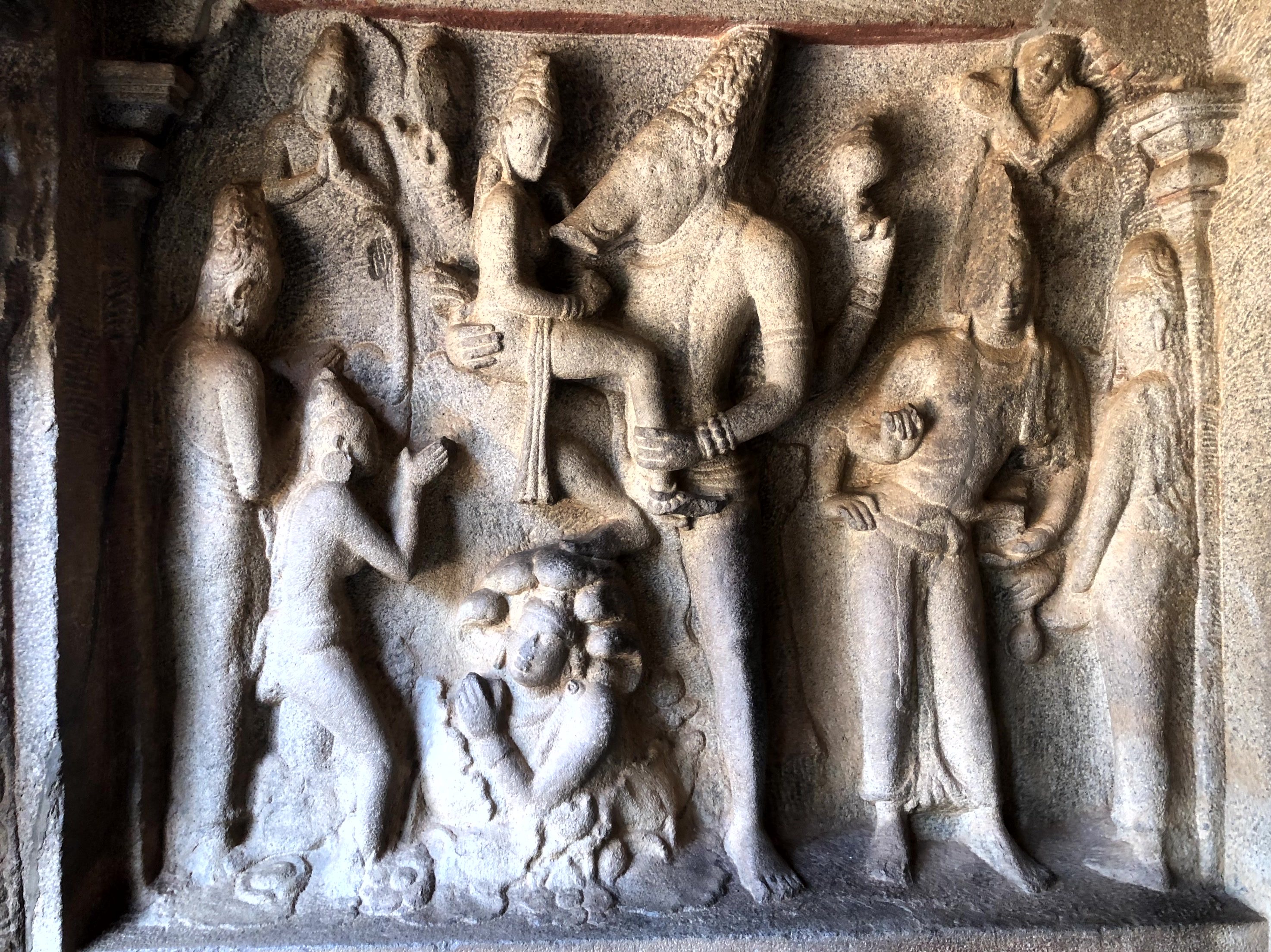
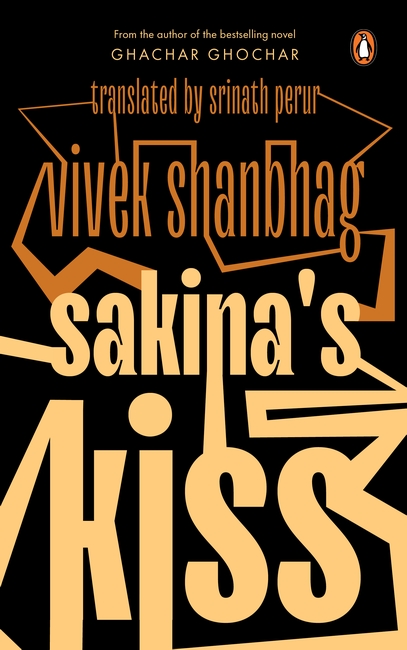


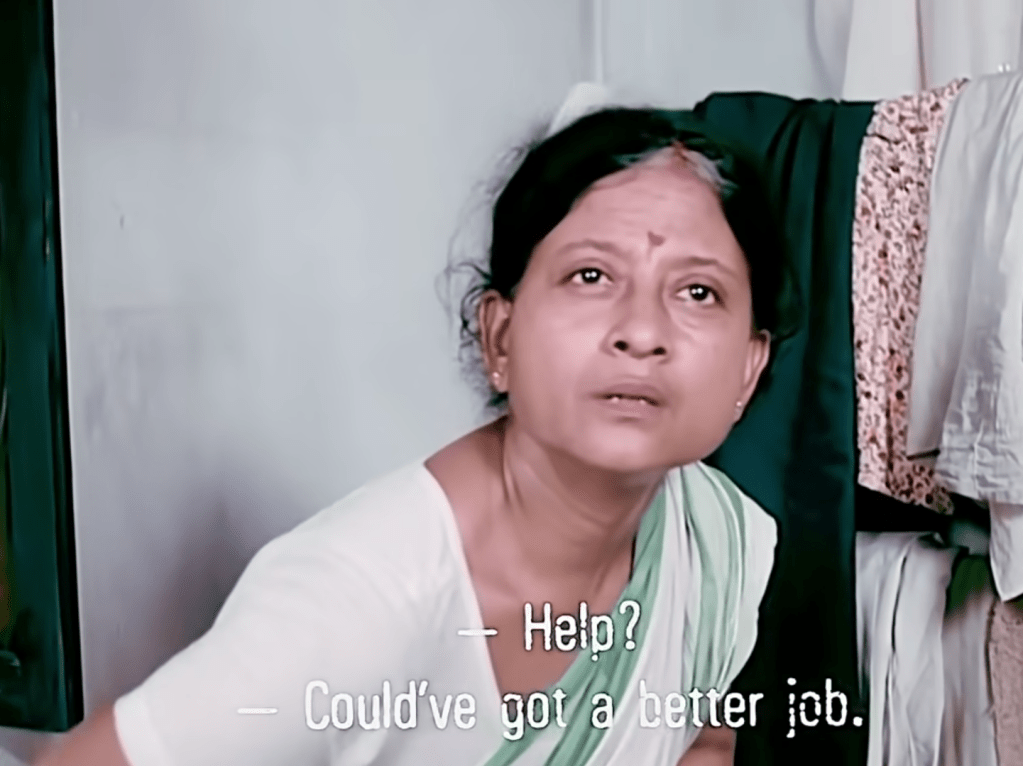

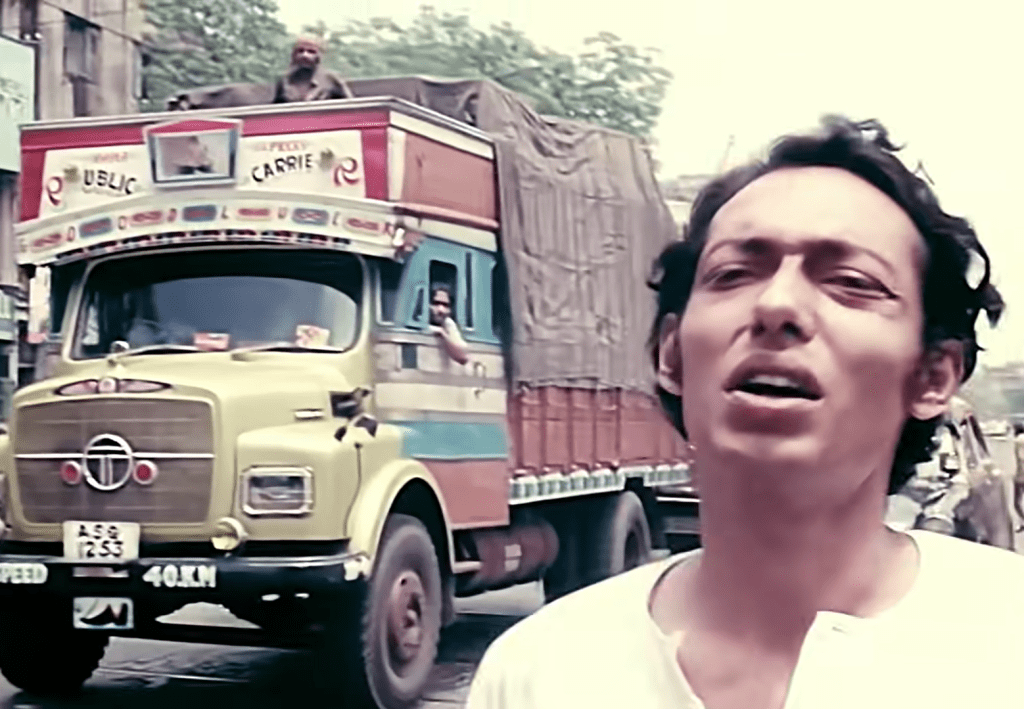
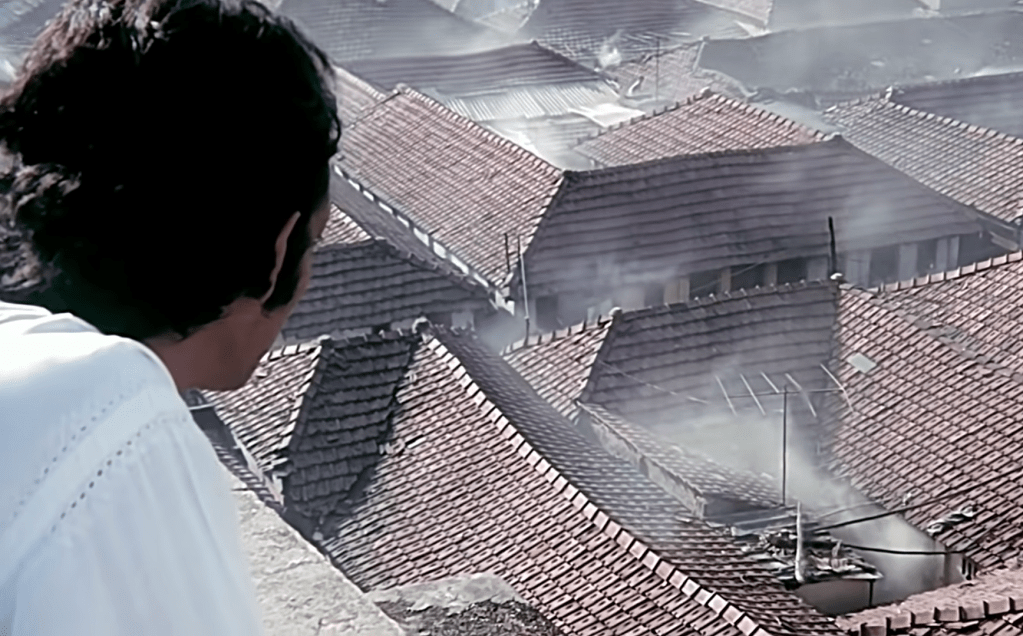
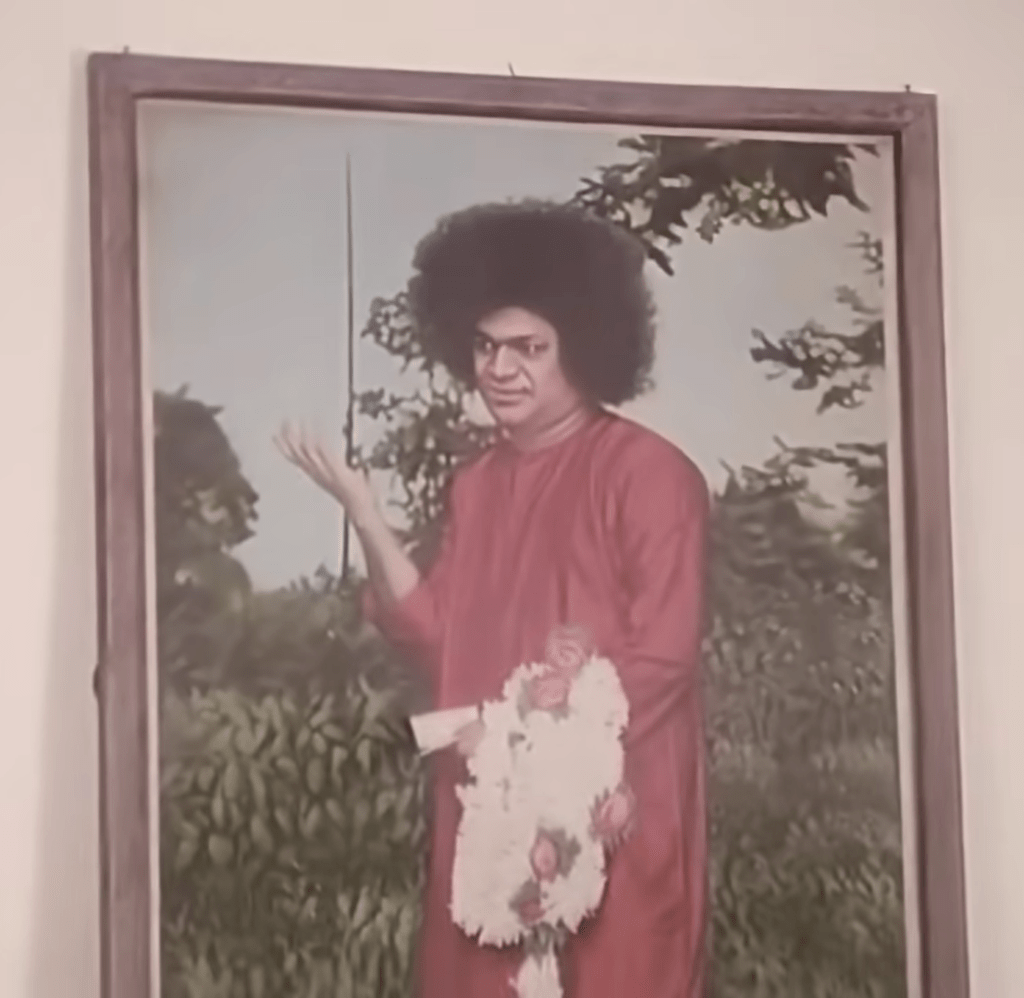

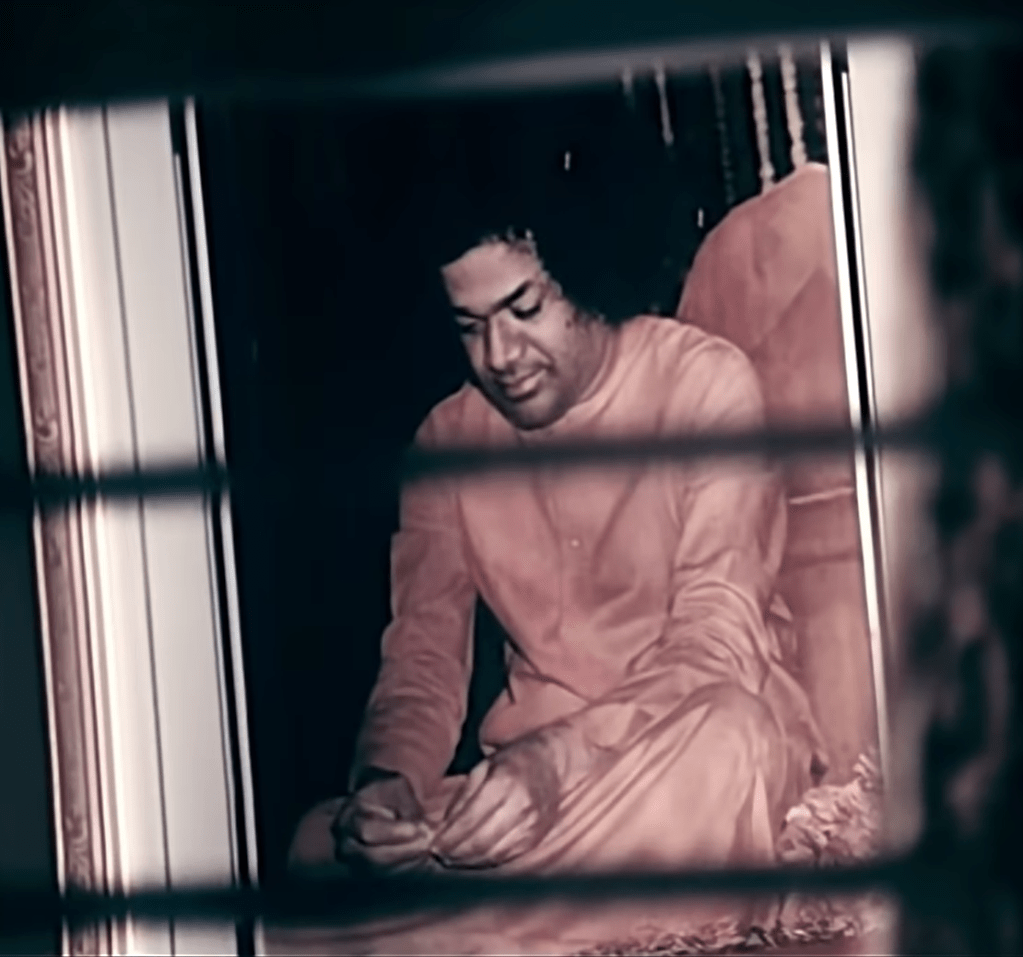

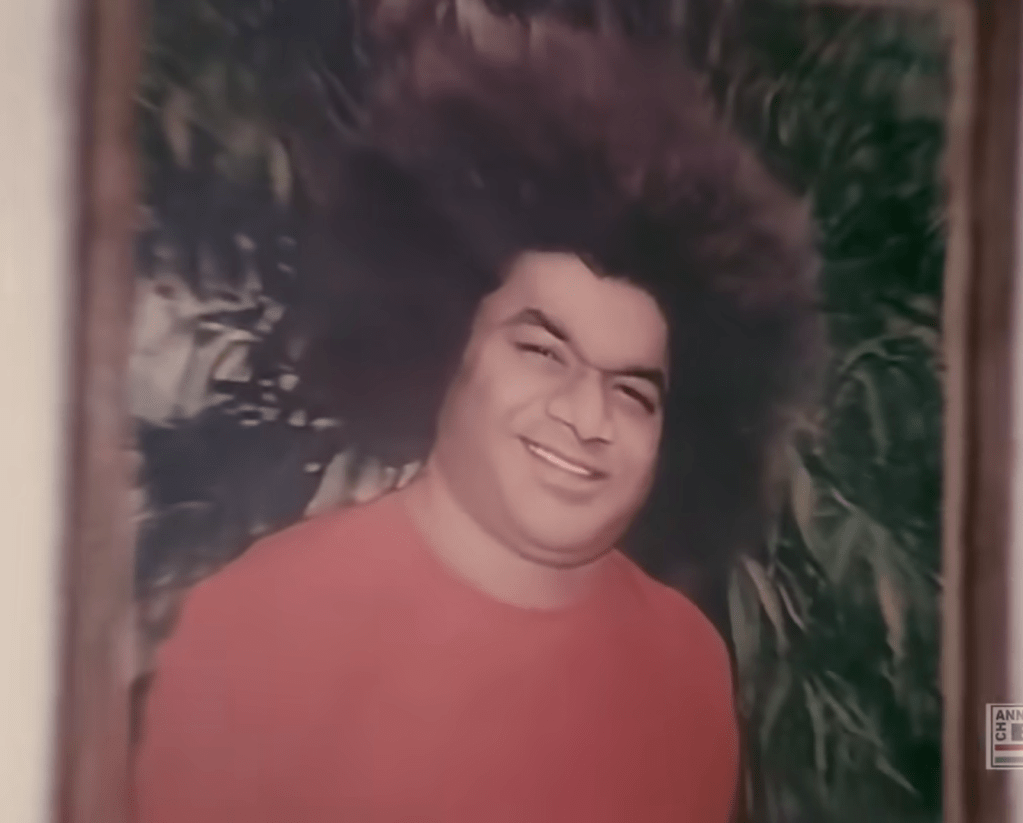


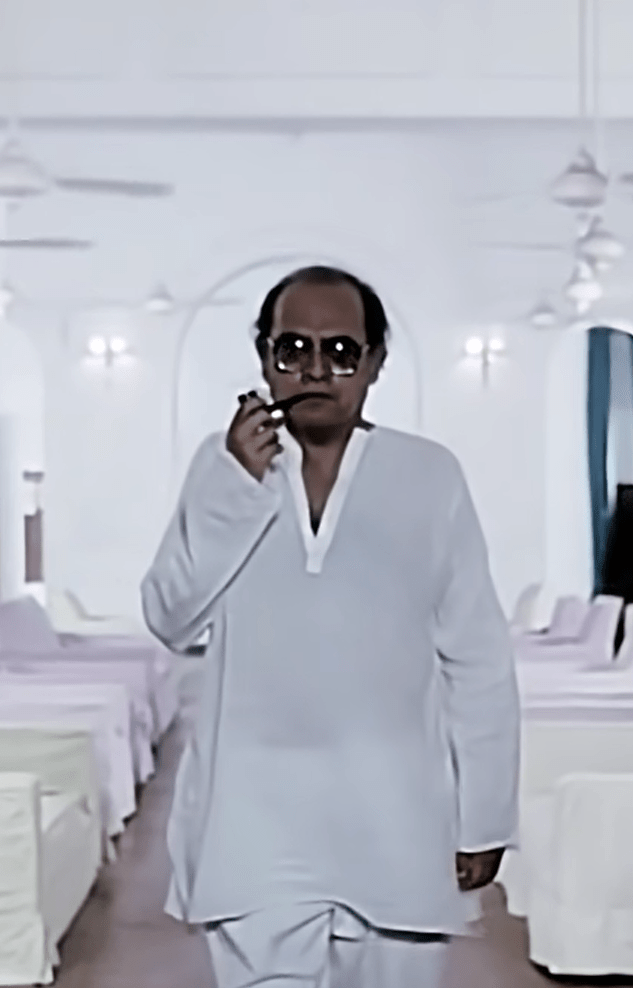


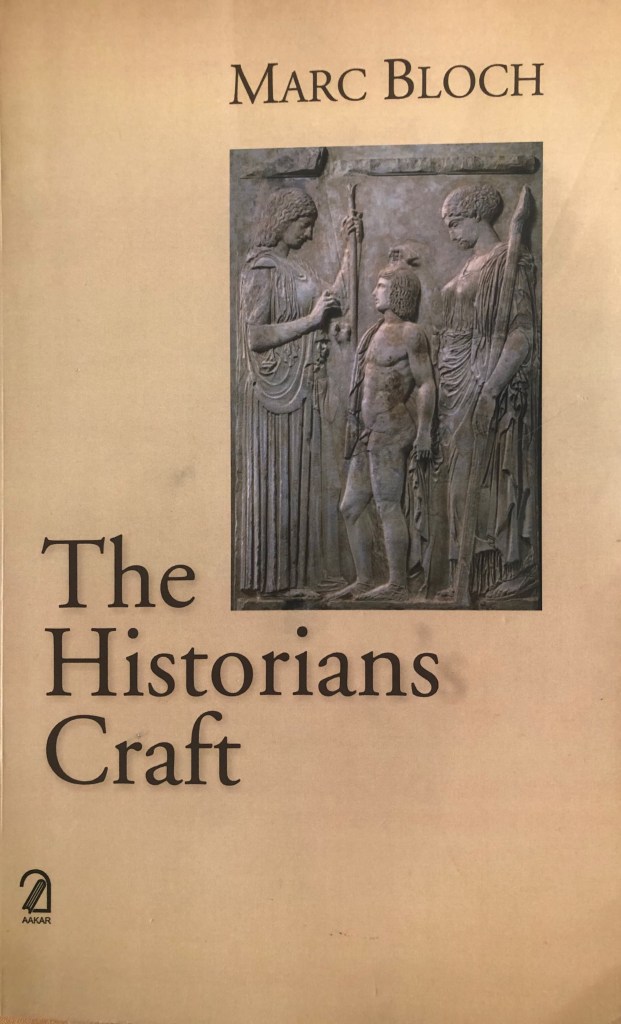

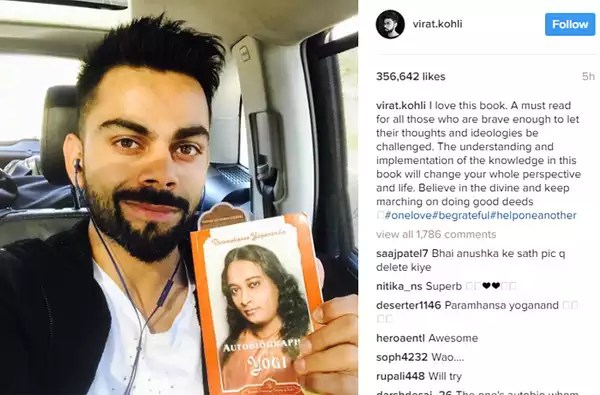
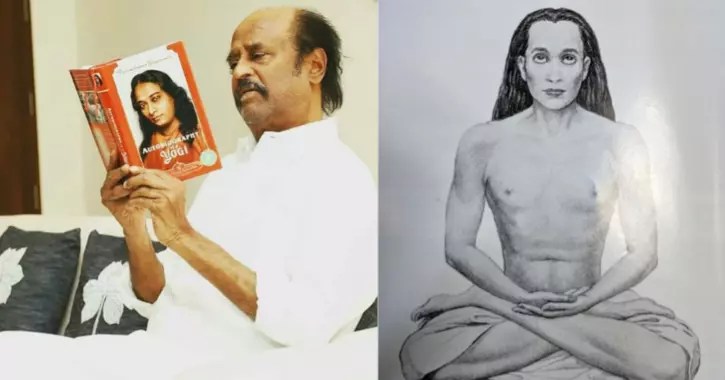
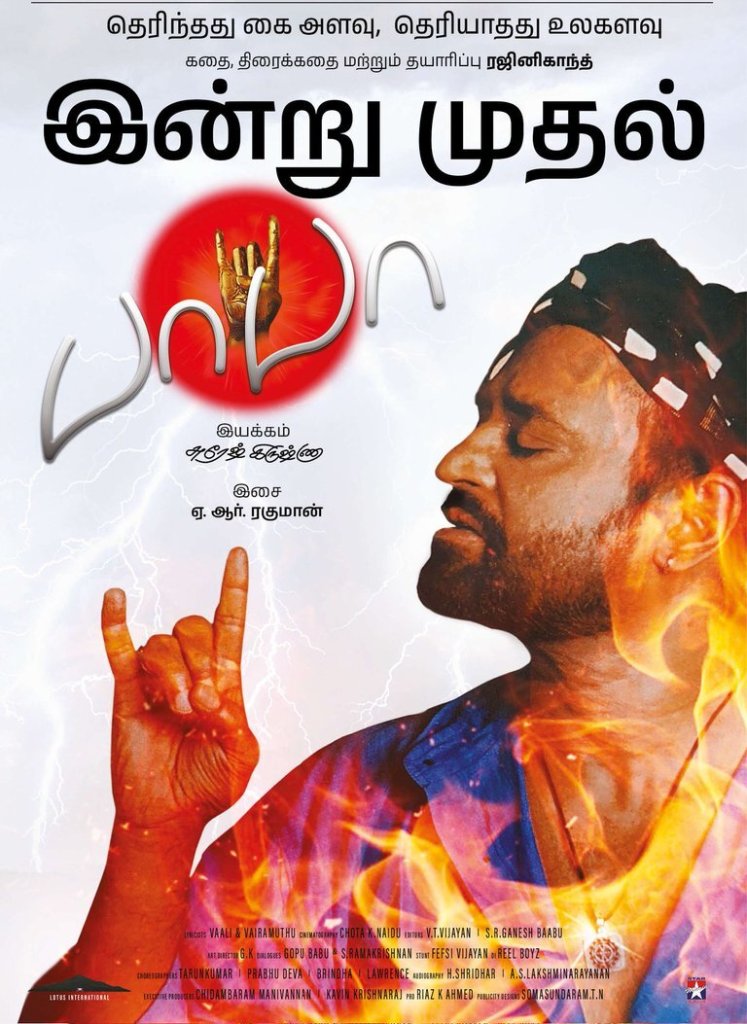
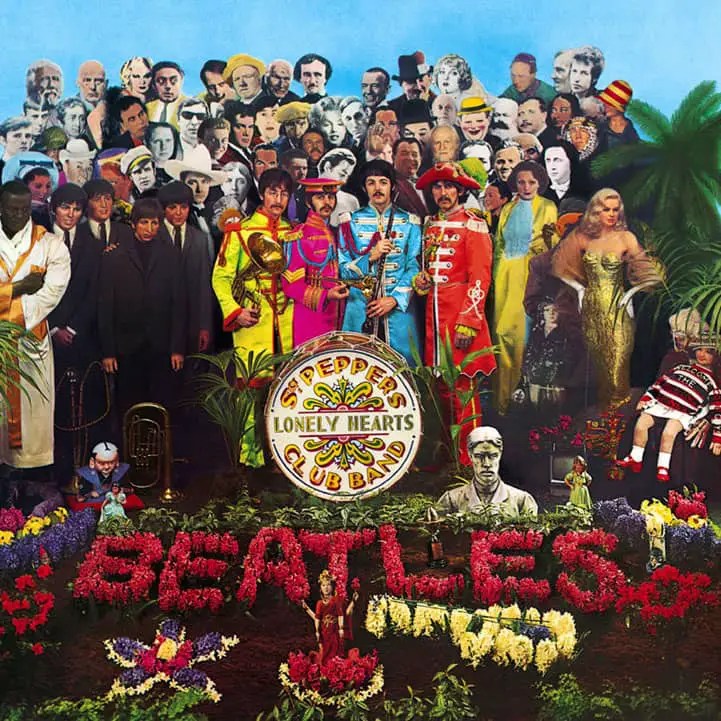


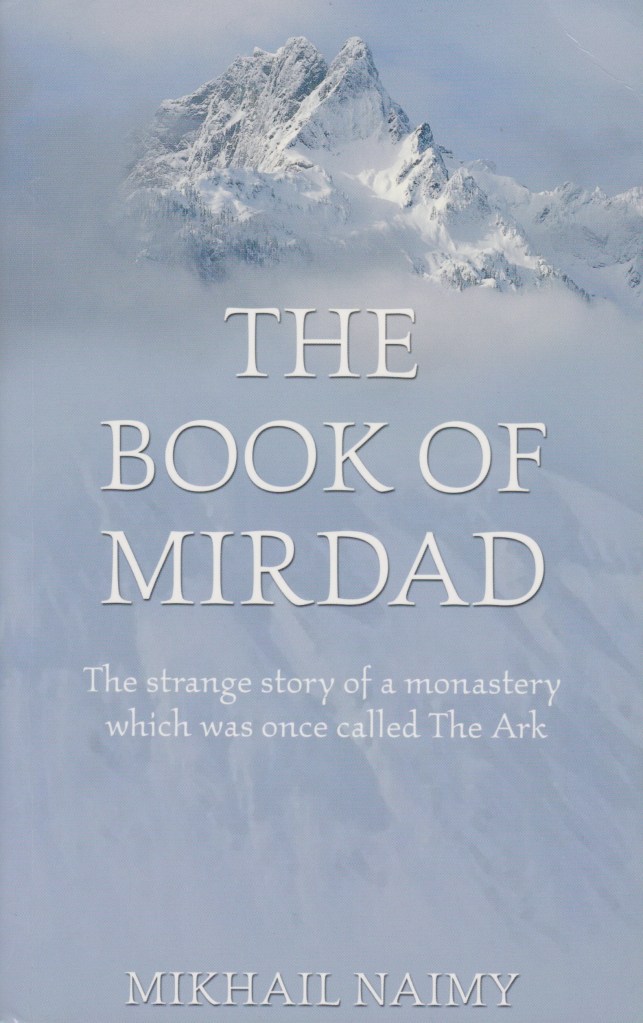
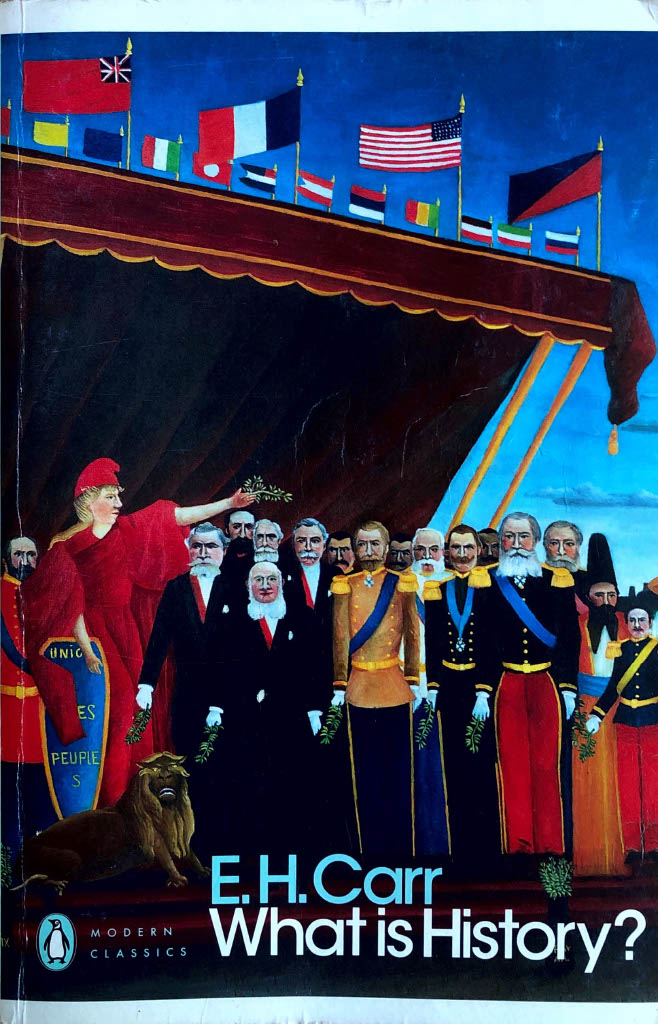

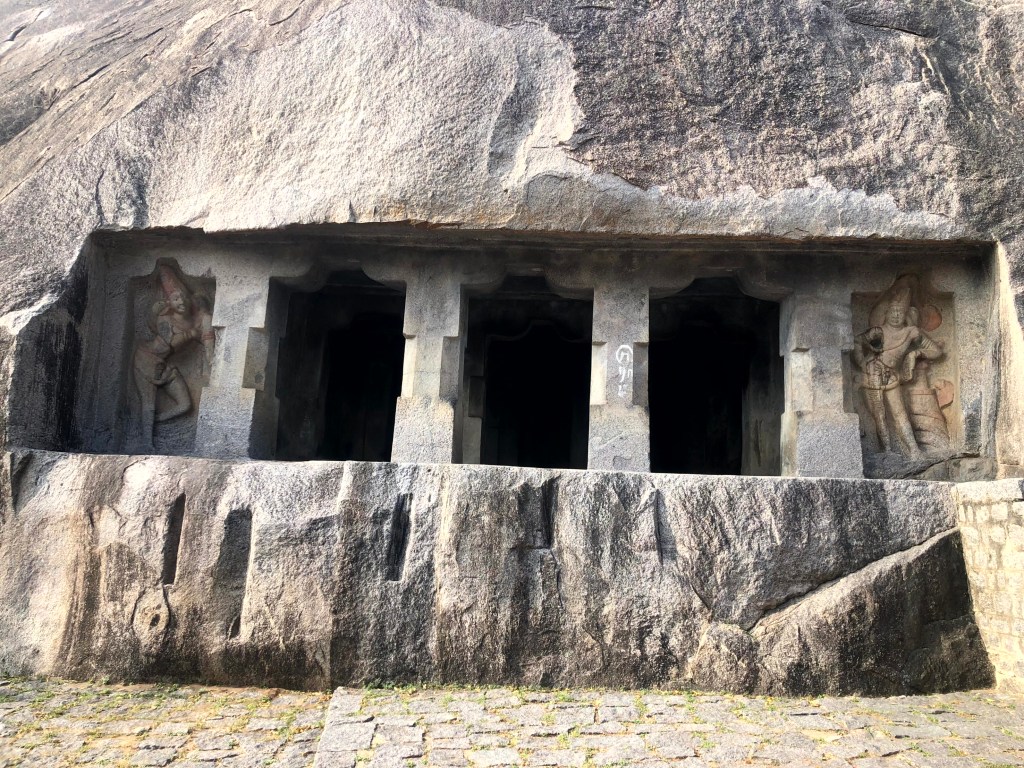
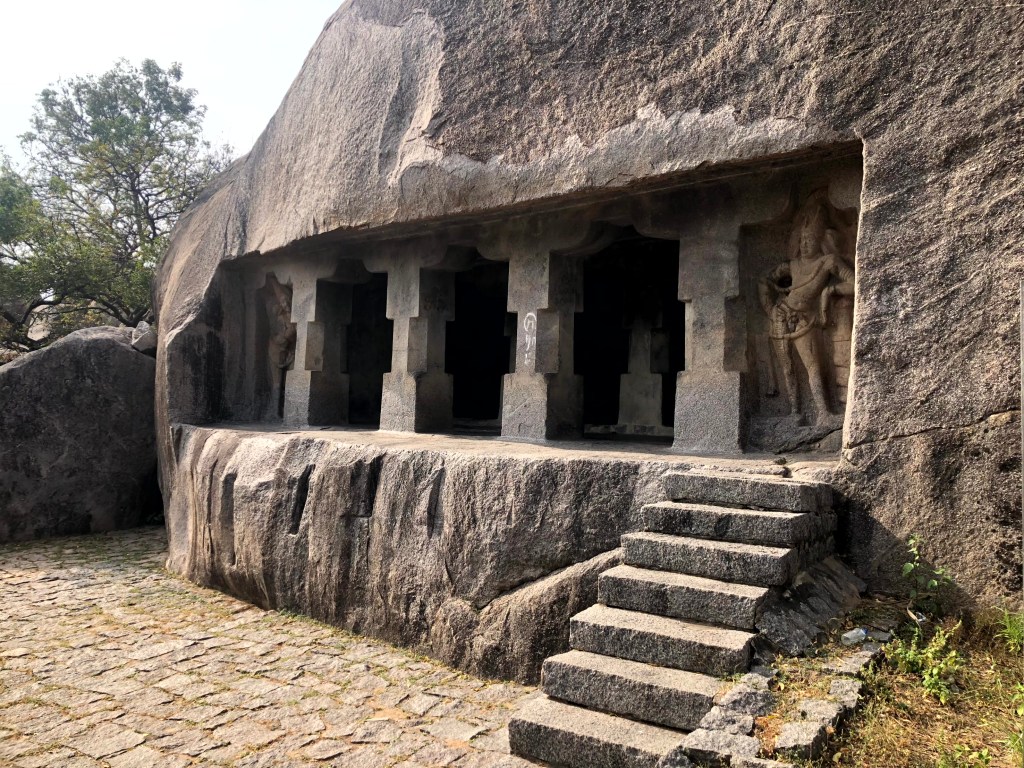


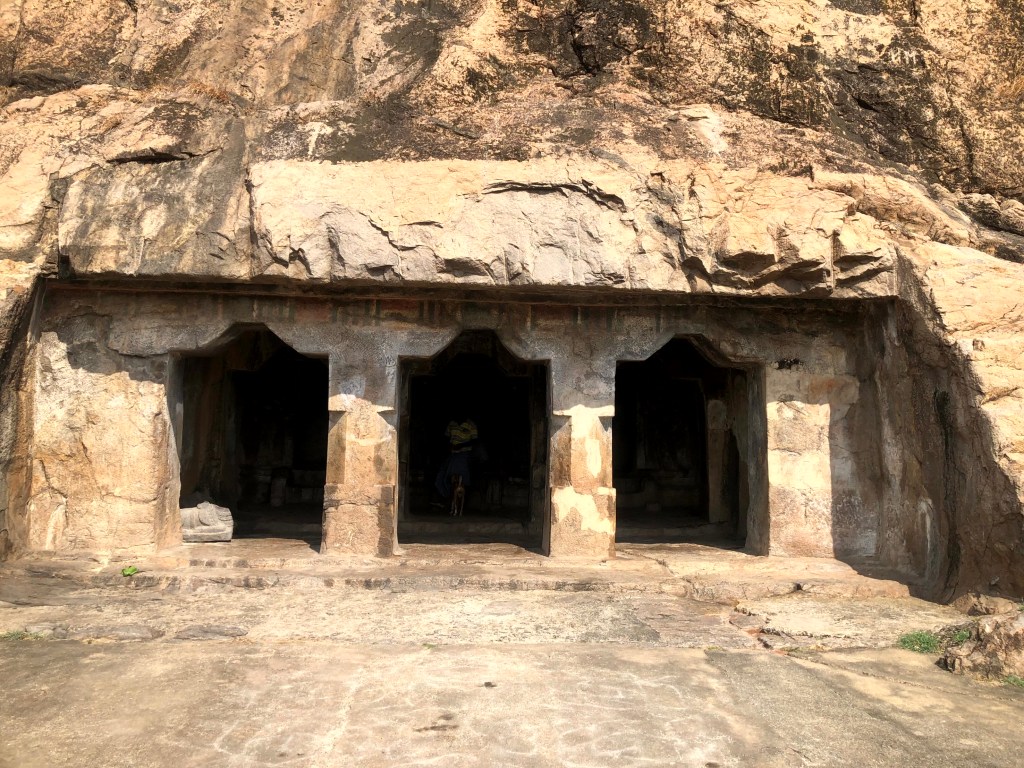

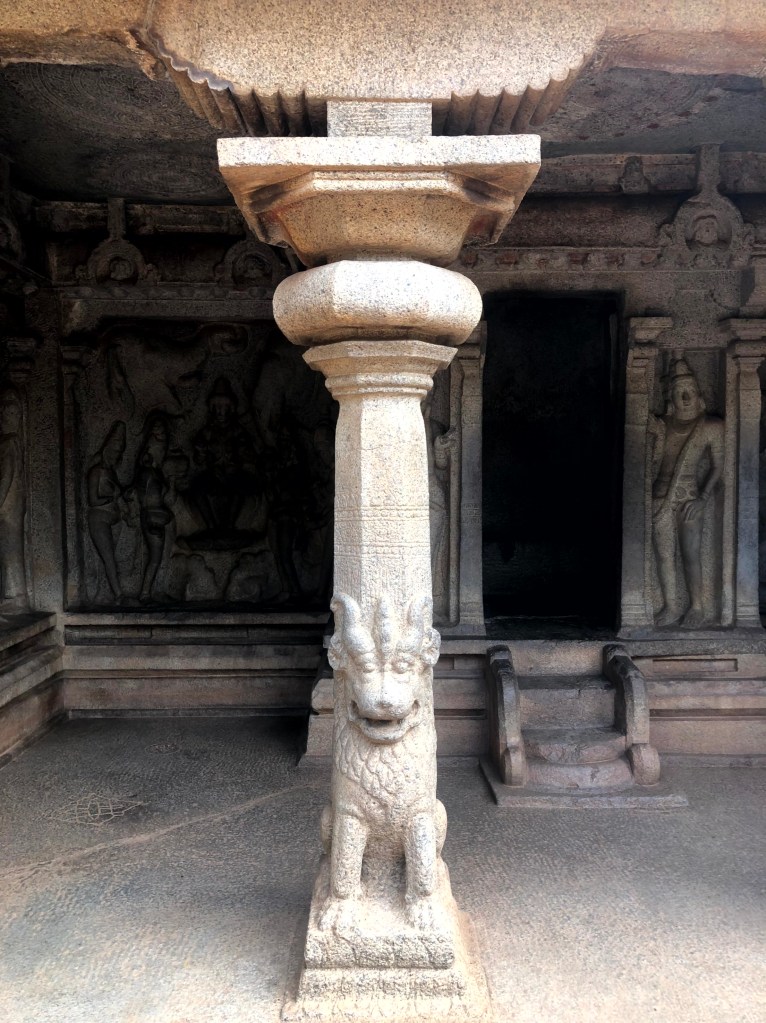

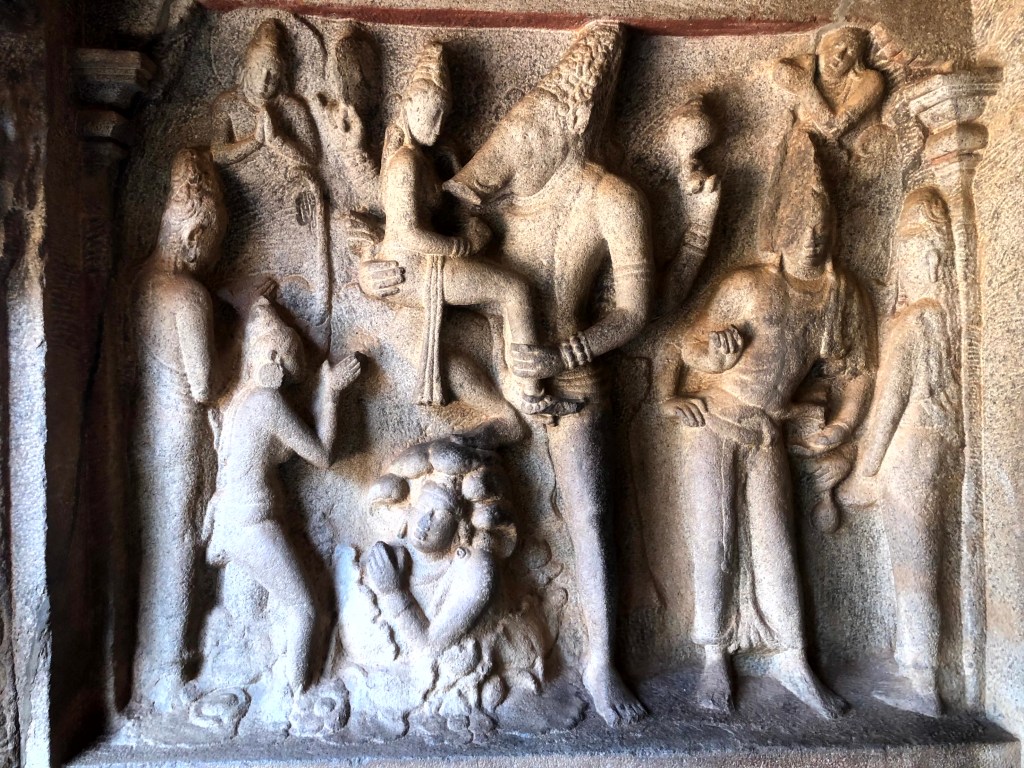

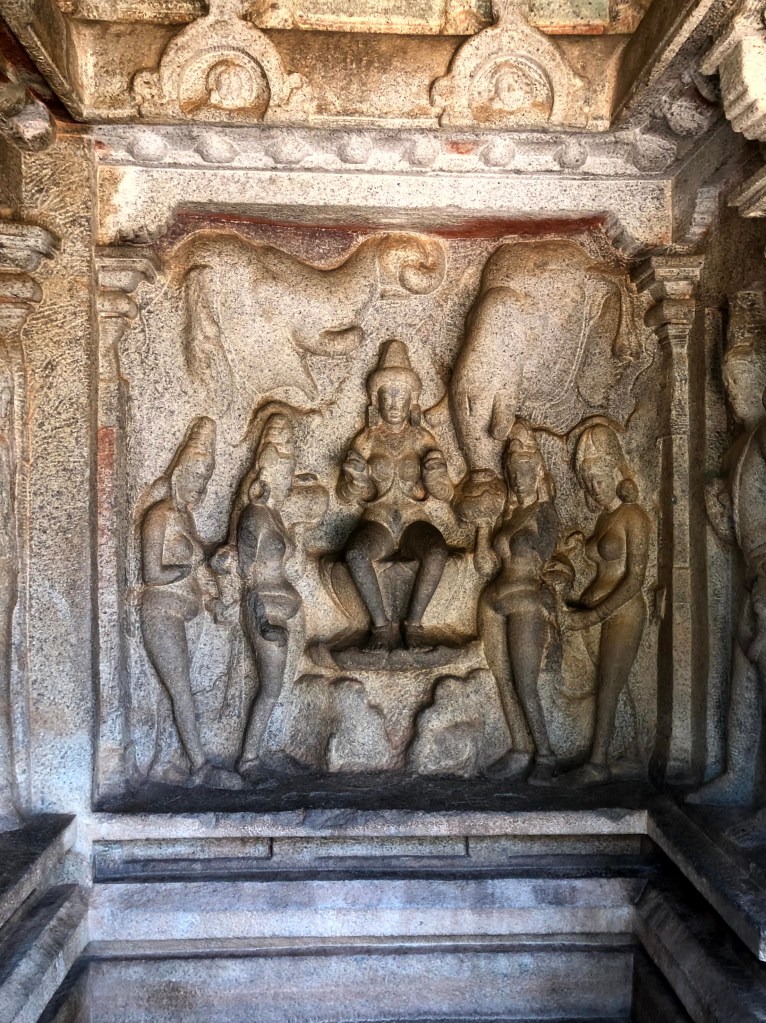
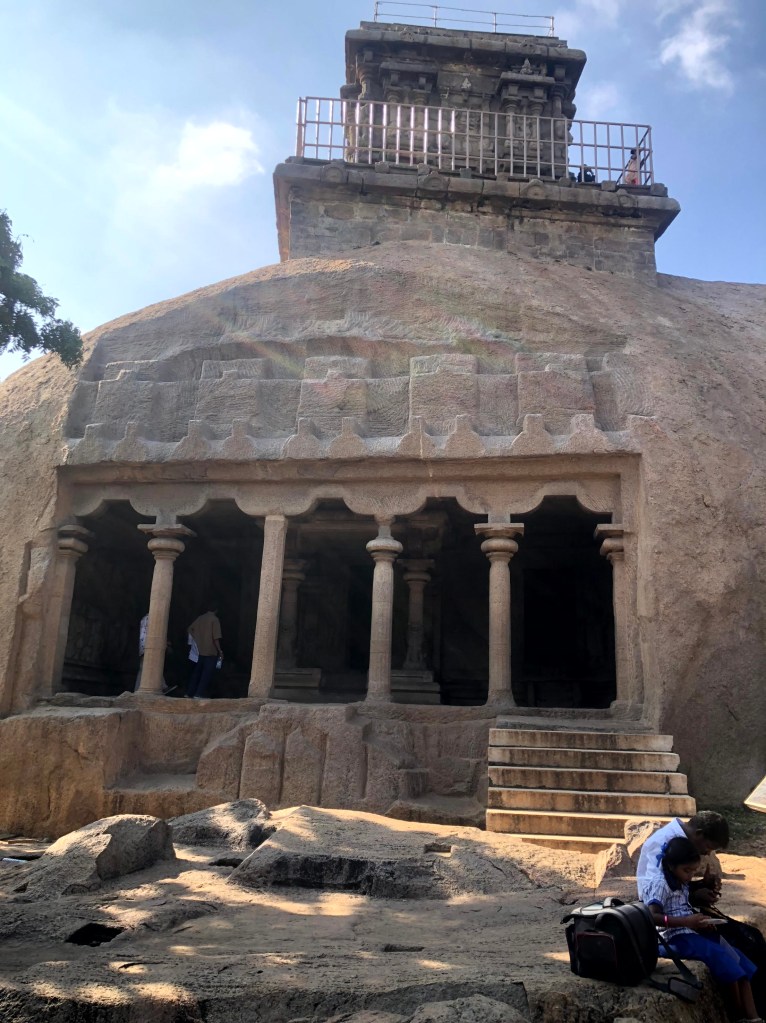
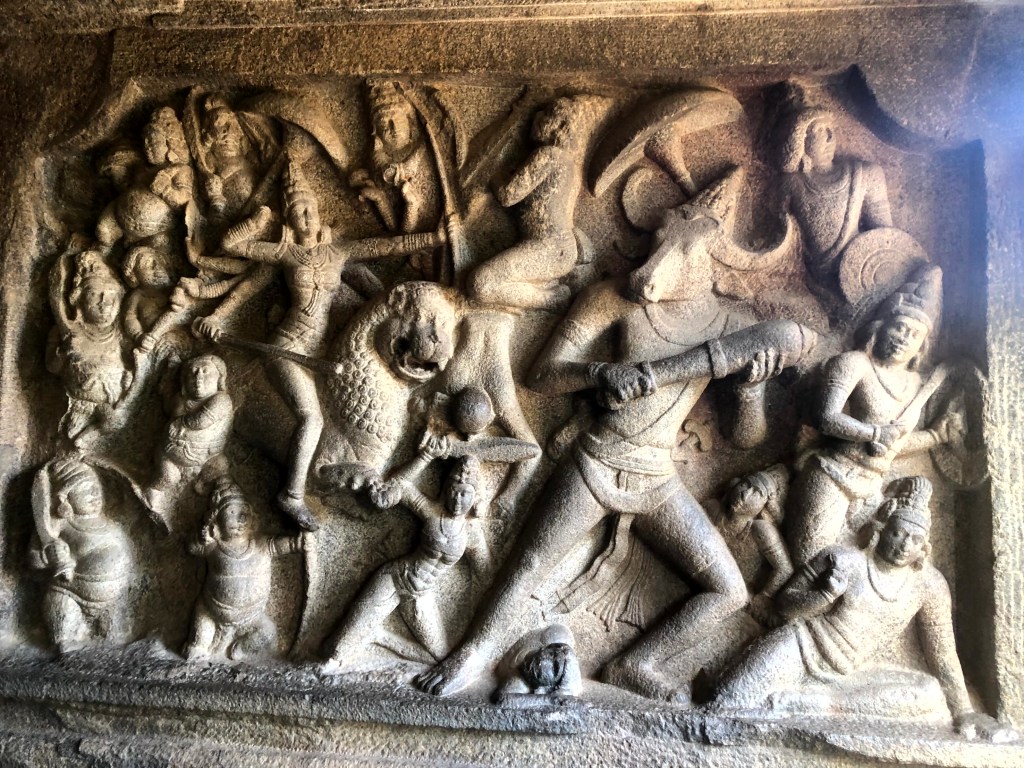


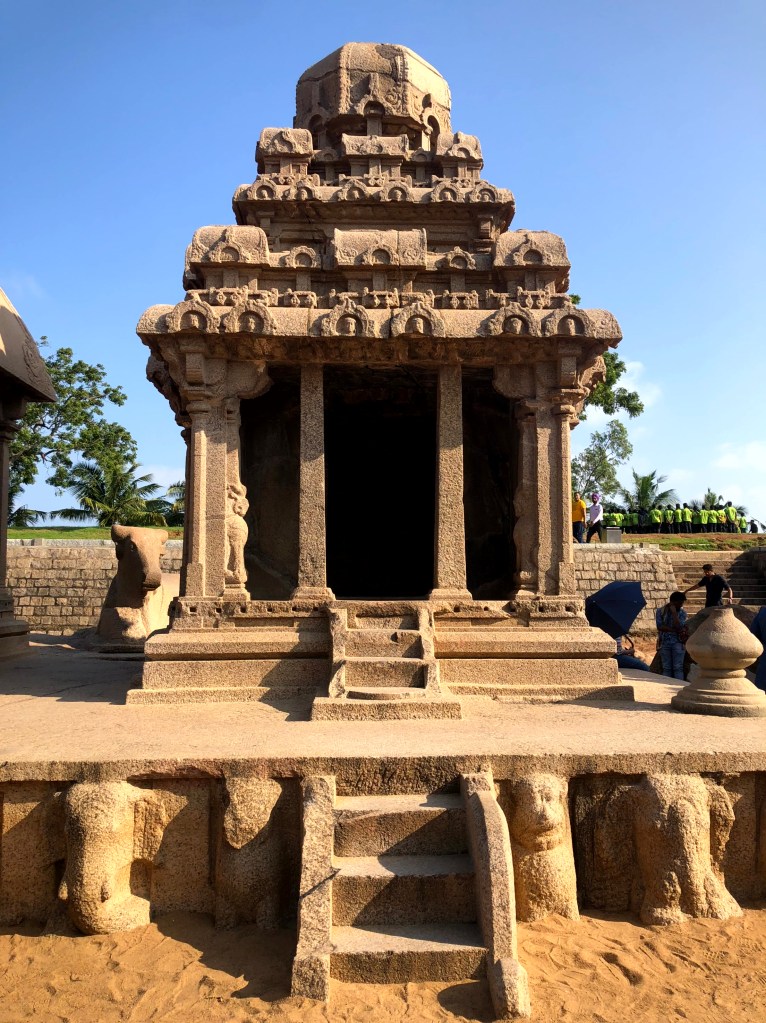


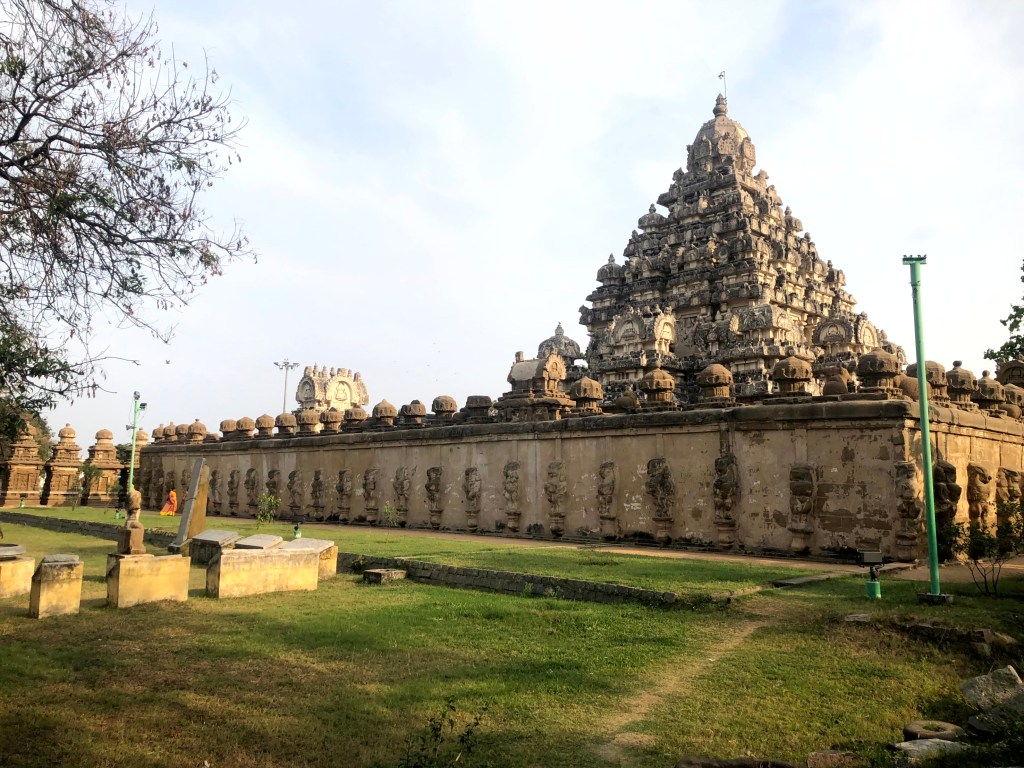


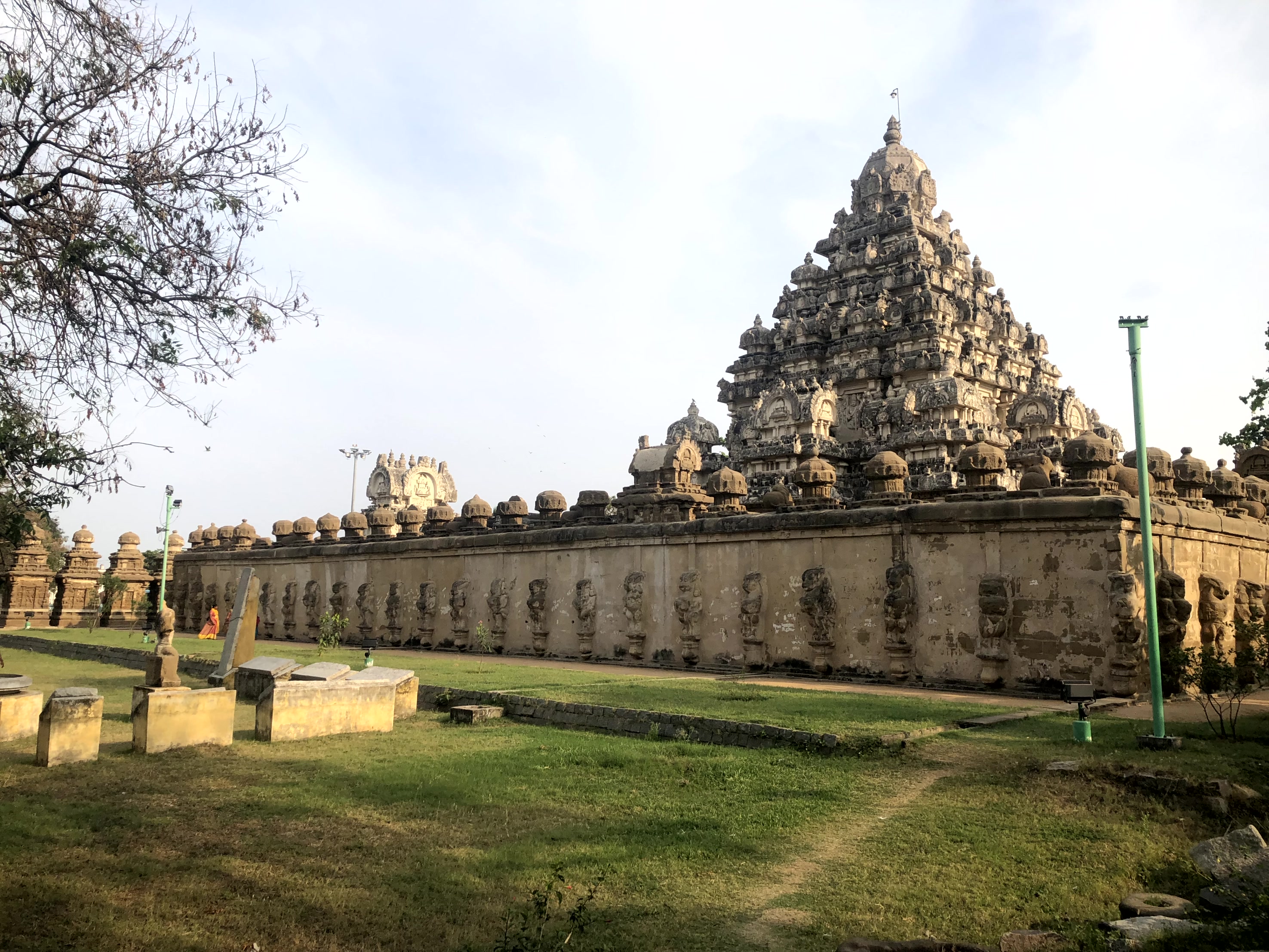


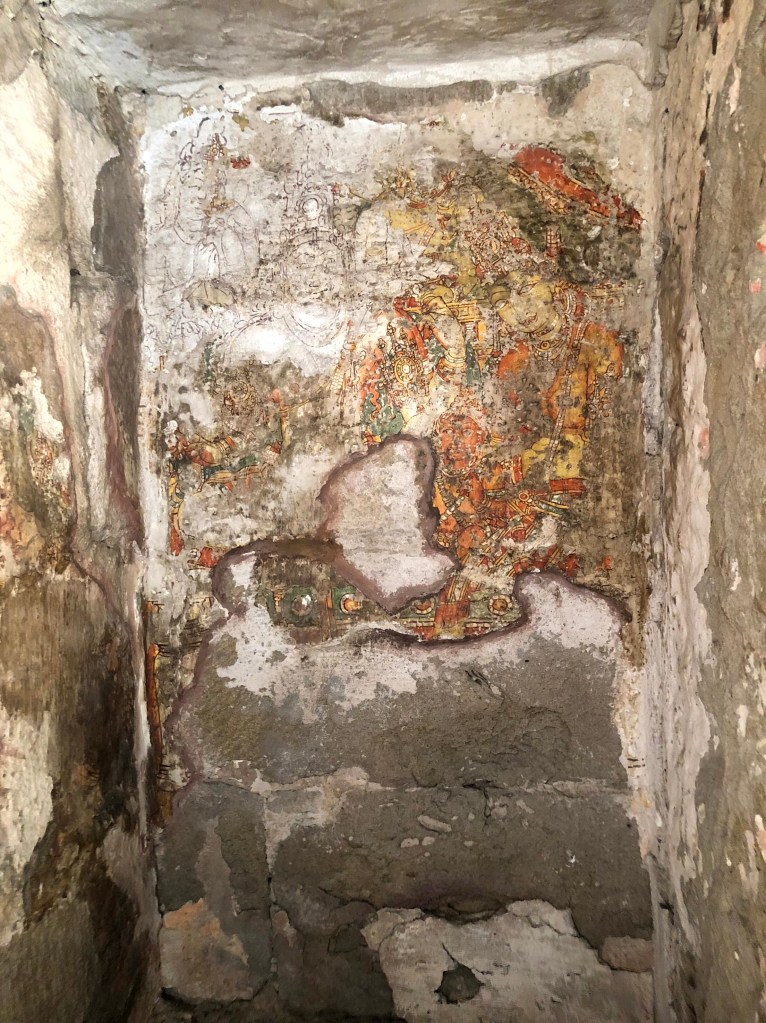
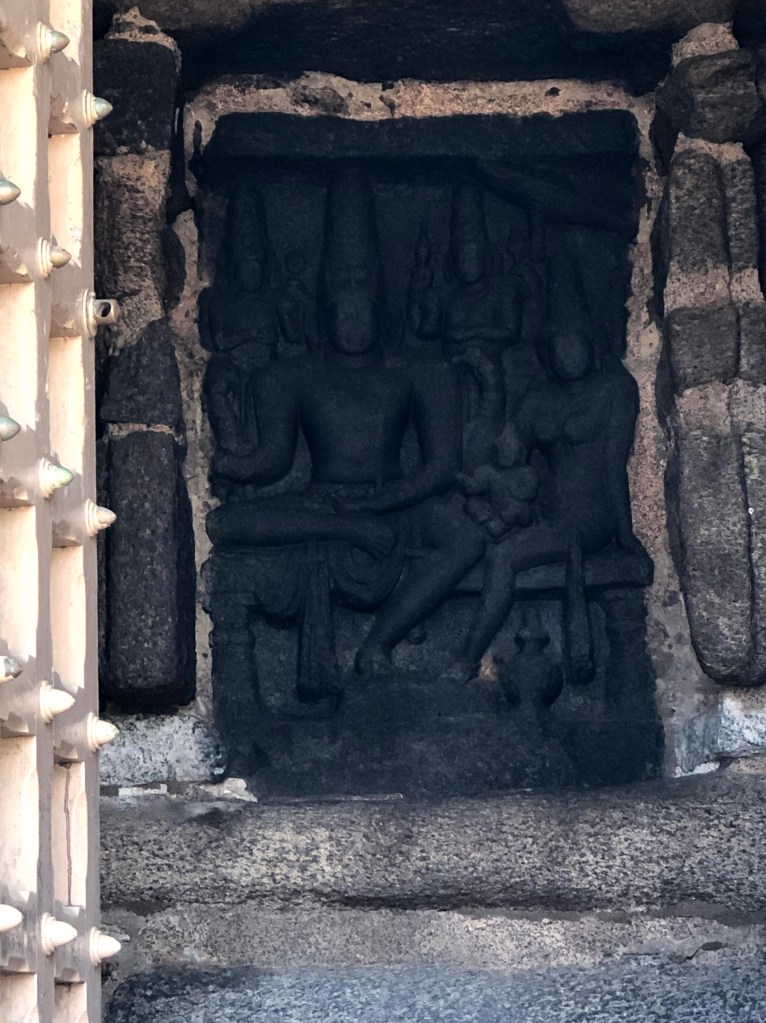
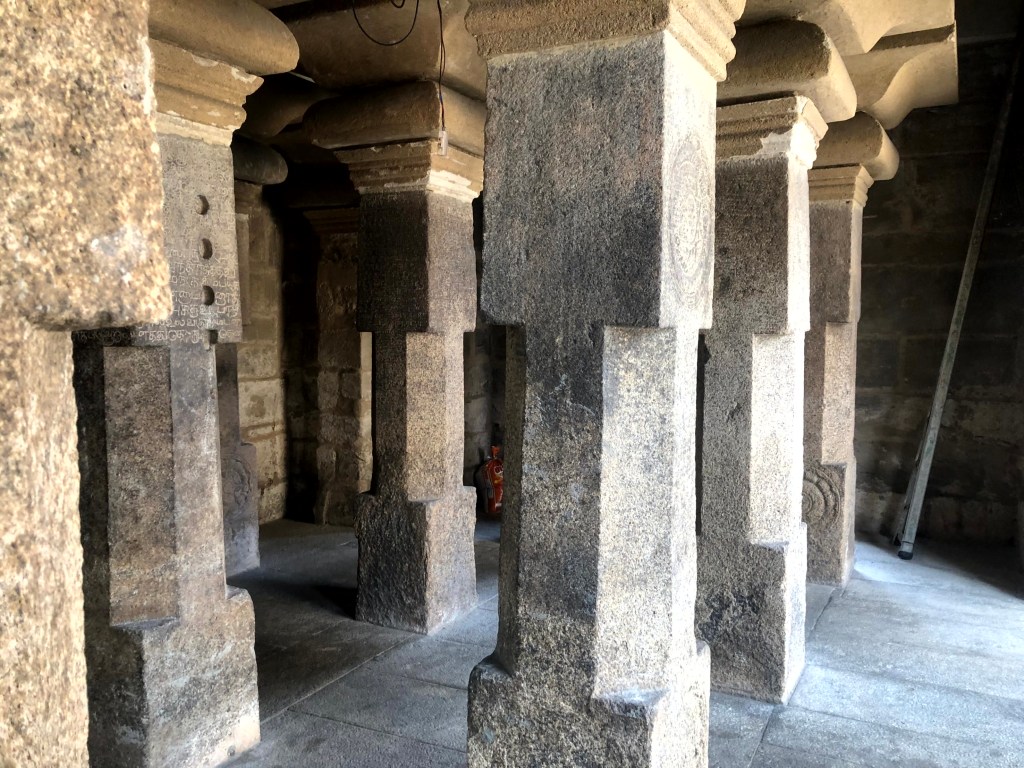

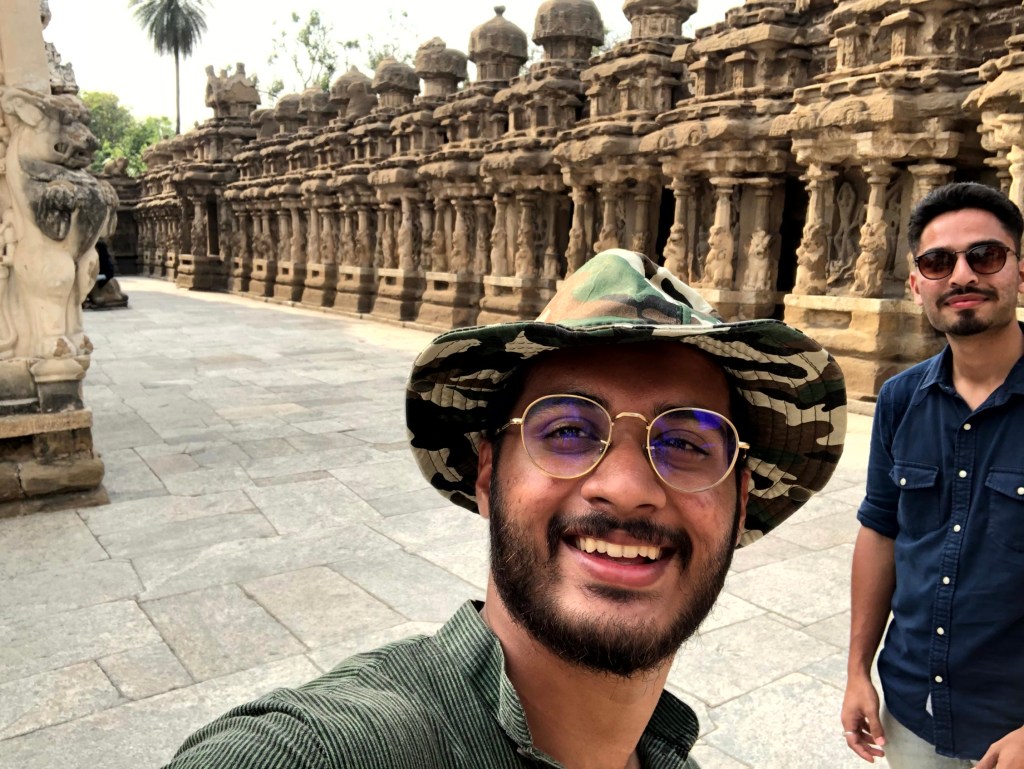


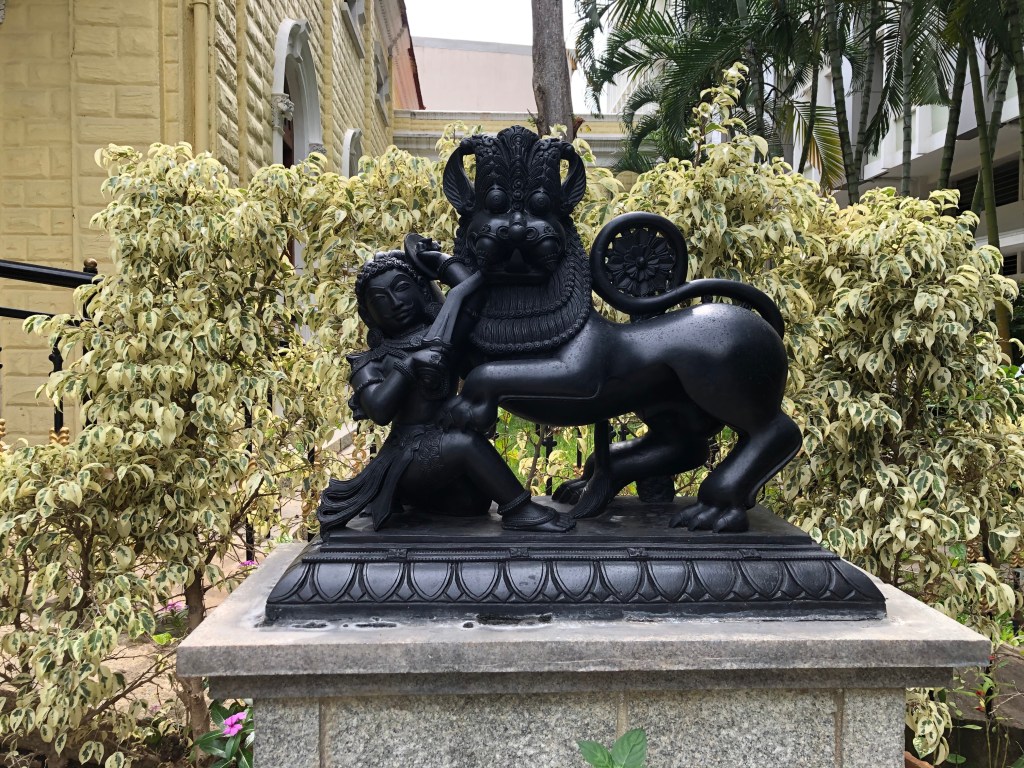
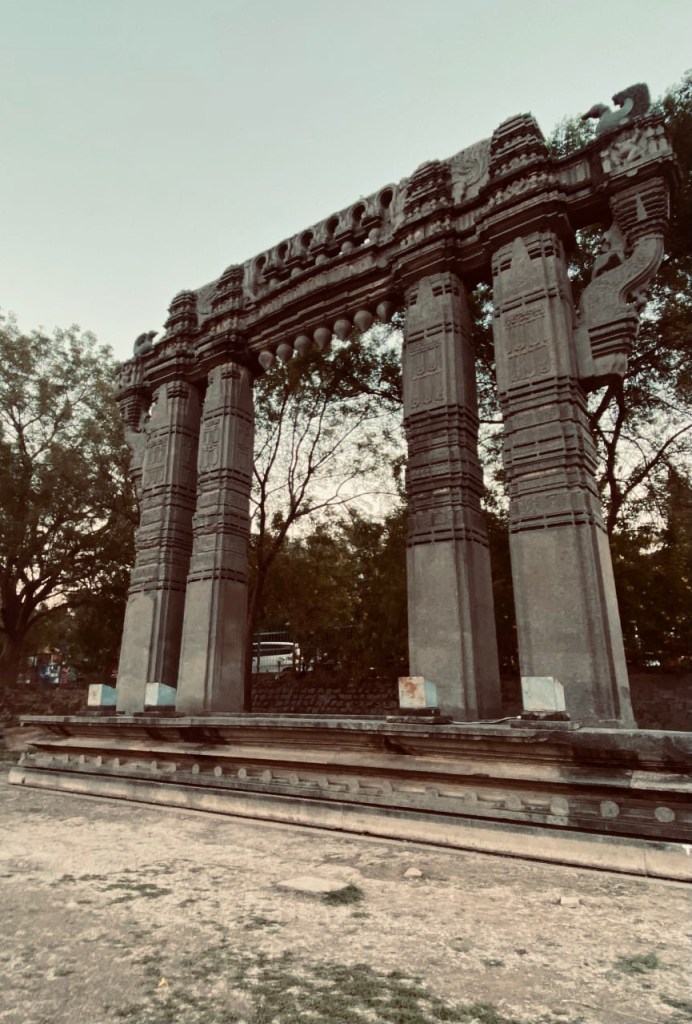
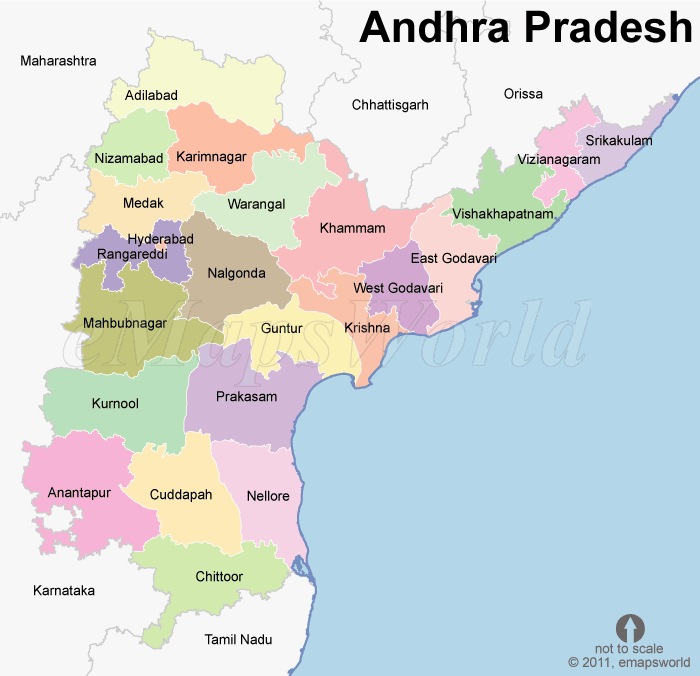
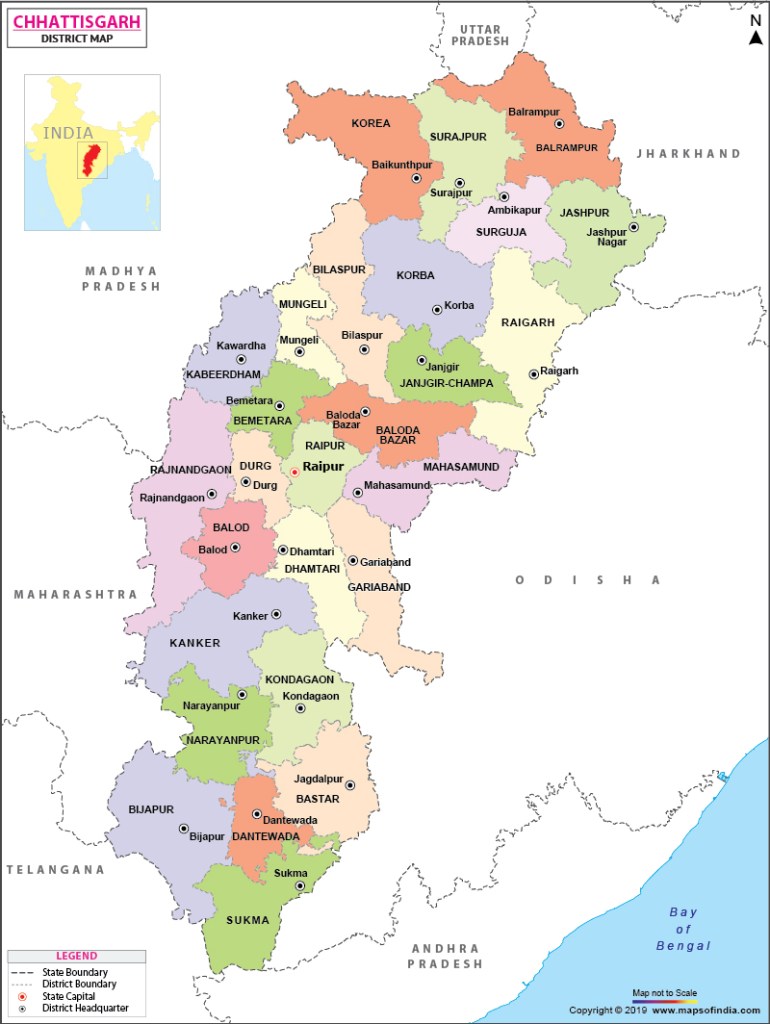

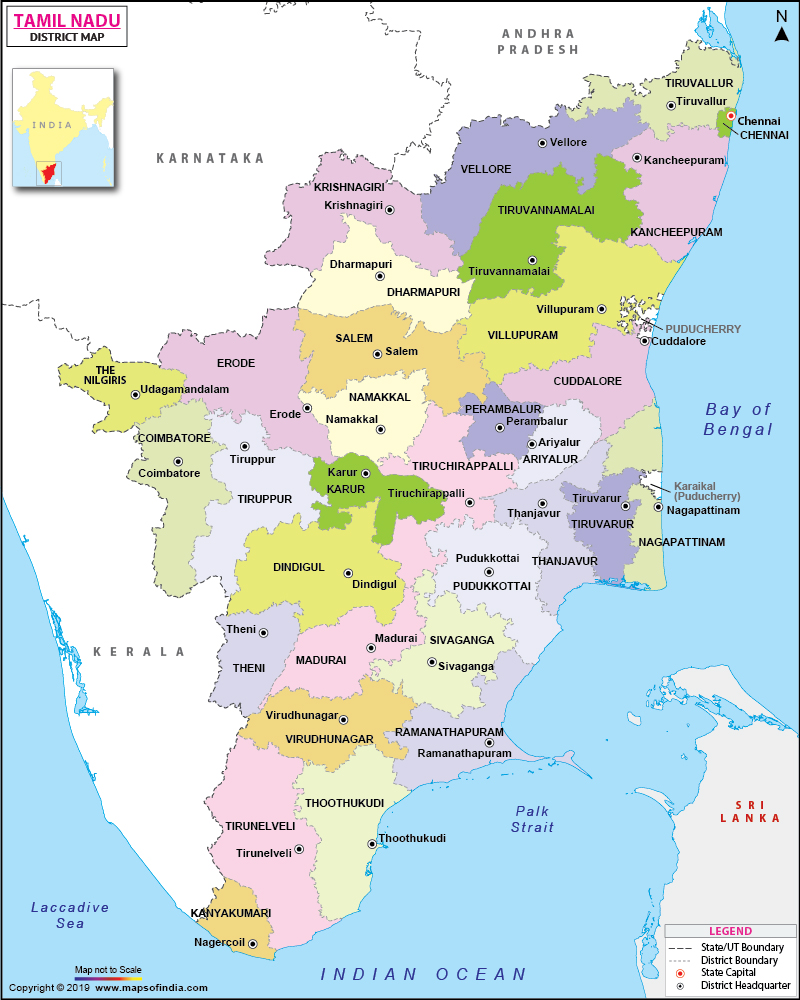
 Anuroop Tantry
.jpg)