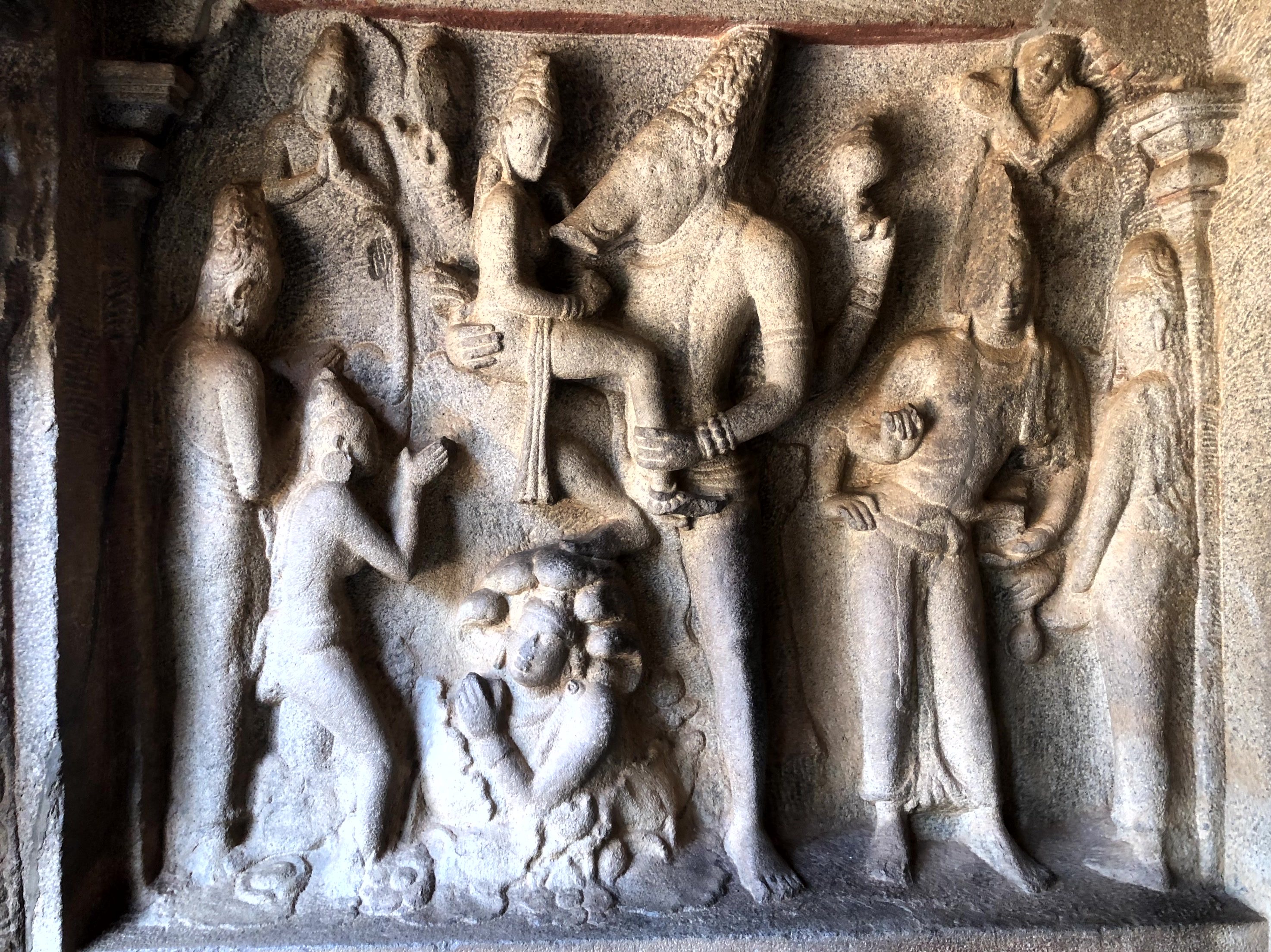
Inscriptions are one of the most important primary sources, which have made it possible for us, to not just know about the existence of history in exception to the Vedic civilization, but decipher a lot of details making our current knowledge about these ancient civilizations profound. From Ashokan edicts which testify the existence of the Mauryan empire, to Samudra Gupta’s conquests, and kingdoms of the rich Deccan peninsula, the contribution of inscriptions to history have been incredible, in spite of the deciphering of these inscriptions, happening as late as 19th and 20th centuries.
Most of the inscriptions, may seem to have content very trivial to political history, since a lot of them are mostly grants. However when we widen our approach to history, deviating from the notion of history to be mere political, we get a lot of details. Even grants give a lot of political information. Any kind of grant made by a ruler testifies the control of his empire over that region. There existed a theory, that the fortified city of Vijayanagara was built by Veera Ballala-3.
Dr. Venkatachalayya made an attempt to prove this theory wrong by a detailed study of inscriptions. According to his study, the control of the Vijayanagara region was lost by the Hoysalas, after the reign of Veera Ballala-2 and had come under the territory of Yadavas of Devagiri whose inscriptions were found till Chitradurga. These territories were not recovered by the time of Mummadi Veera Ballala (Veera Ballala-3), and the possibility of him constructing the fort was negative. Further study of inscriptions revealed that the region was controlled by one of the Yadava Chieftains Mummadi Singeya Nayaka, who after the attack on Devagiri in 1295, declared independence and the independent kingdom of Kampili came into existence. The Vijayanagara Empire was established on the grave of Kampili Rajya which was plundered by Muhammad Bin Tughlaq.
Inscriptions have also been used to validate the information provided by literary sources and vice versa. Amir Khusrau’s writings on the Siege of Dwarasamudra ( Halebidu ) have been proved to be highly exaggerated. An inscription found in the Hassan District shows that there was a tough resistance put up by the Hoysala army, unlike direct surrender as claimed by Khusrau (Hn-51,52 Epigraphia Carnatica Vol-5 ). It was even believed that he fled to Tiruvannamalai; Nonetheless he was not in Dwarasamudra when the attack happened and his presence in Tiruvannamalai was to mediate the conflict between the two Pandya brothers and thereby an attempt to regain the territory lost by his grandfather Vira Someshwara, when he was killed by Jatavarman Sundara Pandya. Another example is the Aihole inscription about the war between Pulakeshin-2 and Harshavardhana on the banks of River Namrada issued by Immadi Pulakeshin’s minister Ravikeerthi who gives a poetic account of Pulakeshin’s victory. Banabhatta’s Harshacharitha speaks about the war in the banks of river Narmada but the result is not known. This is how historians constantly cross validate their information and then write history.
As mentioned earlier if we widen our horizon, and move beyond political history we get a lot of information through inscriptions like taxation, agriculture pattern, kind of donations made etc. There is an inscription of Achyutha Deva Raya in Holalkere, Chitradurga ( Hk-111, Epigraphia Carnatica Vol-11) which speaks about the remission of marriage tax. Numerous inscriptions about remission of different taxes, land grants to temples with taxes remitted, to soldiers for their bravery or martyrdom, women who committed Sati etc. have been found which give a lot of information about social, agriculture, gender and economic history.
 Anuroop Tantry